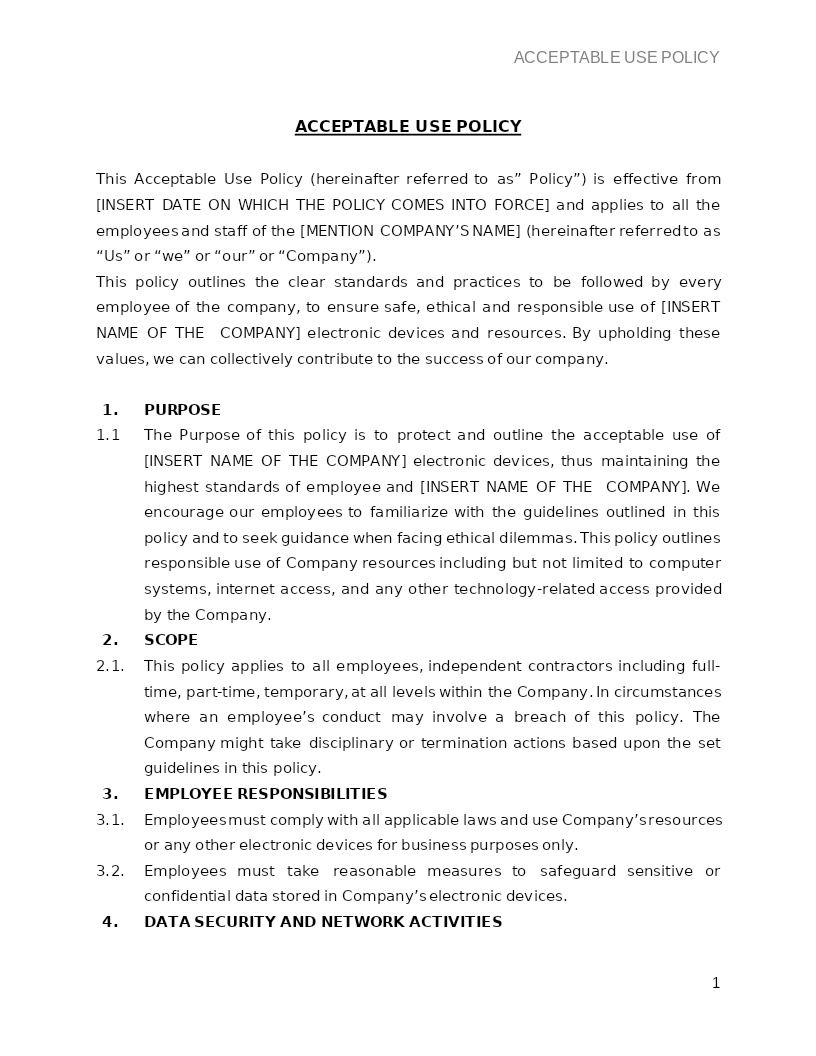
ACCEPTABLE USE POLICY
How does it work?
1. Choose this template
Start by clicking on "Fill out the template"
2. Complete the document
Answer a few questions and your document is created automatically.
3. Save - Print
Your document is ready! You will receive it in Word and PDF formats. You will be able to modify it.
Understanding Acceptable Use Policy in U.S.
An Acceptable Use Policy (AUP) defines the rules governing how employees, contractors, and authorized users may access and use an organization’s technology resources. These include computers, email systems, networks, mobile devices, software, cloud applications, and internet access. The policy establishes acceptable and prohibited behaviors to prevent misuse, protect systems from cyber threats, and ensure compliance with U.S. legal and regulatory requirements.
By setting clear expectations, an AUP promotes responsible use, protects sensitive information, and helps maintain a secure, efficient, and ethical work environment.
Where Acceptable Use Policies Are Commonly Used
Acceptable Use Policies are implemented across all industries, including:
• Healthcare (HIPAA-compliant environments)
• Financial services (GLBA, PCI-DSS regulated organizations)
• Government agencies (NIST, CISA, FISMA requirements)
• Educational institutions (FERPA-regulated data environments)
• Corporate enterprises using internal networks and shared resources
• Technology, SaaS, and data-driven companies
• Retail, e-commerce, and customer support centers
• Organizations using third-party vendors or remote workforce tools
Any organization that provides employees with access to digital tools or confidential information benefits from an AUP.
Different Types of Acceptable Use Practices
- Device and Equipment Usage: Rules governing how company devices, laptops, phones, and hardware should be used.
- Network and Internet Usage: Guidelines for safe internet browsing, network access, VPN use, and prohibited online activities.
- Email and Communication Usage: Standards for professional communication and restrictions against phishing, spam, or inappropriate messaging.
- Data Protection and Confidentiality: Expectations around safeguarding sensitive information, including encryption and secure file sharing.
- Software and Application Usage: Restrictions on downloading, installing, or using unauthorized software or cloud platforms.
When Legal Guidance Becomes Helpful
Consulting real-time lawyers and in-house counsel ensures:
• Compliance with U.S. federal and state privacy laws, including employee monitoring requirements.
• Proper handling of intellectual property, confidential data, and digital rights.
• Avoidance of legal exposure from employees’ online activities or misuse of resources.
• Customization of policies for regulated industries (HIPAA, GLBA, FERPA, PCI-DSS).
• Drafting enforceable disciplinary actions and consent notices.
• Alignment of AUP rules with employment law, cybersecurity mandates, and internal risk frameworks.
Legal review ensures your AUP is defensible, comprehensive, and enforceable.
How to Work With This Policy Template
• Define acceptable and prohibited activities involving networks, devices, and systems.
• Establish user responsibilities for confidentiality, security, and proper conduct.
• Include guidelines for remote work, personal device usage, and mobile device management.
• Document disciplinary actions for violations.
• Align the AUP with cybersecurity policies such as password, monitoring, and data protection policies.
• Train employees and require acknowledgment to ensure awareness and compliance.
• Regularly review and update the policy as technologies and regulations evolve.
Frequently Asked Questions
Q1. What resources are covered under an Acceptable Use Policy?
This policy applies to all organizational technology resources, including computers, mobile devices, networks, internet access, cloud platforms, email systems, and communication tools. It ensures these resources are used ethically, securely, and only for authorized purposes.
Q2. Are employees allowed to use company devices for personal activities?
Limited personal use may be allowed if it does not interfere with work duties, violate laws, or compromise security. The policy outlines acceptable boundaries to ensure personal use does not expose the organization to cyber risks or inappropriate behavior.
3. What activities are prohibited under this policy?
Prohibited activities typically include accessing inappropriate content, downloading unauthorized software, sharing confidential information, bypassing security controls, and engaging in illegal online behavior. These restrictions protect systems and ensure compliance with U.S. regulations.
Q4. How does the AUP protect organizational data and security?
The policy includes requirements for secure browsing, proper password use, responsible communication, and safeguarding sensitive data. By following these guidelines, users help prevent breaches, malware infections, and unauthorized access.
Q5. Does the organization monitor user activity?
Yes, consistent with U.S. privacy and employment laws. Users may be subject to monitoring of network activity, email usage, file access logs, and device behavior. Monitoring helps detect security threats and ensure compliance with the AUP.
Q6. What are the consequences of violating the Acceptable Use Policy?
Consequences may include warnings, restricted access, disciplinary action, termination, or legal involvement, depending on the severity of the violation. The policy ensures fair and consistent enforcement across all users.
Q7. Does this policy apply to remote workers or personal devices?
Yes. Remote employees and users accessing organizational systems from personal devices must follow the same rules. Additional requirements, such as VPN use, encryption, and secure Wi-Fi—may be enforced to protect the organization’s data.
Q8. How often should the Acceptable Use Policy be updated?
The AUP should be reviewed annually or whenever laws, technologies, or organizational needs change. Continuous updates ensure the policy stays relevant, compliant, and effective against emerging cyber threats.