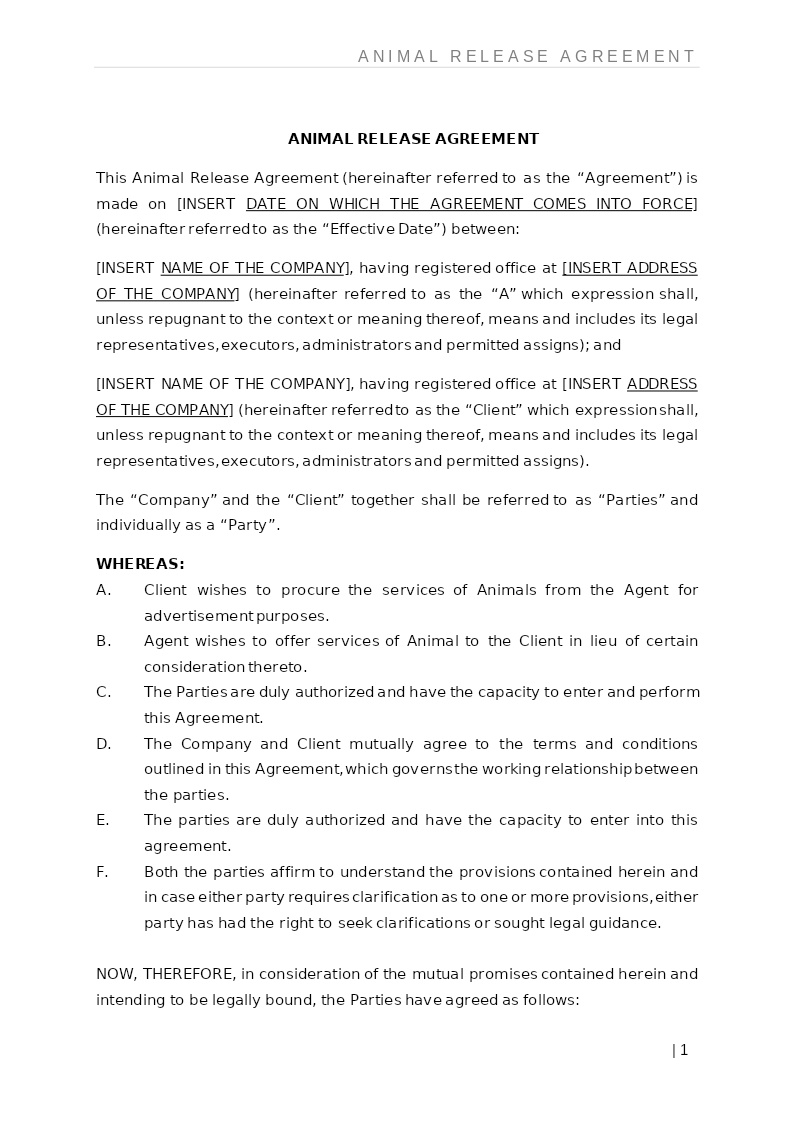
ANIMAL RELEASE AGREEMENT
How does it work?
1. Choose this template
Start by clicking on "Fill out the template"
2. Complete the document
Answer a few questions and your document is created automatically.
3. Save - Print
Your document is ready! You will receive it in Word and PDF formats. You will be able to modify it.
Transferring Animal Ownership and Responsibility in U.S. Adoption & Care Settings
An Animal Release Agreement is a formal document that governs the transfer of ownership or long-term responsibility for an animal from one party to another. It provides clarity on the animal’s condition, care needs, and legal obligations while releasing the original owner, shelter, rescue organization, or facility from future claims or liabilities.
Having a defined agreement in place helps both parties communicate openly, finalize the transfer with transparency, and ensure that the animal’s well-being remains the primary focus throughout the process.
Where Animal Release Agreements Are Commonly Used
Animal release agreements are widely used in many U.S. scenarios, including:
- Pet adoptions through shelters or rescue organizations
- Transfers between foster homes, individuals, and adoption centers
- Release of animals from research institutions or rehabilitation facilities
- Surrender of animals by owners unable to continue care
- Temporary or permanent transfers involving working animals, service animals, or livestock
Any time an animal changes hands, an agreement ensures that future responsibilities, liabilities, and expectations are clearly defined.
Different Types of Animal Release Agreements You May Encounter
- Standard Adoption Release: Used when a shelter or rescue places an animal into a permanent adoptive home, transferring legal responsibility to the new owner.
- Foster-to-Owner Release: Applies when a foster caregiver transitions into permanent ownership of the animal.
- Medical or Special-Needs Release: Used when an animal has medical, behavioral, or rehabilitation-related requirements that must be understood and accepted by the receiving party.
- Shelter or Intake Surrender Release: Signed when an individual voluntarily relinquishes ownership of an animal to a shelter or organization.
- Working or Service Animal Transfer: Covers animals with specialized training where liability, usage, and care expectations must be clearly documented.
When Legal Guidance Becomes Helpful
Although many animal transfers are routine, legal counsel is extremely valuable when:
- The animal has a history of aggression, medical complications, or behavioral risks
- Ownership of livestock, exotic animals, or regulated species is involved
- Transfers occur across U.S. states with differing animal-welfare laws
- There are disputes over prior ownership, breeding rights, or microchip registration
- The transfer involves organizations governed by federal or state regulations
- Special clauses are needed regarding breeding restrictions, liability waivers, or future contact
Real-time legal advice helps ensure the agreement is enforceable, compliant with applicable laws, and aligned with the long-term welfare of both the animal and the new caretaker.
How to Work with This Template
- Identify both parties involved in the transfer
- Clearly state the purpose and scope of the ownership or responsibility transfer
- Describe the animal’s condition, history, and care needs
- Define the release of liability and obligations of the receiving party
- Choose the governing U.S. state law and dispute-resolution method
- Review the terms together (legal review optional but recommended)
- Sign electronically or in hard copy
This template follows U.S. standards used by shelters, rescues, adoption centers, and private individuals, and is compatible with major e-signature platforms.
Frequently Asked Questions
Q1. Why is an Animal Release Agreement important in the U.S.?
An Animal Release Agreement protects both parties by formally documenting the transfer of ownership or responsibility. It prevents future claims, clarifies legal obligations, and ensures the new caretaker is fully aware of the animal’s needs. This structure reduces liability risks and ensures the animal is placed into a safe, responsible environment.
Q2. Does this agreement protect the original owner or shelter from future liability?
Yes. One of the primary purposes of an Animal Release Agreement is to release the original owner or organization from legal responsibility once the transfer is complete. This means they cannot be held liable for future incidents, medical costs, or behavioral issues that arise after adoption or transfer.
Q3. Is the animal’s health and behavioral history included in this agreement?
Typically, yes. The agreement may summarize known medical conditions, vaccinations, behavioral tendencies, or past treatments. Providing this information ensures transparency and helps the new caretaker understand the level of care required. It also helps prevent future disputes about undisclosed conditions.
Q4. Can this agreement be used for rescue animals with special needs?
Absolutely. Many U.S. shelters and rescues rely on specialized release agreements for animals with medical or behavioral challenges. These agreements outline additional care instructions, potential risks, and responsibilities the new caretaker must accept. This ensures the animal receives appropriate support after transfer.
Q5. Does this agreement help prevent disputes over future ownership?
Yes. A properly executed Animal Release Agreement clearly identifies who the legal owner is after the transfer. It eliminates ambiguity that could lead to custody fights, return demands, or disagreements over breeding or relocation. For both parties, it establishes a definitive legal record of the ownership shift.
Q6. Can this agreement address post-adoption follow-ups or restrictions?
Yes. Many organizations include clauses requiring periodic check-ins, limiting breeding, or prohibiting resale or transfer without consent. These provisions help safeguard the animal’s welfare and ensure continued responsible care. The agreement can be tailored to reflect the organization’s or owner’s expectations.
Q7. Is this suitable for livestock, service animals, or working animals?
Yes. Transfers involving working animals often require more detailed terms regarding training, usage, liability, and future rights. A structured agreement helps outline expectations and ensures compliance with industry and state regulations. It also protects both parties when the animal plays a specialized role.
Q8. Are electronic signatures valid for Animal Release Agreements in the U.S.?
Yes. Under federal law (ESIGN Act) and state e-signature statutes, electronic signatures are legally enforceable in most cases. This allows shelters, rescues, and individuals to complete transfers efficiently, even from remote locations. Digital signing also ensures accurate documentation and easy record-keeping.