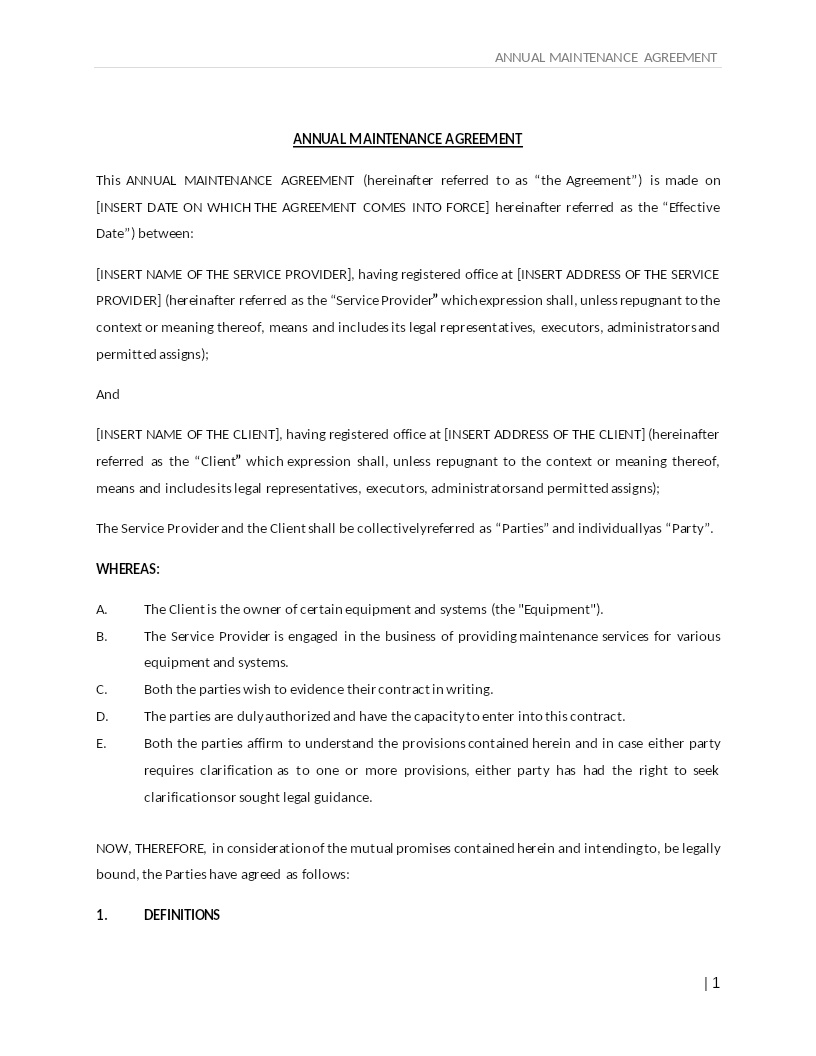
ANNUAL MAINTENANCE AGREEMENT
How does it work?
1. Choose this template
Start by clicking on "Fill out the template"
2. Complete the document
Answer a few questions and your document is created automatically.
3. Save - Print
Your document is ready! You will receive it in Word and PDF formats. You will be able to modify it.
Ensuring Reliable, Consistent, and Long-Term Equipment Performance
When equipment, systems, or facilities must operate efficiently throughout the year, organizations rely on a structured agreement that governs ongoing service and support. An Annual Maintenance Agreement provides that framework. It defines what maintenance services will be performed, outlines responsibilities, and ensures both parties understand how issues will be handled during the service period.
Putting an Annual Maintenance Agreement in place promotes reliability, reduces operational disruptions, and helps organizations plan ahead with confidence. It ensures that essential assets receive regular care and that any unexpected issues are managed promptly and professionally.
Where Annual Maintenance Agreements Are Commonly Used
Annual Maintenance Agreements are standard across many industries that depend on routine inspection, servicing, and upkeep, including:
- HVAC, electrical, and plumbing systems
- IT infrastructure, servers, and security systems
- Manufacturing equipment and production machinery
- Medical devices and specialized technical equipment
- Elevators, lifts, and building safety systems
- Facility management, property care, and office maintenance
- Commercial appliances and food-service equipment
Any time the performance or safety of equipment must be maintained throughout the year, an Annual Maintenance Agreement provides clear expectations and structured support.
Different Types of Maintenance Agreements You May Encounter
- Preventive Maintenance Agreements: Focus on routine inspections, cleaning, tuning, and adjustments to avoid breakdowns and extend asset lifespan.
- Corrective or Repair-Based Agreements: Provide repair services when issues arise, covering labor and sometimes parts, depending on the contract.
- Comprehensive Maintenance Agreements: Offer a full-service package including preventive care, repairs, emergency support, and priority response.
- Emergency Maintenance Agreements: Ensure fast response times and priority handling for urgent breakdowns or system failures.
- Performance-Based Agreements: Tie service commitments to measurable performance standards, ensuring consistent operational output.
When Legal or Professional Guidance Becomes Helpful
Most maintenance contracts can be drafted with internal guidance, but professional support becomes valuable when:
- Equipment is highly technical, regulated, or mission-critical
- The agreement covers multiple locations or jurisdictions
- Services involve hazardous operations requiring OSHA compliance
- The contract includes warranties, indemnities, or complex liability limitations
- High-value assets require detailed risk allocation
- Emergency response times or uptime guarantees affect business continuity
- The agreement involves third-party vendors or subcontractors
Legal review ensures compliance with U.S. commercial, safety, and industry standards while protecting both parties from disputes.
How to Work with This Template
- Identify all equipment and systems covered under the Annual Maintenance Agreement
- Specify the maintenance schedule, service levels, and response times
- Clarify what services are included and what services are billable separately
- Detail pricing, annual fees, renewal terms, and payment schedules
- Define liability limitations, warranties, and insurance requirements
- Outline emergency procedures and escalation channels
- Review compliance with safety regulations and applicable state laws
- Ensure both parties understand their roles, access responsibilities, and communication expectations
This structure aligns with widely recognized maintenance standards across the United States.
Frequently Asked Questions
Q1. Why is an Annual Maintenance Agreement important for U.S. businesses?
An Annual Maintenance Agreement ensures equipment receives regular servicing, reducing the likelihood of breakdowns and costly repairs. It provides predictable maintenance expenses and establishes clear expectations for both parties. By setting structured service schedules, organizations prevent downtime and protect high-value assets. Consistent maintenance improves safety, reliability, and operational efficiency.
Q2. What types of equipment are typically covered under an Annual Maintenance Agreement?
Annual Maintenance Agreements can cover HVAC units, IT systems, medical devices, machinery, facility infrastructure, commercial appliances, and more. The agreement clearly lists all included assets to avoid ambiguity. Coverage depends on the organization’s needs and the service provider’s expertise. Defining the scope ensures clarity in service expectations and maintenance plans.
Q3. How does an Annual Maintenance Agreement help reduce unexpected repair costs?
The agreement often includes preventive maintenance and may cover certain repairs, which helps avoid surprise expenses. Regular servicing reduces the chances of major failures, saving money in the long term. Some Annual Maintenance Agreements cap repair costs or include flat-rate repair options. This gives organizations better financial control and predictable budgeting.
Q4. Are emergency services included in an Annual Maintenance Agreement?
Many Annual Maintenance Agreements include priority access to emergency repairs with guaranteed response times. This ensures urgent issues are resolved quickly without long wait times. The contract outlines what qualifies as an emergency and whether additional charges apply. Fast response minimizes disruptions and protects critical operations.
Q5. Can an Annual Maintenance Agreement improve the lifespan of equipment?
Yes. Routine preventive maintenance helps equipment operate efficiently and reduces wear and tear. Technicians can identify issues early, preventing costly damage. Organizations benefit from improved performance and extended equipment life. This also reduces long-term replacement costs and operational risk.
Q6. What happens if equipment covered under the AMA fails repeatedly?
Most agreements include escalation procedures for persistent issues, such as in-depth diagnostics or specialized repairs. Service providers may review whether parts need replacement or whether operational conditions are affecting performance. Documentation under the AMA helps track recurring problems. This ensures accountability and proactive solutions.
Q7. Are parts included in the maintenance agreement?
Coverage varies depending on the type of AMA. Some agreements include essential parts, while others charge separately for replacements. The policy outlines which parts are covered and which require additional payment. Clear terms help avoid billing disputes and ensure transparency.
Q8. Can the agreement be customized based on business needs?
Yes. AMAs can be tailored to include specific services, extended response times, industry-required inspections, or additional equipment. Customization ensures the agreement aligns with operational demands and risk levels. Service providers and clients can negotiate add-ons or exclusions. This flexibility improves value and service relevance.