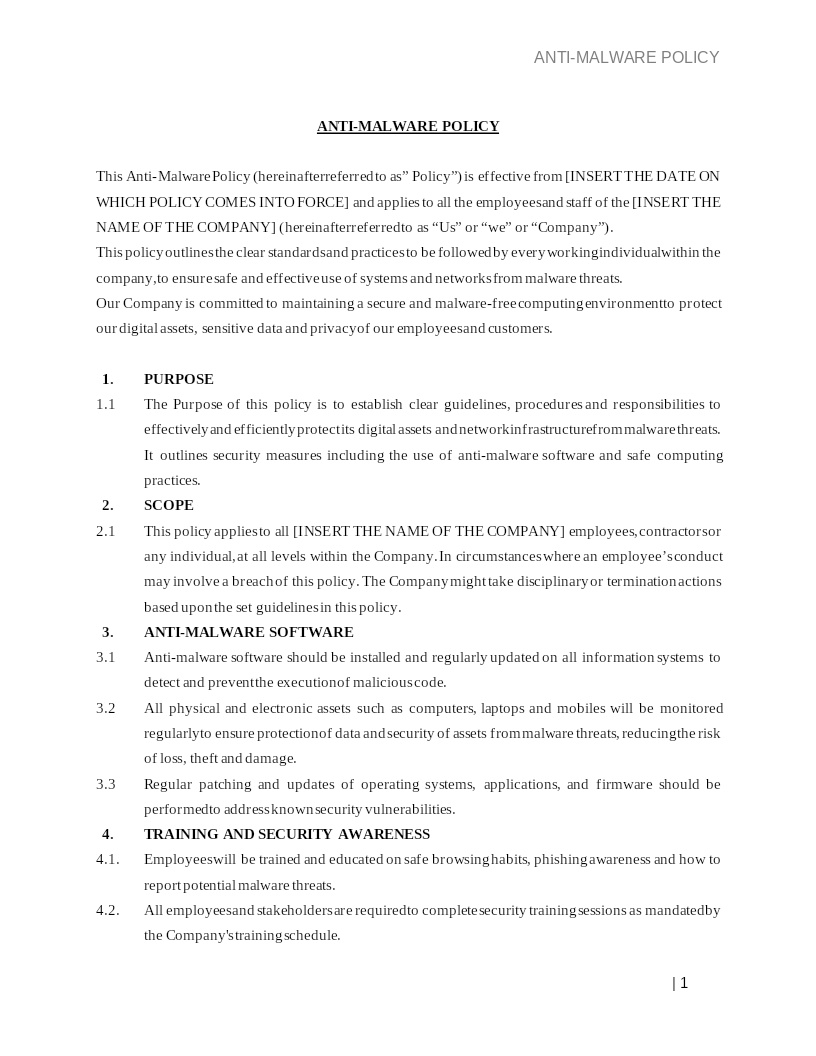
ANTI MALWARE POLICY
How does it work?
1. Choose this template
Start by clicking on "Fill out the template"
2. Complete the document
Answer a few questions and your document is created automatically.
3. Save - Print
Your document is ready! You will receive it in Word and PDF formats. You will be able to modify it.
Strengthening Cybersecurity and Safeguarding Digital Assets Through an Anti-Malware Policy
An Anti-Malware Policy is a formal organizational directive that establishes the standards, responsibilities, and technical controls necessary to prevent, detect, and mitigate malware threats within the organization’s information-technology environment. Developed in accordance with U.S. cybersecurity regulations and recognized industry frameworks, including the National Institute of Standards and Technology (NIST) Cybersecurity Framework, NIST Special Publication 800-83 governing malware incident handling, the Federal Trade Commission’s data-security enforcement guidelines, and applicable state-level data-breach notification laws, this policy outlines the protocols employees must follow to safeguard company data, systems, and network infrastructure from malicious software. It defines malware risks, acceptable use rules, software-installation procedures, system monitoring requirements, and the responsibilities of IT personnel in responding to malware incidents. By setting these standards, the organization reduces cybersecurity exposure, maintains compliance with regulatory obligations, and protects confidential, proprietary, and personal information.
A comprehensive Anti-Malware Policy describes the types of malwares such as viruses, ransomware, spyware, trojans, worms, rootkits, and phishing-based threats and the methods by which threats may infiltrate organizational networks, including email attachments, unsafe downloads, removable media, compromised websites, or unauthorized installations. The policy mandates the installation and maintenance of approved anti-malware software on all company-owned and authorized personal devices, establishes requirements for automatic updates, routine scanning, and real-time protection, and outlines restrictions on unverified applications, third-party plugins, and external devices. It further details user responsibilities, including adherence to secure browsing practices, avoidance of suspicious links or attachments, and the immediate reporting of unusual system behavior. Additionally, the policy defines the process for malware detection, isolation, triage, remediation, and documentation, ensuring that incidents are handled promptly, consistently, and in compliance with applicable laws and internal controls. Implementing this policy enhances the organization’s cyber defense posture and supports business continuity.
Where Anti-Malware Policies Are Commonly Used
Anti-Malware Policies are critical in sectors where data security and system availability are essential, including:
- Technology companies, SaaS providers, and cloud-based service organizations
- Healthcare providers subject to HIPAA cybersecurity requirements
- Financial institutions governed by GLBA and related security mandates
- Government contractors and public-sector entities bound by federal security standards
- Educational institutions managing sensitive student and faculty information
- Retail, e-commerce, and hospitality businesses handling payment-card data
- Manufacturing and logistics companies using automated or connected industrial systems
- Nonprofits managing donor databases and confidential program data
Any organization with digital infrastructure benefits from a documented Anti-Malware Policy.
Different Types of Anti-Malware Policies You May Encounter
1. Endpoint Protection Policies: Cover anti-malware installation and monitoring on workstations and mobile devices.
2. Email and Phishing-Response Policies: Regulate safe email use and phishing-prevention procedures.
3. Removable Media and USB Security Policies: Address restrictions on external storage devices to prevent malware infiltration.
4. Network Security and Monitoring Policies: Focus on threat detection, firewalls, and intrusion-prevention and detection systems.
5. Incident Response and Malware-Remediation Policies: Provide protocols for identifying, isolating, and eliminating malware.
When Legal Guidance Becomes Helpful
Legal counsel is recommended when:
- Malware incidents may trigger mandatory state or federal breach-notification requirements
- Regulated data is compromised, such as PHI under HIPAA or financial data under GLBA
- Vendor contracts require cybersecurity controls or breach liability terms
- Investigations involve employee misconduct or unauthorized system access
- Policies intersect with employee-privacy rules, monitoring laws, or union agreements
- Insurance claims (e.g., cyber liability policies) require documented remediation steps
- The organization handles government-classified or sensitive information with federal standards
Legal review ensures that the Anti-Malware Policy complies with U.S. cybersecurity and privacy laws and supports defensible incident-response practices.
How to Work with This Template
- Define malware threats and outline acceptable behaviors that reduce risk
- Require installation of organization-approved anti-malware software
- Establish rules for system updates, scanning frequency, and patch management
- Clarify restrictions on unauthorized applications, downloads, and external devices
- Define the obligations of employees to report suspicious activity
- Establish IT protocols for malware triage, containment, and remediation
- Document incident-reporting timelines and escalation pathways
- Require training on phishing awareness, safe browsing, and cybersecurity hygiene
- Maintain logs, audit trails, and compliance documentation
- Update the policy periodically to reflect emerging threats and regulatory changes
This template reflects cybersecurity best practices and supports regulatory compliance across U.S. industries.
Frequently Asked Questions
Q1. What is an Anti-Malware Policy, and why is it important?
An Anti-Malware Policy outlines rules and controls to prevent malicious software from compromising organizational systems. It is important because it protects data, reduces cybersecurity risk, and ensures compliance with U.S. regulations and industry standards.
Q2. Does the policy apply to personal devices used for work?
Yes. Any personal device accessing company systems or data must comply with anti-malware requirements and security controls.
Q3. What types of malwares does the policy address?
Viruses, ransomware, spyware, worms, trojans, adware, phishing-based threats, and any malicious code capable of damaging systems or stealing information.
Q4. Does the policy require specific security software?
The organization typically mandates approved anti-malware tools and prohibits unauthorized software installations.
Q5. What should employees do if they suspect malware?
Immediately stop using the device, disconnect from the network if safe to do so, and report the issue to IT or security personnel for investigation.
Q6. Does the policy address phishing attempts?
Yes. Users receive guidelines on recognizing phishing emails, avoiding suspicious links, and reporting fraudulent communications.
Q7. Are regular updates and scans mandatory?
Yes. Anti-malware tools must be updated and run automated scans to ensure ongoing protection.
Q8. Does this policy reduce legal liability after a breach?
It helps. A documented anti-malware policy supports regulatory compliance, reduces negligence claims, and enhances incident-response readiness.
Q9. Can employees face discipline for violating this policy?
Yes. Unauthorized downloads, disabling security tools, or failing to report incidents may result in disciplinary action.
Q10. Should legal counsel review the Anti-Malware Policy?
Absolutely. Legal review ensures the policy complies with cybersecurity, privacy, employment, and breach-notification obligations.