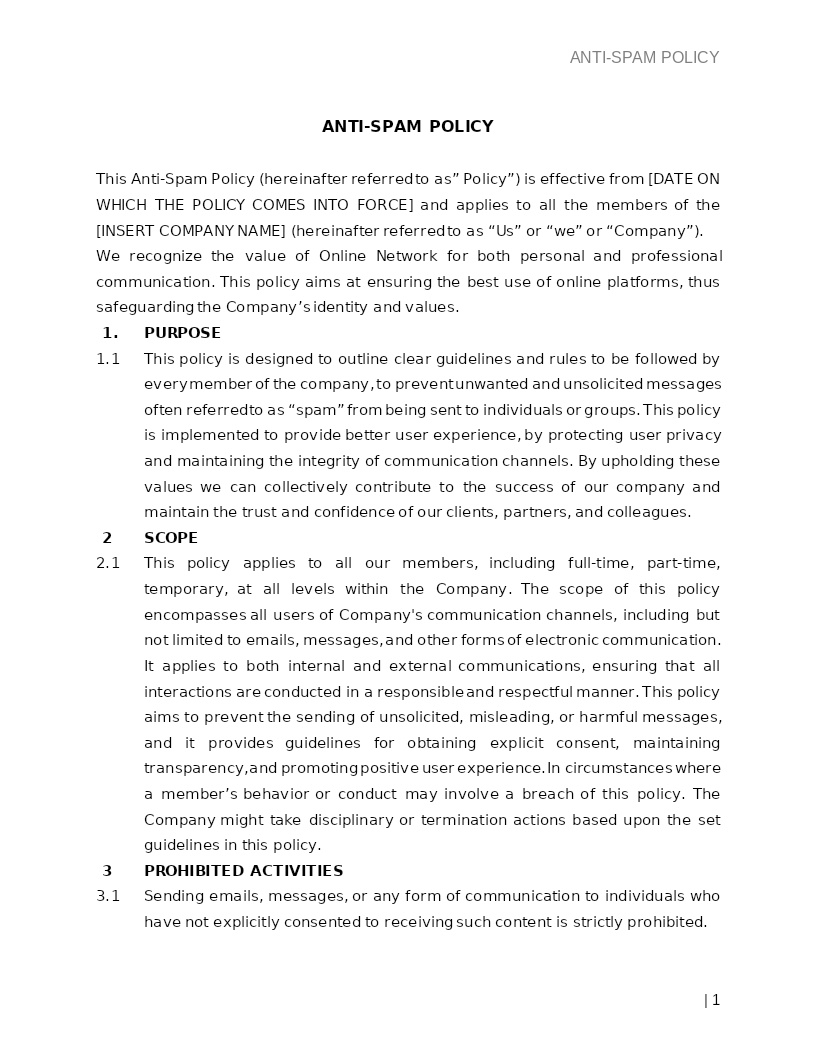
ANTI-SPAM POLICY
How does it work?
1. Choose this template
Start by clicking on "Fill out the template"
2. Complete the document
Answer a few questions and your document is created automatically.
3. Save - Print
Your document is ready! You will receive it in Word and PDF formats. You will be able to modify it.
Understanding Anti-Spam Policies
An Anti-Spam Policy sets clear standards for how an organization sends, manages, and monitors electronic communications, including emails, text messages, and digital marketing campaigns. This policy ensures that all outbound communication complies with U.S. laws such as the CAN-SPAM Act, as well as relevant state regulations and industry best practices. It defines what constitutes spam, outlines acceptable communication practices, and explains how recipients can opt out.
Having a written Anti-Spam Policy helps organizations maintain trust, protect brand reputation, and avoid penalties for unsolicited or deceptive messaging. It establishes internal guidelines so marketing teams, sales teams, and automated systems communicate ethically and lawfully.
Where Anti-Spam Policies Are Commonly Used
Anti-Spam Policies are standard in organizations that send digital communications, including:
• Email marketing, sales outreach, and newsletter campaigns
• Customer support and service updates
• Automated notification systems and transactional emails
• SMS promotional campaigns
• Lead generation and CRM-based outreach
• Online service providers and SaaS platforms
• E-commerce platforms sending promotions and abandoned-cart reminders
Different Types of Anti-Spam Controls You May Encounter
- Permission-Based Messaging: Requires user consent before sending marketing communications.
- Opt-Out and Unsubscribe Management: Ensures recipients can remove themselves from mailing lists easily and permanently.
- Content and Truth-in-Advertising Standards: Mandates accurate subject lines, clear sender identification, and non-deceptive messaging.
- Contact List Quality Controls: Prevents the use of purchased, scraped, or unverified email lists.
- Monitoring and Auditing Measures: Tracks complaint rates, bounce rates, and compliance metrics.
When Legal Guidance Becomes Helpful
Legal review can be useful when:
• The organization sends high-volume marketing emails or SMS campaigns
• Communications target users in multiple U.S. states or internationally
• The business uses third-party marketing tools or outsourced agencies
• There are concerns about consent, opt-in/opt-out rules, or data privacy
• You want to align your policy with GDPR, CASL, or global anti-spam laws
• A consumer complaint or regulatory inquiry has been filed
How to Work with This Template
• Define what qualifies as spam for your organization
• Identify legal requirements under the CAN-SPAM Act and state regulations
• Establish rules for consent, content accuracy, and sender identification
• Explain opt-out processes and timelines for honoring removal requests
• Set internal review procedures for marketing content
• Train employees and contractors who send electronic communications
• Select the governing U.S. state law
• Sign or adopt the policy internally as part of compliance documentation
Frequently Asked Questions
Q1. What is an Anti-Spam Policy and why does my organization need one?
An Anti-Spam Policy outlines rules for sending responsible and legally compliant electronic communications. It is vital because it protects your organization from legal penalties, reduces complaint rates, and ensures that customers receive messages they want and nothing more.
Q2. Does the CAN-SPAM Act apply to all businesses in the U.S.?
Yes. The CAN-SPAM Act applies to any business sending commercial email, regardless of size. Even a single promotional email must comply with rules on consent, sender identification, opt-outs, and truthful content.
Q3. What types of messages are considered spam under U.S. law?
Spam includes unsolicited promotional emails or texts, misleading subject lines, deceptive content, bulk messaging to purchased lists, and any communication sent without proper consent. Regular transactional updates, such as receipts or account notices, generally do not qualify as spam.
Q4. How do opt-out requirements work?
Recipients must be able to unsubscribe easily, and requests must be honored within 10 business days, as required by the CAN-SPAM Act. The policy ensures opt-out links function correctly and that addresses are permanently removed from marketing lists.
Q5. Can my business use purchased email lists?
Using purchased or scraped email lists is risky and often leads to spam complaints. The Anti-Spam Policy encourages permission-based strategies to ensure recipients genuinely want to receive your communications.
Q6. Does this policy apply to SMS or text message marketing?
Yes. Although SMS is regulated under different laws (like the Telephone Consumer Protection Act), a comprehensive Anti-Spam Policy includes rules for all forms of electronic marketing, including texts and automated messaging.
Q7. What are the penalties for violating anti-spam laws in the U.S.?
Penalties can include significant fines, investigations, and damage to your brand reputation. Each non-compliant email can trigger monetary penalties, making proactive compliance essential.
Q8. How can we reduce the likelihood of messages being marked as spam?
Following best practices such as accurate subject lines, clean contact lists, authentication protocols, and avoiding excessive frequency—improves deliverability and reduces spam flagging.
Q9. Are employees required to follow this policy?
Yes. Anyone sending electronic communications on behalf of the organization must adhere to the policy. Training ensures employees understand compliance rules and responsible messaging practices.
Q10. Can this policy be applied to international customers?
Yes, but additional laws may apply. If your messages reach customers in the EU or Canada, you must also comply with GDPR and CASL. The Anti-Spam Policy can be adapted to include international compliance requirements.