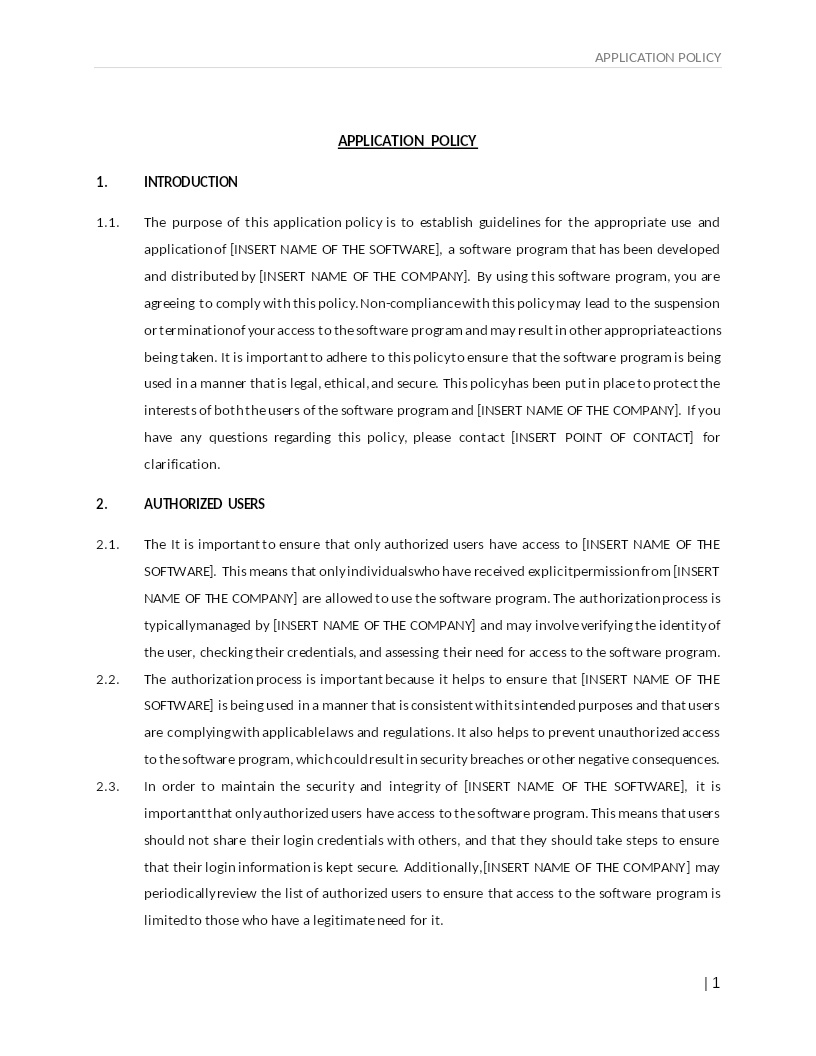
APPLICATION POLICY
How does it work?
1. Choose this template
Start by clicking on "Fill out the template"
2. Complete the document
Answer a few questions and your document is created automatically.
3. Save - Print
Your document is ready! You will receive it in Word and PDF formats. You will be able to modify it.
Why an Application Policy Matters
An Application Policy provides clear rules and expectations for how job applicants, vendors, contractors, program participants, or users may submit applications to your organization. It outlines the standards for eligibility, documentation, timelines, communication, and review procedures. Having a clear Application Policy ensures that every application is processed fairly, consistently, and in compliance with U.S. employment and business regulations.
A well-defined Application Policy also protects the organization by preventing misunderstandings, reducing administrative disputes, and ensuring accurate record-keeping throughout the application process.
Where Application Policies Are Commonly Used
Application Policies are used in a wide range of organizational and commercial settings, including:
• Job applications and recruitment processes
• Vendor or contractor onboarding
• Membership or program enrollment
• Loan, grant, or scholarship applications
• Housing or rental applications
• Internal employee transfers or promotions
• Volunteer and internship programs
• Service or software access applications
Any environment that requires individuals or businesses to apply for access, approval, or participation benefits from having a written Application Policy.
Different Types of Application Policies You May Encounter
- Employment Application Policy: Sets rules for job applications, background checks, required documents, and equal-opportunity compliance.
- Vendor/Contractor Application Policy: Covers criteria for onboarding suppliers or service providers.
- Program or Membership Application Policy: Used by schools, nonprofits, clubs, and subscription-based organizations.
- Grant or Scholarship Application Policy: Outlines submission, eligibility, deadlines, and evaluation criteria.
- Service or Platform Application Policy: Used by tech companies for software access, beta testing, or platform registration.
When Legal Guidance Becomes Helpful
Legal review is useful when:
• The policy deals with personal data governed by privacy laws
• The process involves credit checks or background checks
• The organization must comply with EEOC, FCRA, ADA, or state hiring laws
• Applications involve minors or vulnerable groups
• The business is subject to industry-specific regulations (healthcare, finance, real estate)
• The application process includes waivers, disclaimers, or eligibility restrictions
How to Work with This Template
• Identify the type of applications your organization receives
• Define eligibility, required documents, and evaluation criteria
• Set deadlines, review timelines, and communication expectations
• Include nondiscrimination language and compliance standards
• Establish rules for incomplete, late, or fraudulent applications
• Choose the governing state law
• Review internally (legal review is optional)
• Publish it digitally or in hard copy for applicants
• Update it periodically to reflect organizational changes
Frequently Asked Questions
Q1. What is an Application Policy and why is it important?
An Application Policy outlines how applications are submitted, reviewed, and processed. It is important because it ensures fairness, transparency, and compliance with U.S. employment and privacy laws while giving applicants clear expectations.
Q2. Does an Application Policy apply to all applicants equally?
Yes. A properly written policy ensures consistent treatment of every applicant, helping organizations avoid discrimination claims and follow EEOC and state-specific standards.
Q3. Can organizations request personal information in applications?
Yes, but only information that is legally allowed and necessary. Sensitive data such as medical details, disability status, or protected characteristics must be handled carefully to comply with ADA, HIPAA, and privacy laws.
Q4. What happens if an applicant submits incomplete or inaccurate information?
The policy typically gives the organization the right to reject incomplete, fraudulent, or unverifiable applications. Clear rules help prevent disputes about application denials.
Q5. How long should organizations keep applicant records?
U.S. federal guidelines often recommend keeping employment-related application records for at least one year, or longer in regulated industries. The policy may specify retention timelines.
Q6. Does an Application Policy guarantee acceptance?
No. The policy clarifies that submitting an application does not guarantee approval, hiring, or enrollment. This protects the organization from misunderstandings or liability.
Q7. Can an applicant appeal or request reconsideration?
Some policies provide an appeals or re-application process. Others do not. Including this section helps minimize frustration and clarifies applicant rights.
Q8. Are digital or online applications legally valid?
Yes. Under the U.S. ESIGN Act, digital applications and electronic signatures are fully enforceable, provided both parties consent to electronic communication.
Q9. Can the organization update its Application Policy at any time?
Yes. Most policies include a clause indicating the organization may revise the policy, especially if laws, hiring needs, or internal procedures change.
Q10. Does this policy help with compliance in regulated industries?
Absolutely. Application Policies support compliance with laws governing hiring, consumer protection, licensing, financial services, healthcare, and more by providing structured, documented procedures for applicant evaluation.