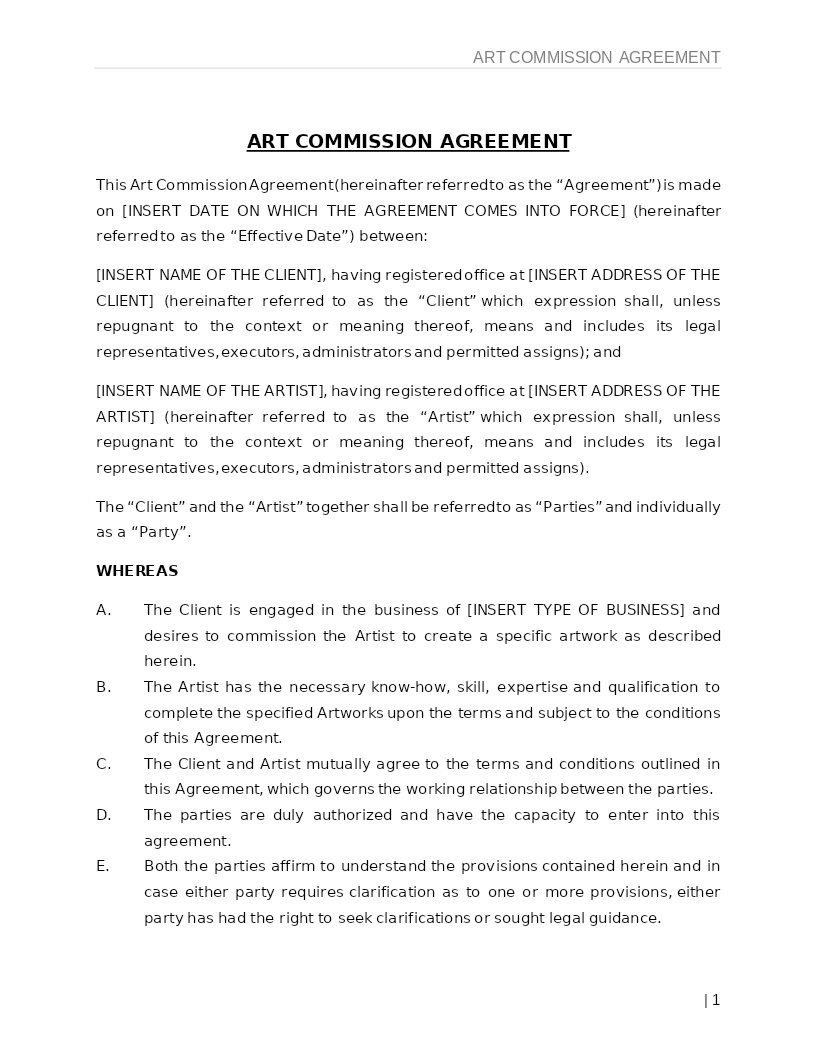
ART COMMISSION AGREEMENT
How does it work?
1. Choose this template
Start by clicking on "Fill out the template"
2. Complete the document
Answer a few questions and your document is created automatically.
3. Save - Print
Your document is ready! You will receive it in Word and PDF formats. You will be able to modify it.
Understanding Art Commission Agreements
An Art Commission Agreement is a legally binding contract between an artist and a client outlining the terms under which a custom artwork will be created. It clearly defines the scope of the artwork, creative instructions, timelines, payment terms, revision rights, delivery method, intellectual property ownership, and usage rights. This agreement protects both parties by ensuring expectations are documented before the creative process begins.
In the United States, Art Commission Agreements operate under state contract laws, federal copyright laws, consumer protection regulations, and industry-specific standards for creative services. Because commissioned art involves unique creative work, it is essential to establish clear terms to avoid misunderstandings about ownership, rights, and final deliverables.
Where Art Commission Agreements Are Commonly Used
Art Commission Agreements are widely used across many creative and commercial environments, including:
- Custom paintings, digital illustrations, or portraits
- Concept art, character design, or animation for games and media
- Book cover design, album art, and editorial illustration
- Large-scale murals, installations, or public art projects
- Commissioned photography and digital artwork
- Branding, product design, or marketing artwork
- Corporate artwork for offices or commercial spaces
Whether the project is personal, commercial, or digital, a written Art Commission Agreement ensures clarity and fairness.
Different Types of Art Commissions You May Encounter
- Custom Fine Art Commissions: Personalized artwork such as portraits, oil paintings, or canvas pieces.
- Digital Art Commissions: Character designs, illustrations, animations, and NFT-based art.
- Commercial Art Commissions: Brand-focused artwork for merchandise, logos, packaging, or advertising campaigns.
- Public Art or Mural Commissions: Large-scale or site-specific projects requiring permits, installation planning, and public display rights.
- Photography or Visual Media Commissions: Commissioned photography, retouching, or digital editing services.
When Legal Guidance Becomes Helpful
Legal review is beneficial when:
- The artwork involves commercial usage, licensing, merchandising, or copyright transfer
- The project includes multiple stages, complex revisions, or large budgets
- A mural or public installation requires permits or insurance
- The client wants full IP ownership instead of a license
- The commission involves minors, likeness rights, or sensitive content
- There is uncertainty about payment schedules, kill fees, or cancellation terms
- The work will be used in advertising, media, or product lines
Legal guidance helps ensure the agreement complies with U.S. contract and copyright laws while protecting creative rights.
How to Work with This Template
- Identify the artist and the commissioning client
- Describe the artwork, style, materials, and project requirements
- Outline payment terms, deposits, installment schedules, and final fees
- Define revision rights, project milestones, and delivery expectations
- Specify copyright ownership—whether retained by the artist or assigned
- Include licensing terms for personal or commercial use
- Choose the governing U.S. state law
- Add clauses for cancellation, refunds, delays, or force majeure
- Sign electronically or in hard copy following U.S. contract standards
This template follows widely recognized U.S. creative industry practices and is compatible with common digital signature platforms.
Frequently Asked Questions
Q1. What is an Art Commission Agreement and why is it important?
An Art Commission Agreement outlines the expectations, timelines, and rights involved in creating custom artwork. It is important because it protects both the artist and client, ensuring clarity on payment, revisions, usage rights, and final deliverables.
Q2. Does commissioning art give the client copyright ownership?
Not automatically. Under U.S. copyright law, the artist typically owns the copyright unless the agreement specifically transfers it. Clients usually receive a license to use the artwork for personal or commercial purposes, depending on the contract.
Q3. What should be included in an Art Commission Agreement?
A strong agreement includes project description, creative direction, artwork specifications, revisions, payment terms, licensing rights, delivery details, and cancellation policies. These elements prevent misunderstandings during the creative process.
Q4. Can a client request revisions to the artwork?
Yes. Most agreements include a set number of revisions. Additional revisions may require extra fees. Clear revision terms ensure that expectations are fair and manageable for both parties.
Q5. Can commissioned artwork be used for commercial purposes?
Only if the agreement grants commercial usage rights. Without a commercial license, the artwork may only be used for personal display. Commercial rights allow use in advertising, merchandise, branding, or resale products.
Q6. How are payments handled for art commissions?
Payments often include a non-refundable deposit, followed by installment payments or a final balance upon completion. Payment terms should be clearly outlined to avoid delays or cancellations.
Q7. What happens if either party cancels the commission?
Cancellation terms depend on the agreement. Many contracts include a kill fee or partial refund policy. The artist may retain rights to unfinished work or completed drafts.
Q8. Are electronic signatures valid for Art Commission Agreements?
Yes. Under the U.S. ESIGN Act, electronic signatures are legally enforceable. Most artists and clients use digital signing platforms for convenience and security.
Q9. Can the artist display commissioned work in their portfolio?
Often, yes—unless the agreement restricts it. Artists usually retain the right to showcase commissioned pieces in their portfolio, unless the client requests confidentiality.
Q10. Is an Art Commission Agreement suitable for digital artists and freelancers?
Absolutely. Whether creating traditional or digital artwork, freelancers benefit from clear written terms to protect their creative rights, ensure payment, and maintain professional standards.