ASSET MANAGEMENT POLICY
How does it work?
1. Choose this template
Start by clicking on "Fill out the template"
2. Complete the document
Answer a few questions and your document is created automatically.
3. Save - Print
Your document is ready! You will receive it in Word and PDF formats. You will be able to modify it.
Understanding the Purpose and Use of an Asset Management Policy
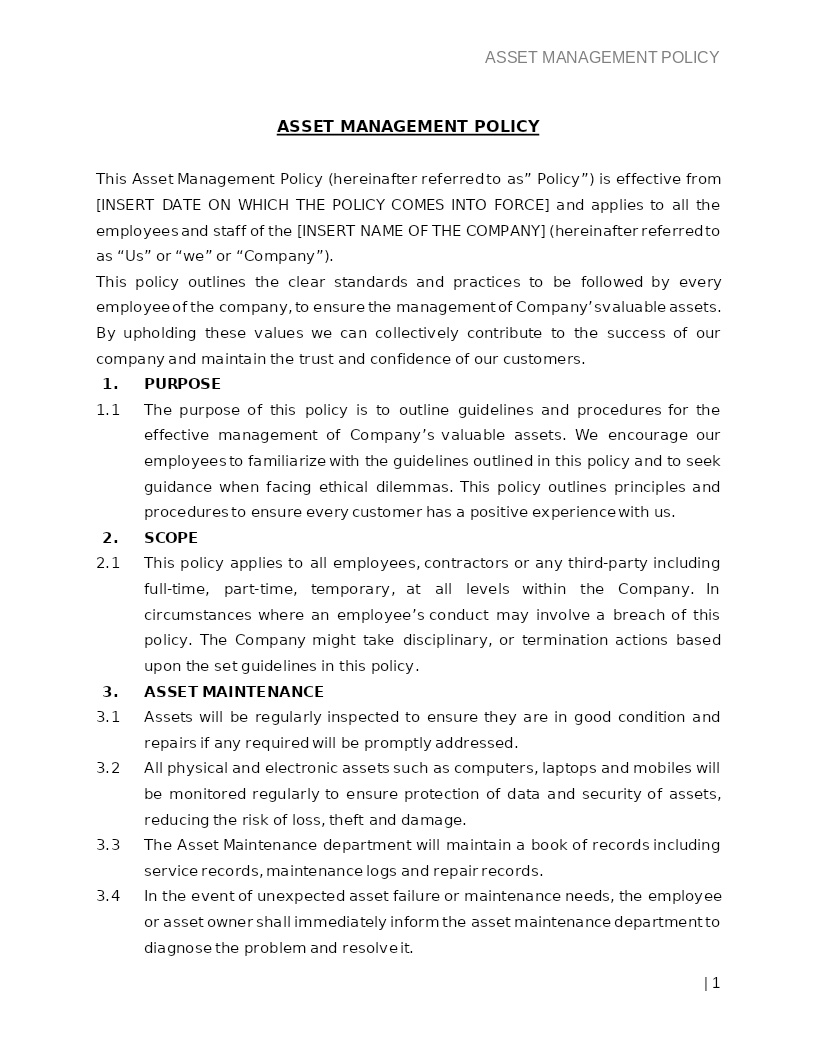
Organizations rely on a wide range of assets, physical, digital, technological, and financial, to operate effectively. An Asset Management Policy provides a structured framework for how these assets are acquired, used, maintained, tracked, safeguarded, and eventually disposed of. It ensures that every asset is handled responsibly throughout its lifecycle, maximizing value while protecting organizational resources. By establishing clear standards for asset control, the policy enhances accountability, minimizes losses, and supports strategic planning across all levels of the organization.
Where Asset Management Policies Are Commonly Used
Asset management guidelines are widely implemented across U.S. industries, including:
- Corporations managing IT hardware, software, and digital infrastructure
- Government agencies responsible for public property, vehicles, and equipment
- Healthcare and financial institutions with strict compliance requirements
- Manufacturing facilities monitoring machinery and high-value tools
- Professional services firms managing client data, financial assets, or intellectual property
- Educational institutions overseeing campus assets, inventory, and technology
Any organization that relies on assets to function efficiently can benefit from a robust asset management policy.
Different Types of Asset Management Practices You May Encounter
- Physical Asset Management: Focuses on equipment, machinery, vehicles, facilities, and hardware.
- Digital and IT Asset Management: Covers software licenses, data, digital tools, servers, and cybersecurity controls.
- Financial Asset Management: Tracks investments, accounts, and financial instruments used within the organization.
- Inventory and Consumables Management: Monitors supplies, stock, and regularly used operational materials.
- Lifecycle Management: Ensures assets are acquired, maintained, updated, and decommissioned using standardized processes.
When Legal Guidance Becomes Helpful
While many asset management practices can be implemented internally, legal and in-house counsel involvement becomes important when:
- Assets are governed by federal or state regulations (e.g., HIPAA, SOX, data privacy laws).
- Software licenses, third-party agreements, or vendor contracts carry strict obligations.
- Policies involve employee monitoring, data handling, or cybersecurity protocols.
- Asset disposal includes sensitive data, hazardous materials, or regulated equipment.
- Cross-border operations require compliance with international asset-handling rules.
- High-value or proprietary assets are vulnerable to misuse, theft, or intellectual property concerns.
Legal review helps ensure the policy remains compliant, enforceable, and aligned with organizational risk controls.
How to Work with This Template
- List all asset categories relevant to your organization and define their lifecycle stages.
- Assign responsibilities for tracking, maintenance, security, and reporting.
- Establish procedures for acquisition, audits, transfer, and disposal of assets.
- Select a governing state law and ensure alignment with regulatory requirements.
- Review the policy internally or with legal counsel for accuracy (optional).
- Communicate the policy across departments to ensure clear understanding and adoption.
This policy follows asset management standards widely recognized across the United States and supports operational efficiency and financial accountability.
Frequently Asked Questions
Q1. Why is an Asset Management Policy important for U.S. businesses?
An Asset Management Policy is essential because it provides a structured approach for tracking, using, and protecting organizational assets. It reduces financial losses by ensuring assets are properly maintained, documented, and controlled. The policy also supports operational efficiency by maximizing asset performance and minimizing downtime. In addition, it strengthens accountability by clearly defining roles and responsibilities.
Q2. How does this policy help maximize asset value?
By establishing guidelines for proper use, maintenance, and lifecycle management, the policy ensures that assets operate at optimal performance for as long as possible. It minimizes damage, misuse, and premature replacement costs. Regular monitoring allows organizations to identify underused or overused assets and make strategic decisions. This helps the organization extract maximum value from each investment.
Q3. Does this policy support regulatory and legal compliance?
Yes. Many industries require proper handling, tracking, and disposal of certain assets, especially those involving data, technology, or hazardous materials. An Asset Management Policy ensures compliance with federal and state regulations, reducing the risk of violations or penalties. It also establishes documentation practices that support audits and regulatory reviews.
Q4. How does this policy improve financial planning and budgeting?
The policy provides accurate data on asset conditions, depreciation, lifecycle costs, and future replacement needs. This allows leadership to forecast expenditures more effectively and avoid unexpected financial strain. With clear asset visibility, organizations can optimize capital allocation and eliminate unnecessary purchases. Better oversight supports stronger financial decision-making across departments.
Q5. Can this policy help prevent loss, theft, or misuse?
Absolutely. By implementing control measures such as tracking systems, usage logs, and regular audits, the policy reduces the risk of asset theft or mismanagement. Clear accountability ensures that employees understand their responsibilities regarding asset handling. This structured oversight protects the organization’s investments and minimizes avoidable losses.
Q6. Does this policy enhance operational efficiency?
Yes. When assets are properly maintained and readily available, employees can perform their tasks without interruption. The policy ensures assets are tracked, scheduled for maintenance, and kept in good working condition, reducing downtime. It standardizes processes across departments, improving workflow and boosting productivity throughout the organization.
Q7. How does this policy support long-term sustainability?
By promoting responsible asset usage, maintenance, and disposal practices, the policy encourages resource conservation and reduces waste. It helps organizations plan for future asset needs while optimizing current inventory. Sustainable asset management contributes to regulatory compliance, cost savings, and environmental responsibility. This positions the organization for long-term, stable growth.
Q8. Is this policy beneficial for small and mid-sized businesses?
Definitely. Smaller organizations often struggle with asset tracking and unplanned replacement costs. A formal policy provides structure, minimizes financial waste, and ensures resources are used effectively. It strengthens internal controls and supports scalability as the organization grows. Even with limited staff, it helps maintain clarity and consistency across operations.