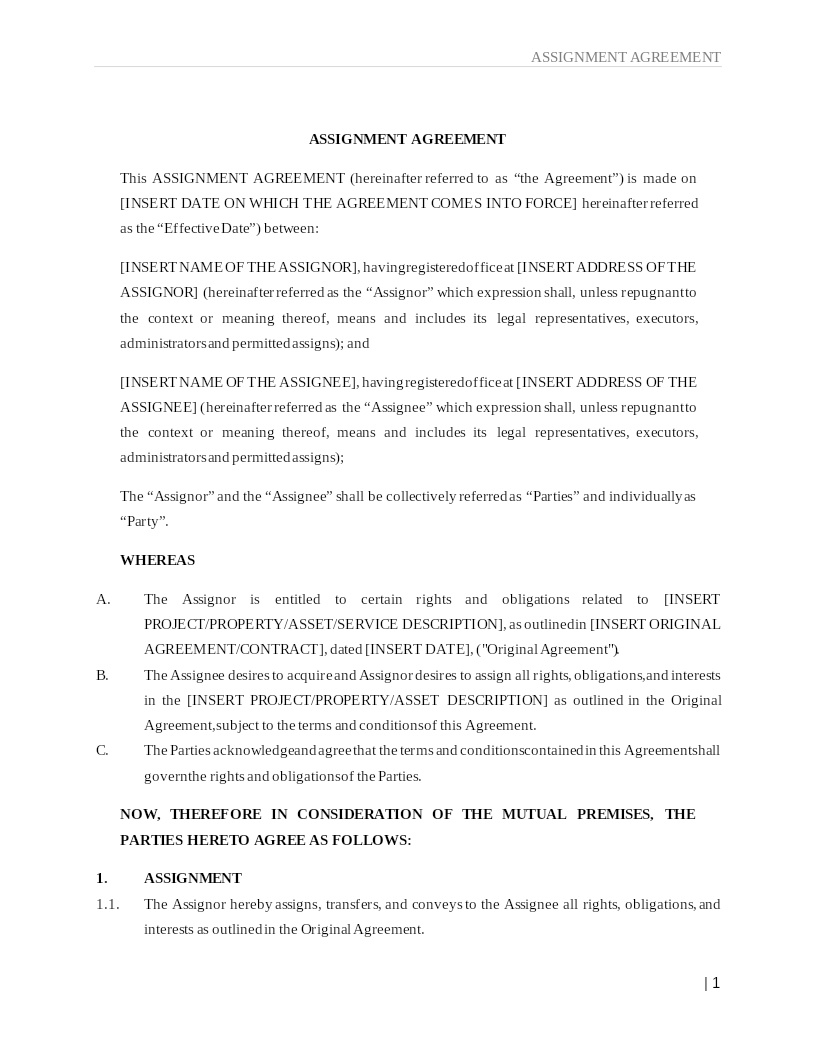
ASSIGNMENT AGREEMENT
How does it work?
1. Choose this template
Start by clicking on "Fill out the template"
2. Complete the document
Answer a few questions and your document is created automatically.
3. Save - Print
Your document is ready! You will receive it in Word and PDF formats. You will be able to modify it.
Understanding Assignment Agreement in U.S.
An Assignment Agreement is a legally binding document used to transfer contractual rights, interests, or obligations from one party (the “Assignor”) to another party (the “Assignee”). This agreement outlines the scope of the transfer, conditions, warranties, and responsibilities of each party. Assignment Agreements are essential in business transactions, intellectual property transfers, contract reassignments, and financial dealings where rights need to be formally reassigned.
By clearly defining the terms of the assignment and ensuring compliance with U.S. laws and existing contractual requirements, this agreement protects all parties involved, reduces the risk of disputes, and maintains the integrity of the original contractual relationship.
Where Assignment Agreements Are Commonly Used
Assignment Agreements are used across numerous industries and business scenarios. They are commonly applied in:
• Business sales, mergers, and acquisitions
• Intellectual property transfers (copyrights, trademarks, patents)
• Lease, loan, and service contract assignments
• Transfer of contractual rights in real estate and financing
• Technology and software licensing arrangements
• Partnership and vendor agreements
• Debt assignment and factoring transactions
• Internal corporate restructuring or asset reallocation
Any situation requiring a formal transfer of rights or obligations can benefit from a well-drafted Assignment Agreement.
Different Types of Assignment Arrangements You May Encounter
- Contractual Assignment: Transfers duties, obligations, or benefits from one contract party to another, subject to contract terms and required consents.
- Intellectual Property Assignment: Transfers ownership of copyrights, trademarks, patents, or creative works, ensuring U.S. IP law compliance.
- Real Estate or Lease Assignment: Allows a tenant or property holder to transfer occupancy or interest to a new party.
- Receivables or Financial Assignment: Transfers the right to collect payments, debts, or financial benefits under a contract.
- Business Asset Assignment: Used in corporate transactions to transfer specific assets, rights, or obligations from seller to buyer.
When Legal Guidance Becomes Helpful
Legal counsel plays an important role in customizing Assignment Agreements because:
• U.S. contract law imposes rules on assignability, consent requirements, and enforceability.
• Some contracts prohibit assignment without prior written approval, legal review ensures compliance.
• Lawyers clarify liability transfers, indemnification clauses, warranties, and representations.
• Multi-state transactions may involve different legal standards or regulatory obligations.
• Intellectual property assignments require precise language to ensure full and valid transfer of rights.
• Legal professionals help avoid disputes by ensuring the agreement is precise, enforceable, and aligned with related contracts.
Consulting with counsel ensures the assignment is legally valid and protects the interests of all parties involved.
How to Work With This Policy Template
• Identify the specific rights, obligations, or assets being assigned.
• Verify whether consent is required under the originating contract.
• Define warranties, liabilities, and responsibilities of both Assignor and Assignee.
• Ensure compliance with U.S. contract, IP, and commercial laws.
• Establish effective dates, payment terms (if any), and documentation procedures.
• Include protections such as indemnification, confidentiality, and limitation-of-liability clauses.
• Review the agreement regularly and keep records of all assignment transactions.
Frequently Asked Questions
Q1. Why is an Assignment Agreement important?
An Assignment Agreement formalizes the transfer of rights or obligations between parties. It eliminates confusion, ensures legal compliance, and protects both sides by clearly outlining the terms of the transfer. This helps prevent misunderstandings or disputes regarding future responsibilities.
Q2. Does an Assignment Agreement need to comply with U.S. laws?
Yes. Assignment Agreements must comply with federal and state contract laws, as well as any industry-specific regulations. Some contracts are legally non-assignable or require written consent. Proper compliance ensures the transfer is enforceable and recognized by law.
Q3. What types of rights can be assigned?
Commonly assigned rights include contractual duties, intellectual property rights, financial receivables, leases, service agreements, and business assets. The agreement specifies what is being transferred to ensure clarity and transparency for all parties.
Q4. Can an Assignment Agreement transfer obligations as well as benefits?
Yes, assignments may include rights, obligations, or both, depending on the terms of the original contract. Some obligations require approval from the other party before the transfer can take effect. Proper documentation ensures the new party fully accepts the duties transferred.
Q5. What happens if the original contract prohibits assignment?
If a contract contains a “no assignment” clause, legal consent is required before transferring rights. Without consent, the assignment may be invalid or unenforceable. Legal review ensures the transfer complies with contract terms and avoids potential disputes.
Q6. How does an Assignment Agreement protect both parties?
It outlines warranties, liabilities, indemnities, and conditions that safeguard both Assignor and Assignee. These protections clarify responsibilities and reduce risks related to performance, legal claims, or financial losses after the assignment.
Q7. Is a written Assignment Agreement necessary for intellectual property transfers?
Yes. U.S. copyright, trademark, and patent laws require written documentation for valid IP transfers. A detailed agreement ensures the full ownership rights are legally reassigned and properly recorded.
Q8. Is an Assignment Agreement useful for small businesses?
Absolutely. Small businesses often transfer service contracts, vendor relationships, leases, or IP rights. A clear Assignment Agreement supports smooth transitions, minimizes legal exposure, and helps maintain consistent business operations.