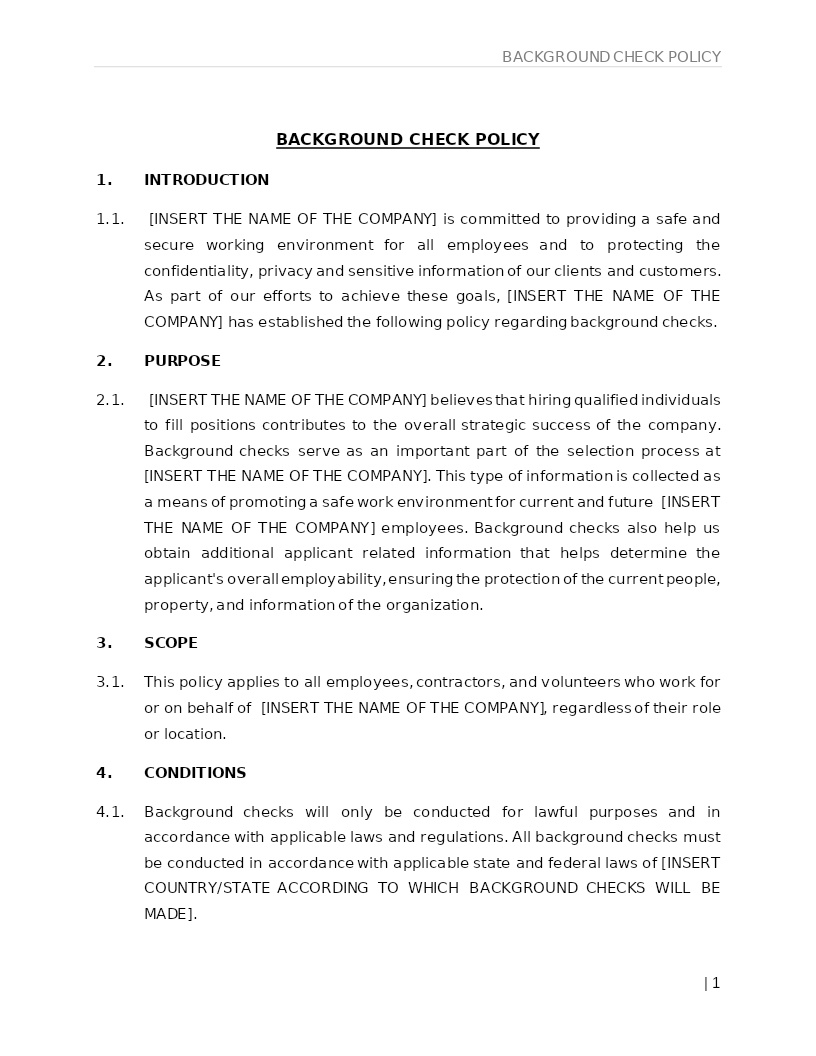
BACKGROUND CHECK POLICY
How does it work?
1. Choose this template
Start by clicking on "Fill out the template"
2. Complete the document
Answer a few questions and your document is created automatically.
3. Save - Print
Your document is ready! You will receive it in Word and PDF formats. You will be able to modify it.
Supporting Safe, Compliant, and Informed Hiring Practices
When an organization evaluates prospective employees, contractors, or volunteers, it becomes important to have a clear framework for how background screenings are conducted. A Background Check Policy provides that structure. It outlines what types of checks may be performed, how information will be used, and what safeguards ensure fairness and compliance with federal and state laws.
Having a Background Check Policy in place builds trust, ensures transparency, and helps organizations make informed hiring decisions that protect their workforce, clients, and reputation.
Where Background Check Policies Are Commonly Used
Background screening requirements are standard across numerous industries and business contexts, including:
- Corporate hiring and executive recruitment
- Healthcare, childcare, and elder-care roles
- Financial institutions, insurance companies, and investment firms
- Schools, universities, and education-related services
- Transportation, logistics, and security-sensitive sectors
- Volunteer programs and nonprofit organizations
- Contractors and independent service providers
Any time an individual will have access to company assets, sensitive information, vulnerable populations, or confidential environments, a structured screening process is essential.
Different Types of Background Checks You May Encounter
- Criminal History Checks: Review past convictions or pending charges to identify potential safety or security risks.
- Employment Verification: Confirm previous job titles, responsibilities, and duration of employment.
- Education Verification: Validate academic credentials, certifications, and specialized training.
- Reference Checks: Assess reliability, professionalism, and behavioral traits through third-party references.
- Identity and Social Security Verification: Ensure the candidate’s identity is authentic and legally verifiable.
- Credit Checks (where permitted): Evaluate financial responsibility for roles involving money-handling or fiduciary duties.
- Driving Records: Required for roles involving company vehicles, transportation, or delivery responsibilities.
When Legal Guidance Becomes Helpful
While many screening procedures can be standardized internally, professional guidance becomes valuable when:
- Your organization operates in multiple states with varying background check laws
- Roles involve regulated industries such as healthcare, finance, security, or transportation
- You must comply with FCRA (Fair Credit Reporting Act) obligations
- You need consent forms, adverse action notices, or disclosure documents
- You are handling sensitive data governed by privacy laws
- The role requires fingerprinting, licensing checks, or federal-level clearances
Legal review ensures your policy follows federal and state regulations, protects candidate rights, and reduces risk of non-compliance.
How to Work with This Template
- Identify which roles require which types of background checks
- Clarify when checks are conducted (pre-employment, ongoing, or role-specific)
- Specify candidate consent and disclosure requirements
- Determine how results will influence hiring decisions
- Ensure compliance with FCRA and applicable state laws
- Establish clear data-handling, storage, and privacy procedures
- Review criteria and restrictions with HR, compliance, and legal teams
This format aligns with widely accepted U.S. employment compliance standards and helps maintain fairness and transparency across the hiring process.
Frequently Asked Questions
Q1. Why is a Background Check Policy important for U.S. employers?
A Background Check Policy ensures consistent, fair, and legally compliant hiring practices across the organization. It helps identify potential risks, verify candidate credibility, and protect workplace safety. It also demonstrates due diligence, reducing exposure to liability and negligent hiring claims. Clear procedures strengthen trust between employers and applicants.
Q2. What types of background checks are typically included in the U.S.?
Background checks may include criminal history reviews, employment and education verification, identity confirmation, reference checks, and credit screenings for financial roles. Some industries may require fingerprinting or licensing checks. Each type of screening helps evaluate a candidate’s reliability, qualifications, and suitability for the role.
Q3. Are employers legally required to get consent before running a background check?
Yes. Under the Fair Credit Reporting Act (FCRA), employers must obtain written consent before conducting most third-party background checks. They must also provide disclosures about how the information will be used. This ensures fairness, protects candidate rights, and prevents unauthorized screening.
Q4. Can a background check affect a hiring decision?
Yes, but decisions must follow consistent criteria outlined in the policy and comply with federal and state laws. Employers must consider the relevance of findings to the job duties, the severity of any offenses, and applicable “ban-the-box” or fair-chance hiring laws. Consistent application prevents discrimination and legal violations.
Q5. How do background checks enhance workplace safety?
Screenings help identify candidates who may pose safety or security risks, especially in positions involving vulnerable populations, financial access, or sensitive information. By vetting individuals thoroughly, employers create a safer environment for employees, clients, and stakeholders. This strengthens organizational trust and risk management.
Q6. Do background checks delay the hiring process?
Background checks typically add only a short processing time, depending on the type of screening and third-party providers. Having a structured policy speeds up the process by standardizing requirements. Clear communication with candidates ensures transparency and helps manage expectations during the hiring timeline.
Q7. Are credit checks allowed for all jobs in the U.S.?
No. Credit checks are restricted in several states and are generally allowed only for roles involving financial responsibility, money-handling, or fiduciary duties. Employers must comply with state-specific laws and provide proper disclosures. The policy helps clarify when a credit check is appropriate or legally permissible.
Q8. How is background check information stored and protected?
Information obtained during screening must be stored securely with strict access controls. Employers must follow privacy regulations and data-retention rules to protect sensitive applicant information. Secure handling prevents breaches, maintains confidentiality, and demonstrates responsible employment practices.