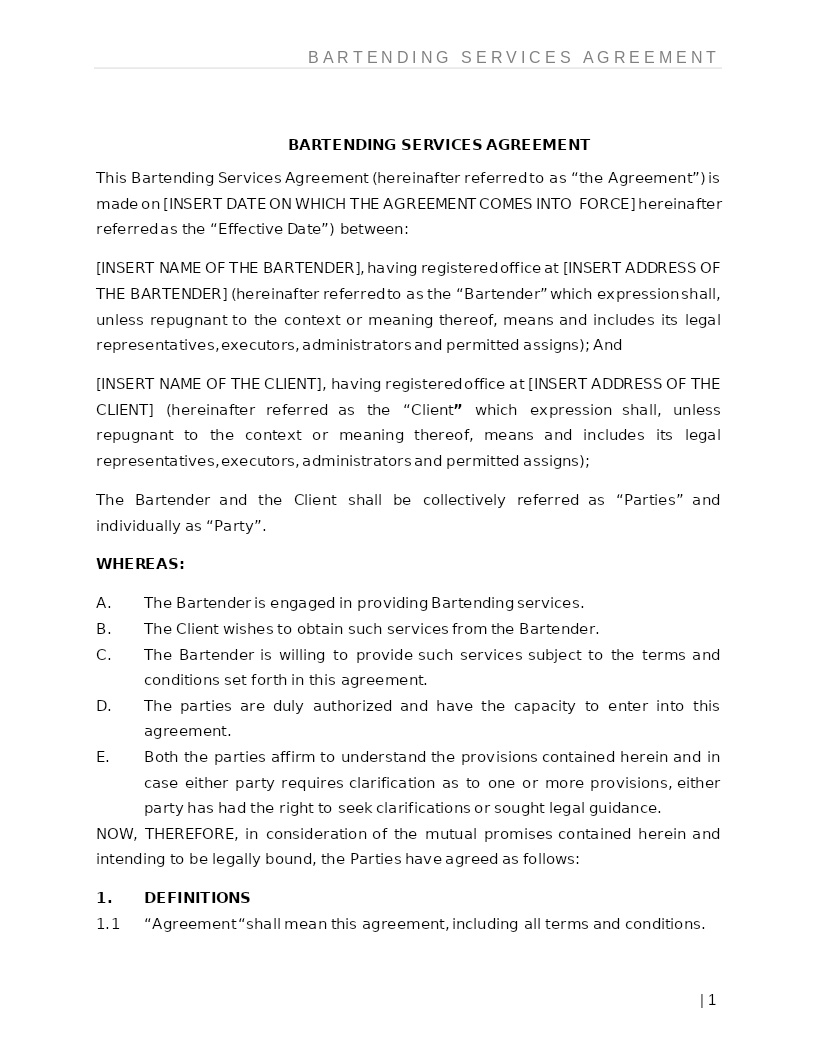
BARTENDING SERVICES AGREEMENT
How does it work?
1. Choose this template
Start by clicking on "Fill out the template"
2. Complete the document
Answer a few questions and your document is created automatically.
3. Save - Print
Your document is ready! You will receive it in Word and PDF formats. You will be able to modify it.
Understanding Bartending Service Agreement in U.S.
A Bartending Services Agreement is a legally binding contract between a bartender or bartending service provider and a client for event-based or ongoing bartending services. It outlines key details such as the scope of services, responsibilities, payment terms, alcohol service rules, and safety regulations. This agreement ensures both parties understand their obligations, helps maintain compliance with U.S. liquor laws, and reduces the risk of disputes related to service expectations, fees, or liability. It also covers essential matters like ID verification, permits, insurance, and cancellation policies to ensure smooth event operations and legal protection.
A clearly drafted Bartending Services Agreement provides peace of mind for both the bartender and the client, creating a professional foundation for responsible and compliant alcohol service.
Where Bartending Services Agreements Are Commonly Used
Bartending Services Agreements are widely used in:
- Weddings, private parties, and corporate events
- Festivals, concerts, and large-scale public gatherings
- Bars, restaurants, and hospitality venues outsourcing bartenders
- Catering companies that provide bar staff
- Mobile bar services and freelance bartenders
- Long-term or recurring bartending arrangements
- Events requiring certified or licensed bartenders under state liquor laws
Any event or establishment serving alcohol benefits from a formalized Bartending Services Agreement.
Different Types of Bartending Services Agreements You May Encounter
- Event-Based Bartending Agreement: Used for single events such as weddings or private parties.
- Professional Bartender Contract: Between a venue and a licensed bartender for scheduled shifts.
- Mobile Bartending Service Agreement: Covers bartenders who supply their own equipment, tools, and mobile bar setups.
- Full-Service Alcohol Catering Agreement: Includes bar setup, alcohol supply, staff, cleanup, and compliance obligations.
When Legal Guidance Becomes Helpful
Legal consultation becomes important when:
- The event involves state-specific liquor licensing or permitting requirements
- The bartender is responsible for purchasing or supplying alcohol
- Liability concerns arise related to intoxicated guests or alcohol-related incidents
- The agreement includes complex insurance, indemnity, or cancellation clauses
- The venue has strict alcohol service rules or vendor requirements
- Multi-state bartending companies need agreements compliant with various jurisdictions
- The parties must ensure compliance with Dram Shop laws or safe-service standards
- Legal review ensures the agreement is enforceable, compliant, and protective of all parties involved.
How to Work With This Bartending Services Agreement
- Clearly define the scope of bartending services for the event or contract
- Specify payment terms, deposits, overtime rates, and cancellation policies
- Identify whether the bartender, client, or venue provides alcohol and supplies
- Outline safety procedures, ID-check responsibilities, and refusal-of-service protocols
- Include liability insurance requirements and state alcohol-service compliance
- Establish cleanup responsibilities, work hours, and staffing expectations
- Review and sign electronically or in hard copy for proper recordkeeping.
Frequently Asked Questions
Q1. Why is a Bartending Services Agreement necessary?
A Bartending Services Agreement ensures clear expectations about responsibilities, fees, and alcohol safety protocols. It protects both the client and bartender by outlining legal obligations, liability limitations, and service expectations. This prevents misunderstandings and ensures compliance with U.S. liquor laws.
Q2. Does the bartender need a license to serve alcohol?
In many U.S. states, bartenders must hold certifications such as TIPS or ServSafe Alcohol to legally serve alcohol. The agreement can specify licensing requirements and ensure that all staff meet state and venue standards. This reduces legal and liability risks for both parties.
Q3. Who is responsible for providing the alcohol and equipment?
Responsibility varies by arrangement. Some bartenders provide a full-service package including alcohol, mixers, and bar tools, while others rely on the client or venue to supply these items. The agreement clarifies ownership, supply responsibilities, and cost allocations.
Q4. What happens if a guest becomes intoxicated during the event?
The agreement often includes responsible-service policies outlining how bartenders must manage intoxicated guests, including refusal of service and safety procedures. These terms help protect both parties under Dram Shop liability laws and encourage safe alcohol consumption.
Q5. Can the client cancel bartending services?
Yes, but the cancellation terms depend on the agreement. Policies may include non-refundable deposits, cancellation deadlines, or rescheduling options. Clearly defining cancellation terms prevents financial disputes and ensures fairness for both parties.
Q6. Does a Bartending Services Agreement include insurance requirements?
Often, yes. Bartenders may be required to carry general liability or liquor liability insurance, especially for large events. This protects both the client and bartender from claims arising from alcohol-related incidents or accidents during service.
Q7. Can the bartender charge additional fees during the event?
Some agreements include provisions for overtime, additional staff, cleanup charges, or last-minute service changes. Outlining these conditions in the contract ensures transparency and prevents unexpected costs for the client.
Q8. Is the agreement suitable for private parties and large events?
Absolutely. Bartending Services Agreements are used for events of all sizes—from small private gatherings to major corporate functions. The contract can be customized to suit staffing needs, alcohol requirements, venue rules, and compliance standards.