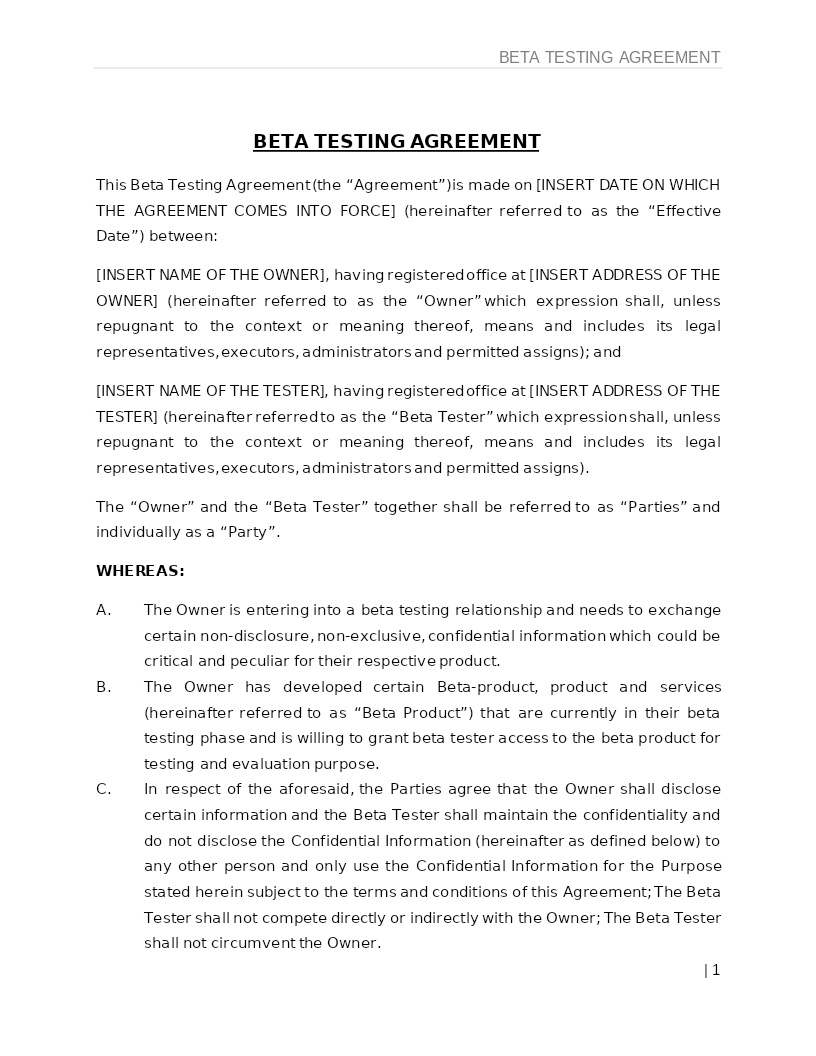
BETA TESTING AGREEMENT
How does it work?
1. Choose this template
Start by clicking on "Fill out the template"
2. Complete the document
Answer a few questions and your document is created automatically.
3. Save - Print
Your document is ready! You will receive it in Word and PDF formats. You will be able to modify it.
Understanding Beta Testing Agreements
A Beta Testing Agreement is a legally binding contract between a software or product developer (the “Company”) and selected users (the “Beta Testers”) who receive early access to a product for testing purposes before its official release. This agreement outlines the scope of testing, confidentiality obligations, permitted use, feedback requirements, data handling, intellectual property rights, and limitations of liability.
In the United States, Beta Testing Agreements are governed by state contract laws, federal privacy regulations, intellectual property statutes, and consumer protection standards. They help ensure that pre-release products are tested responsibly, protect confidential features, and provide clear rules for how the beta version may be used or accessed by testers.
Where Beta Testing Agreements Are Commonly Used
Beta Testing Agreements are frequently used across technology, software, and digital services industries, including:
- SaaS platforms and cloud-based applications
- Mobile apps and consumer-facing software
- Gaming products, VR/AR experiences, and interactive tools
- Hardware devices, wearables, and IoT products
- AI tools, productivity software, and business applications
- Early-access programs for startups and tech companies
- Technology research and prototype development
Whenever developers need real-world feedback on pre-release versions, this agreement ensures legal protection and structured participation.
Different Types of Beta Testing You May Encounter
- Closed Beta Testing: Limited to selected testers under strict confidentiality and controlled access.
- Open Beta Testing: Available to a wider public audience with fewer access limitations.
- Technical Beta: Focused on performance, bugs, and system compatibility.
- Feature Beta: Used to test new features before they are rolled out to the full user base.
- Hardware Beta: Tests prototype devices in real-world usage for durability and functionality.
When Legal Guidance Becomes Helpful
Legal advice is useful when:
- The beta product includes confidential features or proprietary technology
- Usage involves personal, sensitive, or regulated data requiring privacy compliance
- The Company wants to limit liability for product errors or data loss
- The testing involves hardware where physical risks may exist
- Intellectual property must remain protected during early access
- The Company offers incentives, rewards, or paid beta participation
- The beta product impacts business operations or client systems
Legal guidance ensures compliance with U.S. laws and helps structure the agreement for maximum protection.
How to Work with This Template
- Identify the Company and Beta Tester
- Define the beta product, scope of testing, and permitted uses
- Outline feedback requirements, reporting obligations, and restrictions
- Include confidentiality terms and intellectual property protections
- Add disclaimers regarding bugs, instability, and system risks
- Clarify liability limitations and data-handling responsibilities
- Choose governing U.S. state law
- Provide termination rights and beta access duration
- Sign electronically or in hard copy under U.S. contract standards
This template follows standard U.S. software licensing and beta testing practices and is compatible with all major digital signature platforms.
Frequently Asked Questions
Q1. What is a Beta Testing Agreement and why is it important?
A Beta Testing Agreement allows selected users to test pre-release software or products under defined conditions. It is important because it protects the developer’s confidential technology and ensures testers understand usage restrictions and responsibilities.
Q2. Does a Beta Testing Agreement transfer intellectual property rights?
No. Testers receive temporary, limited access to the beta product but do not acquire any ownership or IP rights. The agreement ensures the Company retains full rights to its software, code, technology, and creative content.
Q3. Are beta testers allowed to share screenshots or features publicly?
Only if permission is granted. Most Beta Testing Agreements include strict confidentiality rules prohibiting public disclosure, posting online, reverse engineering, or sharing product details without approval.
Q4. Can testers be held responsible for misuse of the beta product?
Yes. Testers may be liable if they intentionally misuse the software, violate confidentiality terms, compromise security, or damage systems. The agreement outlines restrictions to ensure safe and responsible testing.
Q5. Is a Beta Testing Agreement enforceable in the U.S.?
Yes. These agreements are legally enforceable under state contract and federal IP laws. Clear written terms protect the Company if testers misuse confidential information or violate usage limits.
Q6. What happens if the beta product causes data loss or errors?
Most agreements include disclaimers limiting the Company’s liability for bugs, crashes, or compatibility issues. Testers understand that beta versions are experimental and may impact performance.
Q7. Can testers provide feedback and suggestions?
Absolutely. Feedback is a core part of beta testing. However, most agreements require testers to assign any suggestions, input, or improvements to the Company to avoid future IP disputes.
Q8. Are electronic signatures valid for Beta Testing Agreements?
Yes. Under the U.S. ESIGN Act, electronic signatures are legally valid. Many companies use digital signing tools to streamline tester onboarding.
Q9. Can beta access be revoked early?
Yes. The Company may revoke access at any time, especially if testers break the rules or the testing phase ends. Termination terms are clearly outlined in the agreement.
10. Is this agreement suitable for startups testing early prototypes?
Definitely. Startups rely on Beta Testing Agreements to gather user feedback while protecting their technology, brand reputation, and competitive advantage.