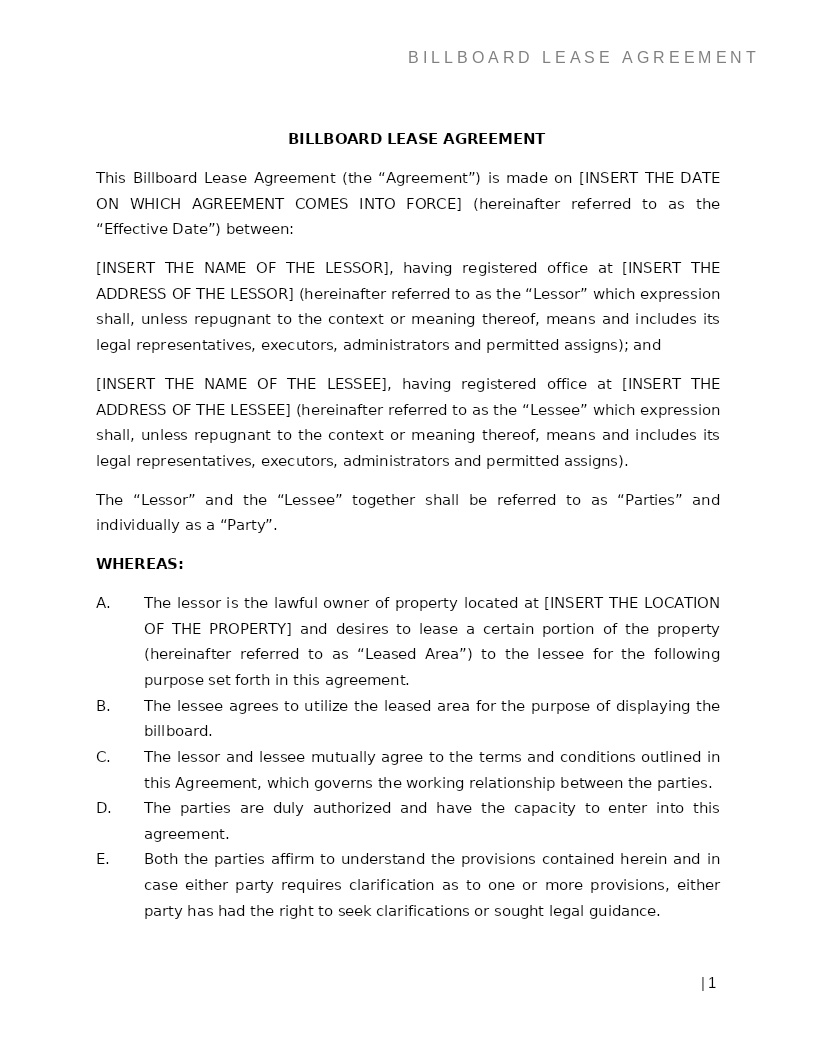
BILLBOARD LEASE AGREEMENT
How does it work?
1. Choose this template
Start by clicking on "Fill out the template"
2. Complete the document
Answer a few questions and your document is created automatically.
3. Save - Print
Your document is ready! You will receive it in Word and PDF formats. You will be able to modify it.
Understanding Billboard Leasing Arrangements in the United States
A Billboard Lease Agreement is a legally binding contract between a property owner (landlord) and an advertiser or outdoor media company (tenant) that grants the tenant the right to install, operate, and maintain a billboard on the landlord’s property. This agreement outlines essential terms such as lease duration, rental payments, maintenance responsibilities, insurance requirements, safety standards, and compliance with federal, state, and local advertising regulations.
In the United States, billboard operations must comply with zoning laws, environmental restrictions, Department of Transportation (DOT) rules, and municipal signage ordinances. A well-drafted Billboard Lease Agreement ensures the relationship is transparent, legally compliant, and aligned with the interests of both parties.
Where Billboard Lease Agreements Are Commonly Used
Billboard Lease Agreements are used for:
- High-traffic roadside billboards (digital or static)
- Urban advertising displays and building-mounted billboards
- Highway and interstate signage
- Digital LED billboards and illuminated advertising structures
- Commercial property advertising spaces
- Transit-based advertising locations
- Outdoor advertising companies leasing land from private owners
Any property location used for outdoor advertising requires a written agreement to ensure clear rights and responsibilities.
Different Types of Billboard Lease Agreements You May Encounter
- Ground Lease Billboard Agreement: The tenant installs a billboard on land owned by the landlord and pays rent for the ground space.
- Wallscape or Building-Mounted Billboard Agreement: Allows installation of signage directly on a building façade.
- Digital Billboard Lease Agreement: Specifies unique requirements for LED screens, electricity usage, content rotation, and technology maintenance.
- Revenue-Sharing Billboard Agreement: The landlord receives a percentage of advertising revenue instead of fixed rent.
- Short-Term Advertising Structure Agreement: Used for temporary billboards or event-based advertising.
When Legal Guidance Becomes Helpful
Legal consultation is crucial when:
- The billboard is located near federal highways regulated under the Highway Beautification Act
- Zoning restrictions, special permits, or environmental rules apply
- The agreement includes revenue sharing, long-term leases, or renewal options
- The billboard involves illumination, digital screens, or electricity usage
- Liability risks exist due to property damage, storms, or structural failures
- Insurance coverage and indemnification provisions are needed
- Multiple advertisers or subleasing arrangements are involved
- Local city ordinances impose special requirements for advertising displays
Lawyers ensure the agreement complies with U.S. outdoor advertising laws and protects both parties from financial and legal risks.
How to Work With This Template
- Identify both parties and the billboard location
- Define the installation, maintenance, and operational responsibilities
- Set rent, revenue-sharing terms, and payment schedules
- Include zoning, permit obligations, and legal compliance requirements
- Add insurance requirements, indemnification clauses, and liability protections
- Specify utility obligations (electricity for digital displays)
- Detail lease duration, renewal options, and termination rules
- Add removal procedures for billboard structures at lease end
- Select governing U.S. state law and dispute resolution procedures
- Sign electronically or physically after review (legal guidance recommended)
This template aligns with standard U.S. outdoor advertising and commercial leasing practices.
Frequently Asked Questions
Q1. Why is a Billboard Lease Agreement important for landowners and advertisers?
A Billboard Lease Agreement defines each party’s rights and responsibilities, preventing disputes over rent, maintenance, and installation. It protects both sides legally and ensures the billboard is operated safely and in compliance with U.S. zoning and advertising laws.
Q2. Does the agreement address zoning and permit requirements?
Yes. Billboard installation in the U.S. requires compliance with local zoning ordinances, state DOT rules, and sometimes federal regulations. The agreement clarifies which party is responsible for obtaining and maintaining permits, reducing the risk of legal violations or fines.
Q3. How are rental payments or revenue-sharing terms handled?
The agreement outlines fixed rent amounts, revenue-sharing arrangements, or hybrid payment structures. Clear financial terms provide transparency and prevent disputes, especially when billboard revenue fluctuates based on advertiser demand.
Q4. Who is responsible for billboard maintenance and repairs?
Typically, the advertiser or media company maintains the billboard structure, lighting, and safety features. The agreement clarifies these duties to prevent hazards, ensure structural integrity, and comply with local inspection requirements.
Q5. How does the agreement protect the property owner from liability?
Most agreements include indemnity clauses and insurance requirements, ensuring the billboard operator carries adequate liability coverage. This protects property owners from claims related to accidents, structural failures, or damage caused by the signage.
Q6. Can the agreement cover digital or illuminated billboards?
Yes. Digital and illuminated billboards require additional clauses covering electricity use, brightness levels, content rotation, and compliance with municipal lighting laws. The agreement can be customized for LED, LCD, and hybrid advertising displays.
Q7. What happens if the city changes zoning laws or bans billboards?
The agreement can include a “governmental action clause” addressing what happens if laws change. This may allow early termination without penalty or define financial responsibilities for removing or relocating the billboard.
Q8. Can the agreement be customized for unique locations or shared revenue models?
Definitely. Billboard Lease Agreements are highly customizable based on property type, location, traffic volume, revenue potential, and advertising technology. Tailoring the agreement ensures both parties maximize value while staying legally protected.