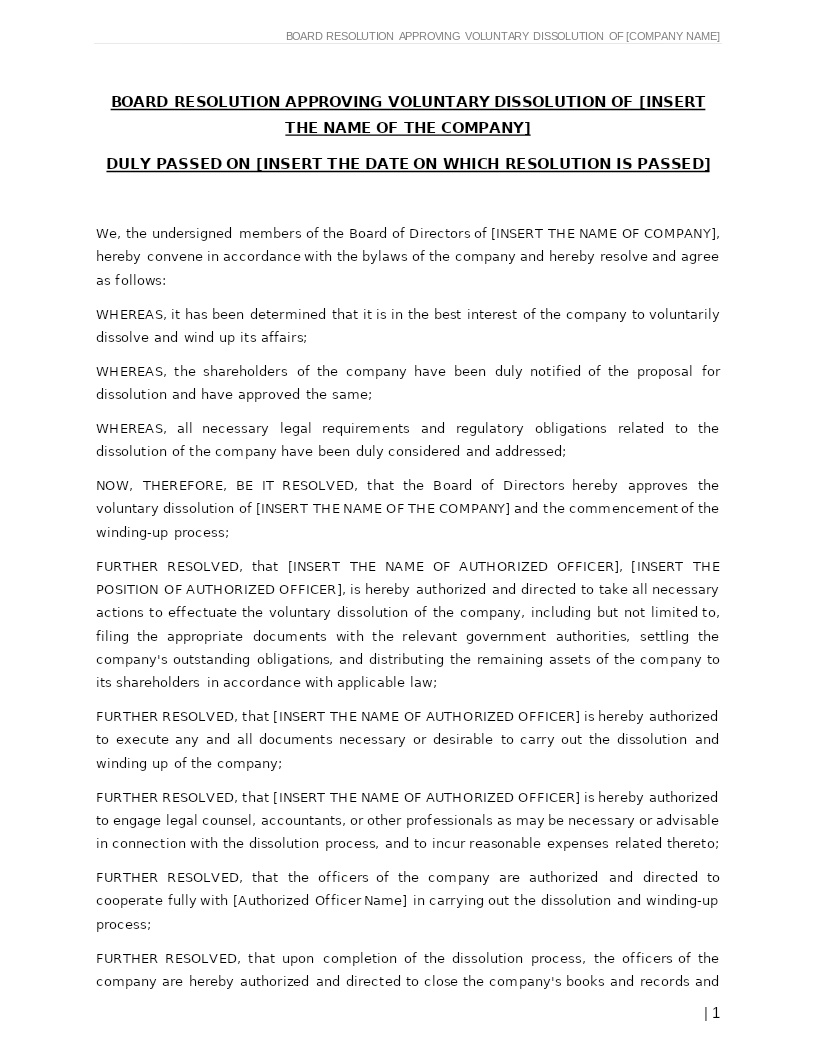
BOARD RESOLUTION APPROVING VOLUNTARY DISSOLUTION
How does it work?
1. Choose this template
Start by clicking on "Fill out the template"
2. Complete the document
Answer a few questions and your document is created automatically.
3. Save - Print
Your document is ready! You will receive it in Word and PDF formats. You will be able to modify it.
Understanding Board Resolution Approving Voluntary Dissolution In U.S.
A Board Resolution Approving Voluntary Dissolution is a formal document passed by a company's Board of Directors to authorize the voluntary dissolution of the corporation. It records the Board's decision to close the business, cease operations, settle liabilities, liquidate assets, and complete all legal requirements for dissolution. This resolution ensures the decision is properly documented, compliant with state corporate laws, and officially approved before the company begins the winding-up process. It provides legal authority, transparency, and structure during the closure of a business entity in the United States.
Where Board Resolutions for Voluntary Dissolution Are Commonly Used
They are typically used for:
- Corporations dissolving voluntarily under state corporate statutes
- LLCs concluding operations by member or manager decision
- Nonprofits ending activities due to lack of funding or completion of purpose
- Businesses merging, restructuring, or closing permanently
- Companies with no ongoing operations seeking a clean legal exit
- Entities that wish to avoid future tax filings, penalties, or compliance costs
Any business seeking to close legally and responsibly must pass a proper dissolution resolution.
Different Types of Dissolution Resolutions You May Encounter
- Board Resolution for Voluntary Dissolution (Standard): Used for corporations dissolving upon Board approval and shareholder ratification.
- Member Resolution for LLC Dissolution: Adopted by LLC members under state LLC acts.
- Resolution for Administrative Dissolution Compliance: Passed when reinstating or properly closing a business previously dissolved by the state.
- Resolution for Partial or Division Dissolution: Used when dissolving a specific branch, unit, or subsidiary.
When Legal Guidance Becomes Helpful
Legal support is particularly important when:
- The company has outstanding debts, assets, or complex financial obligations
- There are disputes among shareholders or directors
- Regulatory approvals are required (e.g., for licensed industries)
- Multi-state operations or foreign qualifications exist
- Dissolution may impact intellectual property or ongoing contracts
- Tax implications must be evaluated before winding up
Lawyers ensure strict compliance with U.S. state corporation laws, IRS requirements, and dissolution procedures.
How to Work With This Board Resolution for Voluntary Dissolution
- Document the Board’s vote and formal approval
- Record reasons for dissolution and major considerations
- Obtain shareholder consent where required by law
- File dissolution documents with the Secretary of State
- Conduct proper winding up, asset liquidation, debt settlement, and record maintenance
- Notify employees, creditors, vendors, tax agencies, and federal/state bodies
- Maintain records of the resolution and dissolution filings
Frequently Asked Questions
Q1. Why is a Board Resolution required for voluntary dissolution?
A Board Resolution is required to legally authorize the dissolution process. It documents that the Board has formally approved closing the business, ensuring compliance with U.S. state corporate laws. Without this resolution, dissolution filings may be rejected.
q2. Who must approve a Board Resolution for voluntary dissolution?
Typically, the Board of Directors must vote on the resolution, followed by shareholder approval, depending on state law and corporate bylaws. This two-step process ensures that both governance and ownership groups support dissolving the company.
Q3. What information is included in a dissolution resolution?
The resolution usually includes the company's legal name, the decision to dissolve, the effective date, reasons for dissolution, authorization for winding-up activities, and designation of an officer to handle filings. These details create a clear, enforceable record.
Q4. What is the difference between voluntary and involuntary dissolution?
Voluntary dissolution occurs when the Board and shareholders choose to close the business. Involuntary dissolution happens when a state terminates the company for failing to meet compliance obligations. A voluntary dissolution resolution avoids penalties and loss of good standing.
Q5. What happens after the Board passes a dissolution resolution?
The company must file Articles or Certificates of Dissolution, notify creditors, settle debts, liquidate assets, and distribute any remaining funds to shareholders. Proper recordkeeping ensures compliance with IRS and state requirements.
Q6. Can a company revoke a dissolution resolution?
Yes, if the dissolution process has not been completed and state law allows it. Revoking requires a new Board resolution and updated filings with the Secretary of State. Legal counsel is recommended to ensure proper reversal procedures.
Q7. How does a dissolution resolution protect directors and shareholders?
The resolution documents that the decision to dissolve was made in good faith and in compliance with fiduciary duties. This reduces exposure to claims of improper conduct and prevents future obligations for taxes, filings, or business liabilities.
Q8. Is a dissolution resolution required for LLCs as well?
LLCs typically require a Member Resolution or Operating Agreement approval instead of a Board Resolution. However, the purpose is the same, to document the formal decision to dissolve the company and begin the winding-up process under U.S. state LLC laws.