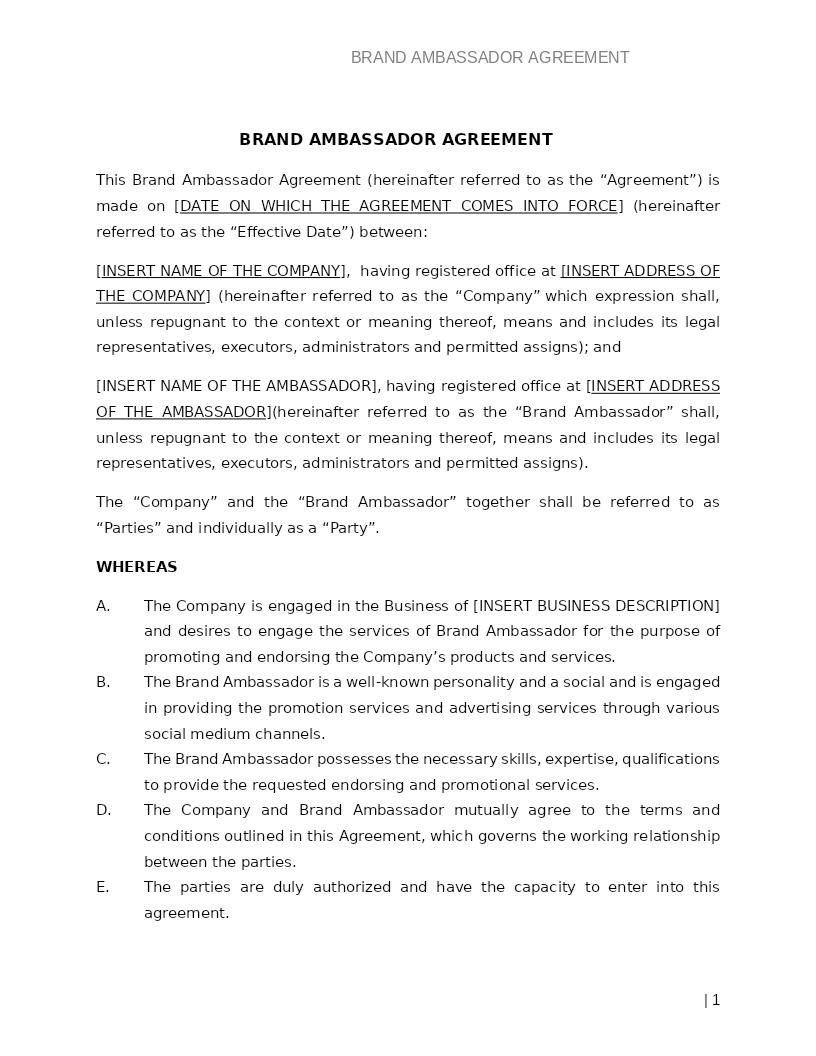
BRAND AMBASSADOR AGREEMENT
How does it work?
1. Choose this template
Start by clicking on "Fill out the template"
2. Complete the document
Answer a few questions and your document is created automatically.
3. Save - Print
Your document is ready! You will receive it in Word and PDF formats. You will be able to modify it.
Understanding Brand Ambassador Agreements
A Brand Ambassador Agreement is a legally binding contract between a company (the “Brand” or “Company”) and an individual or entity (the “Ambassador”) that defines the terms under which the ambassador will promote, represent, and publicly endorse the brand’s products or services. This agreement outlines the scope of promotional activities, compensation structure, content creation requirements, intellectual property rights, usage of brand materials, compliance obligations, confidentiality, and conduct expectations.
In the United States, Brand Ambassador Agreements operate under state contract laws, Federal Trade Commission (FTC) advertising and endorsement guidelines, intellectual property laws, influencer marketing regulations, and social media advertising standards. These agreements protect both parties by ensuring transparency, lawful promotions, and clear expectations for public representation.
Where Brand Ambassador Agreements Are Commonly Used
Brand Ambassador Agreements are widely used across consumer-focused industries, including:
- Retail, fashion, beauty, and lifestyle brands
- Fitness, health, wellness, and supplement companies
- Technology, gaming, and software platforms
- Food, beverage, and hospitality businesses
- E-commerce brands and online product launches
- Influencers, creators, and social media marketers
- Sports personalities and public figures promoting branded products
Whenever a brand relies on ambassadors to enhance visibility and credibility, this agreement ensures legal compliance and protects the brand’s reputation.
Different Types of Brand Ambassador Arrangements You May Encounter
- Social Media Ambassador: Creates and posts promotional content across social media platforms.
- Campus Ambassador: Represents a brand within a college or university community.
- Event Ambassador: Promotes products at events, trade shows, or public appearances.
- Affiliate Ambassador: Earns commissions based on referrals or sales generated.
- Long-Term Partnership Ambassador: Engages in ongoing promotional campaigns with defined deliverables.
When Legal Guidance Becomes Helpful
Legal review is valuable when:
- Compensation involves commissions, free products, bonuses, or revenue-sharing
- Promotions must comply with FTC disclosure rules
- Ambassadors will use trademarks, logos, or copyrighted brand materials
- The brand wants exclusivity for certain product categories
- Content ownership, licensing, or usage rights must be clarified
- The ambassador is a public figure with cross-brand partnerships
- The agreement involves multi-platform digital content or paid advertising
Legal guidance ensures compliance with advertising regulations and protects the brand from reputational or legal risks.
How to Work with This Template
- Identify the brand and the ambassador
- Define promotional duties, marketing deliverables, and campaign objectives
- Specify compensation, flat fees, commissions, affiliate payments, or product benefits
- Include disclosure obligations required by the FTC
- Outline content guidelines, brand messaging, and approval processes
- Add clauses on confidentiality, IP ownership, and usage rights
- Choose the governing U.S. state law
- Set termination conditions, performance requirements, and code of conduct
- Sign electronically or physically following U.S. contract rules
This template follows widely accepted influencer marketing practices and is compatible with major e-signature platforms.
Frequently Asked Questions
Q1. What is a Brand Ambassador Agreement and why is it important?
A Brand Ambassador Agreement outlines the responsibilities and compensation of an ambassador who promotes a company’s products or services. It is important because it ensures transparency, manages expectations, and guarantees that promotions follow U.S. advertising laws.
Q2. Are Brand Ambassador Agreements legally enforceable in the U.S.?
Yes. These agreements are enforceable under state contract law, and all promotional content must comply with FTC endorsement guidelines, requiring clear disclosure of paid partnerships.
Q3. What should a Brand Ambassador Agreement include?
A strong agreement includes deliverables, content guidelines, compensation terms, IP usage rights, disclosure requirements, exclusivity rules, and termination clauses. These protect both the ambassador and the brand.
Q4. Do ambassadors own the content they create?
Ownership depends on the agreement. Many brands require content to be assigned or licensed to the company for continued use in marketing. Clear IP terms prevent future disputes.
Q5. Can a brand require exclusivity from an ambassador?
Yes. Brands often require ambassadors to avoid promoting competing products during the contract term. Exclusivity clauses help maintain consistent brand messaging.
Q6. What are FTC disclosure requirements for ambassadors?
The FTC requires that sponsored posts include clear disclosures such as #ad, #sponsored, or “paid partnership with…”. This ensures transparency and protects consumers from misleading advertising.
Q7. How is compensation structured for brand ambassadors?
Compensation may include fixed payments, commissions, affiliate codes, free products, bonuses, or event fees. All payment terms should be clearly stated in the agreement.
Q8. Can the agreement be terminated early?
Yes. Early termination is common if the ambassador violates rules, fails to deliver content, engages in harmful conduct, or breaches FTC disclosure requirements.
Q9. Are electronic signatures valid for Brand Ambassador Agreements?
Yes. Under the U.S. ESIGN Act, electronic signatures are legally enforceable, and most brands use platforms like Docu Sign for digital agreements.
Q10. Is a Brand Ambassador Agreement suitable for small businesses?
Absolutely. Small businesses benefit significantly from ambassador partnerships and should use written agreements to protect their brand, outline expectations, and ensure legal compliance.