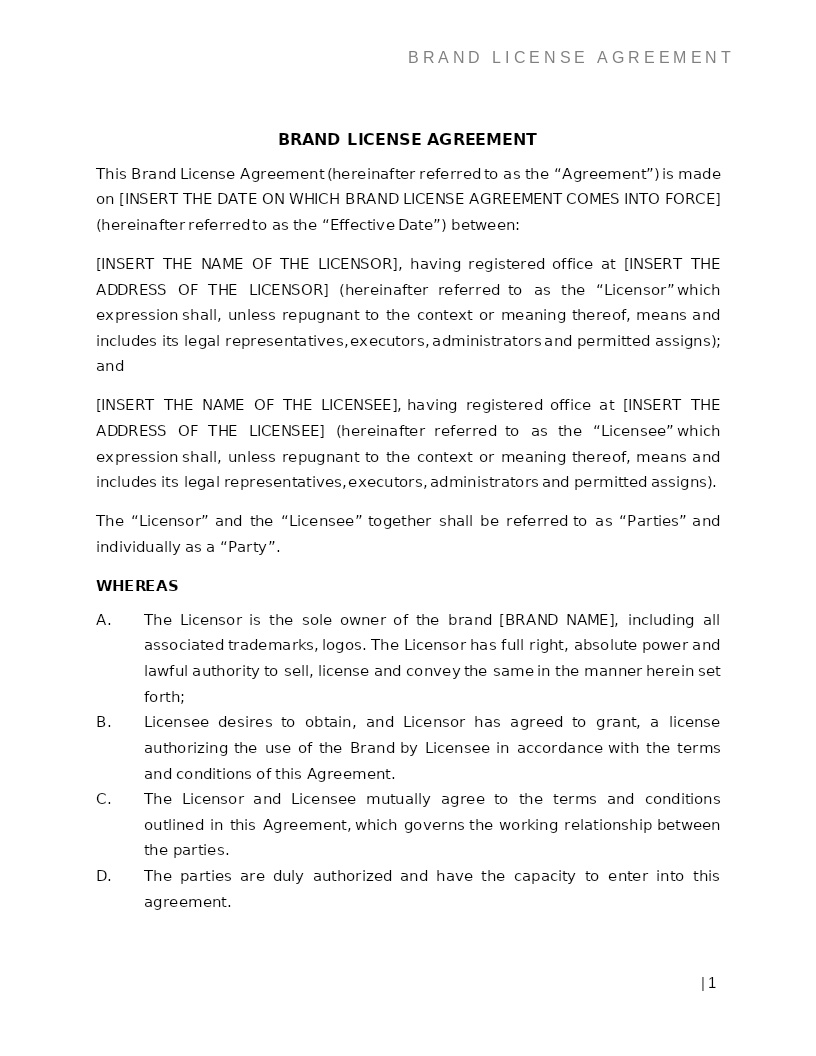
BRAND LICENSE AGREEMENT
How does it work?
1. Choose this template
Start by clicking on "Fill out the template"
2. Complete the document
Answer a few questions and your document is created automatically.
3. Save - Print
Your document is ready! You will receive it in Word and PDF formats. You will be able to modify it.
Understanding Brand License Agreements
A Brand License Agreement is a legally binding contract that allows one party (the Licensee) to use another party’s brand assets such as trademarks, trade names, logos, designs, slogans, or branded content for specific approved purposes. It defines how the brand may be used, where it may appear, and what restrictions apply, protecting the brand owner’s reputation and ensuring consistent brand representation.
In the United States, brand licensing is governed by trademark law, federal intellectual property statutes, state contract laws, and when products are involved consumer protection and advertising regulations. A well-structured Brand License Agreement helps maintain brand integrity while enabling authorized commercial use.
Putting a licensing arrangement in writing ensures both parties understand what is permitted, what is prohibited, and the financial structure of the licensing relationship.
Where Brand License Agreements Are Commonly Used
Brand License Agreements are standard across industries where businesses collaborate to expand reach or monetize intellectual property, including:
- Fashion, apparel, and accessories
- Franchising, product lines, and retail partnerships
- Endorsements and influencer collaborations
- Media, entertainment, and creative industries
- Software, gaming, and digital assets
- eCommerce and private-label arrangements
- Merchandising, promotional products, and events
Whenever a company or individual wants permission to use someone else’s brand, a license agreement ensures clarity and protection for both sides.
Different Types of Brand License Agreements You May Encounter
- Exclusive License: Gives a single Licensee the sole right to use the brand within a defined market, region, or product category.
- Non-Exclusive License: Allows multiple Licensees to use the brand under similar terms.
- Territorial or Market-Specific License: Limits usage to a geographic area or specific market segment.
- Merchandising License: Used to create and sell branded products such as clothing, accessories, or collectibles.
- Digital Content License: Covers brand use in apps, websites, social media, or digital advertising.
When Legal Guidance Becomes Helpful
Brand licensing can involve significant financial and reputational considerations. Legal review is recommended when:
- The brand involves registered trademarks or copyrighted materials
- The Licensee is manufacturing products that must meet safety or regulatory standards
- The agreement includes royalty structures, minimum sales requirements, or exclusivity
- The brand owner must maintain strict quality control over products or marketing
- Multiple jurisdictions or international markets are involved
- The brand is part of a franchise, endorsement, or celebrity partnership
Legal guidance helps ensure compliance with U.S. trademark law and reduces the risk of misuse or brand dilution.
How to Work with This Template
- Identify the Licensor and Licensee
- Clearly define the brand assets being licensed
- Specify how and where the brand may be used
- Set the royalty terms, fees, or compensation
- Include quality control measures to protect brand reputation
- Select the governing U.S. state law
- Review usage guidelines or brand manuals provided by the Licensor
- Sign electronically or in hard copy
This template is compatible with major e-signature platforms and follows brand licensing standards widely recognized across the United States.
Frequently Asked Questions
Q1. What is a Brand License Agreement?
It is a contract that grants permission to use a brand’s trademarks, logos, or creative assets under defined conditions. This ensures the brand is used properly and protects the brand owner’s reputation.
Q2. Does a Brand License transfer ownership of the brand?
No. Licensing grants usage rights only; ownership always remains with the brand owner. The agreement clearly explains that rights are limited and temporary.
Q3. Are royalty payments required in brand licensing?
Often, yes. Many licensing deals include royalty fees based on sales, fixed payments, or minimum guarantees. Terms depend on the commercial arrangement.
Q4. Can a Licensee modify the brand or logo?
Only if the agreement explicitly allows it. Most licenses prohibit altering trademarks or brand assets to maintain consistent brand identity.
Q5. Are electronic signatures valid for Brand License Agreements?
Yes. U.S. federal and state laws recognize electronic signatures as legally binding once both parties consent to electronic signing.
Q6. What happens if the brand is misused?
The Licensor may terminate the agreement, demand removal of unauthorized materials, and seek legal remedies. Clear misuse provisions help protect brand integrity.
Q7. Does a Brand License Agreement need to reference trademark registrations?
It’s recommended. Including trademark details helps clarify the rights being licensed and strengthens legal enforceability.
Q8. Can the Licensee sublicense the brand to others?
Usually not, unless the agreement specifically allows sublicensing. Most licensors restrict sublicensing to maintain control over brand usage.
Q9. What is quality control in brand licensing?
Quality control ensures products or marketing materials using the brand meet the standards set by the Licensor. It helps preserve brand value and avoid consumer confusion.
Q10. Can a Brand License Agreement be renewed?
Yes. Many agreements include renewal terms, performance requirements, or automatic extensions, provided both parties agree.