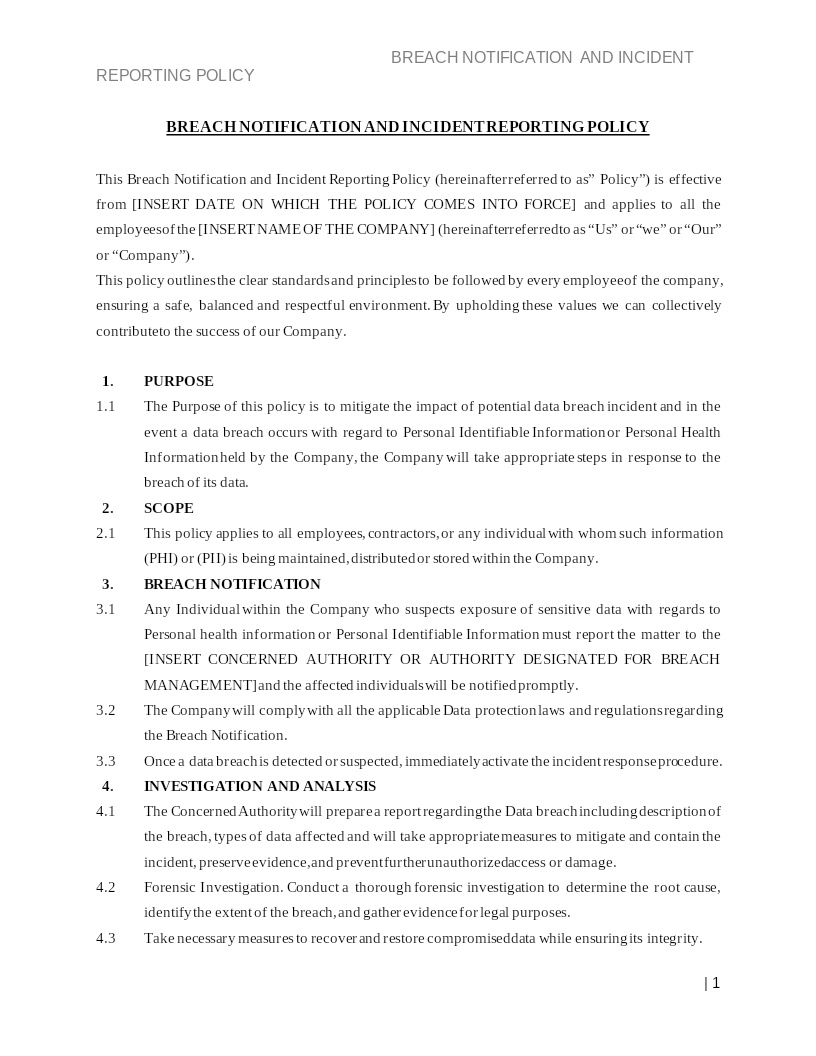
BREACH NOTIFICATION AND INCIDENT REPORTING
How does it work?
1. Choose this template
Start by clicking on "Fill out the template"
2. Complete the document
Answer a few questions and your document is created automatically.
3. Save - Print
Your document is ready! You will receive it in Word and PDF formats. You will be able to modify it.
Understanding Breach Notification And Incident Reporting Policy in U.S.
A Breach Notification and Incident Reporting Policy establishes the procedures an organization must follow when identifying, reporting, and responding to data breaches or security incidents. It outlines mandatory steps for detecting, documenting, and escalating incidents to ensure quick containment, proper investigation, and required notifications to affected individuals, regulators, and other stakeholders.
Designed in alignment with U.S. data protection laws, such as the HIPAA Breach Notification Rule, CCPA/CPRA, GLBA, and applicable state data breach statutes, this policy ensures organizations remain compliant, transparent, and prepared to manage security incidents effectively.
Where Breach Notification and Incident Reporting Policies Are Commonly Used
These policies are essential across all sectors that handle sensitive, confidential, or regulated data, including:
• Healthcare organizations governed by HIPAA
• Financial institutions under GLBA and FFIEC guidelines
• Government agencies and public-sector entities
• Technology, SaaS, and cloud service providers
• E-commerce, retail, and payment processing companies
• Educational institutions covered by FERPA
• Corporate enterprises handling customer or employee data
• Any business subject to state data breach notification laws
Organizations of all sizes need a structured breach reporting framework to remain compliant and secure.
Different Types of Incident Categories You May Encounter
- Data Breach Incidents: Unauthorized access, theft, exposure, or loss of personal, financial, health, or proprietary information.
- Cybersecurity Incidents: Attacks such as phishing, ransomware, malware, unauthorized login attempts, or system compromise.
- Operational or System Failures: System outages, hardware malfunctions, or software vulnerabilities that may impact data or security.
- Insider Incidents: Unauthorized employee activity, negligence, or intentional misuse of systems or data.
When Legal Guidance Becomes Helpful
Consulting real-time lawyers and in-house counsel is essential because:
• U.S. breach notification laws vary by state, and legal guidance ensures your policy meets all applicable requirements.
• Lawyers help determine when a breach legally requires notification and how to communicate with regulators.
• Counsel ensures your policy aligns with contractual obligations, insurance requirements, and industry regulations.
• Legal experts guide sensitive areas such as incident investigation, evidence handling, and communication strategy.
• They help create enforceable procedures that prevent liability and reduce legal exposure during breach events.
Legal consultation ensures that breach response practices are compliant, defensible, and operationally sound.
How to Work With This Policy Template
• Define what constitutes a breach or security incident.
• Establish processes for identifying, documenting, and reporting incidents internally.
• Outline timelines for notifying affected individuals and regulators.
• Assign responsibilities to incident response teams, IT, HR, and management.
• Integrate federal and state legal requirements for breach notifications.
• Document containment, investigation, and recovery steps.
• Include post-incident review procedures to prevent future risks.
• Train employees to recognize and report incidents immediately.
Frequently Asked Questions
Q1. What qualifies as a breach under this policy?
A breach is any unauthorized access, disclosure, loss, or compromise of sensitive, personal, financial, or confidential information. It may result from cyberattacks, internal misuse, system failures, or accidental exposure. This policy defines clear criteria to ensure incidents are identified and escalated promptly.
Q2. Why is breach notification legally required in the U.S.?
Federal and state laws mandate that organizations notify individuals and regulators when personal information is compromised. Regulations such as HIPAA, CCPA/CPRA, and various state data breach laws require prompt disclosure to minimize harm and ensure transparency. Failure to comply can result in significant penalties.
Q3. Who is responsible for reporting an incident within the company?
Every employee is responsible for reporting unusual activity or suspected breaches immediately. The IT Security Team, Compliance Department, and designated Incident Response Team then investigate, validate, and escalate issues. Clear roles help ensure quick and coordinated action.
Q4. How quickly must an organization respond to a breach?
Response timelines vary based on applicable laws, but many U.S. regulations require notification “without unreasonable delay,” often within 30 to 45 days of discovery. This policy sets internal timelines to ensure investigations begin immediately and legal obligations are met.
Q5. What information must be included in a breach notification?
Notifications typically include the nature of the breach, affected data types, estimated number of individuals impacted, steps taken to contain the incident, and recommended protective actions. Some laws require additional disclosures, which this policy ensures are captured.
Q6. How does the policy help minimize damage from a breach?
By outlining immediate containment and mitigation steps, the policy ensures rapid response to limit further exposure. It provides structured procedures for isolating affected systems, securing data, notifying stakeholders, and restoring normal operations.
Q7. Does this policy apply to third-party vendors?
Yes. If vendors or service providers access or process organizational data, they must comply with the same breach reporting requirements. The policy ensures vendor contracts include clear incident reporting obligations to protect the organization.
Q8. How does the policy improve long-term cybersecurity?
The policy mandates post-incident reviews to evaluate root causes, vulnerabilities, and response effectiveness. Lessons learned help strengthen security controls, update procedures, and reduce the likelihood of future breaches, enhancing the organization's overall security posture.