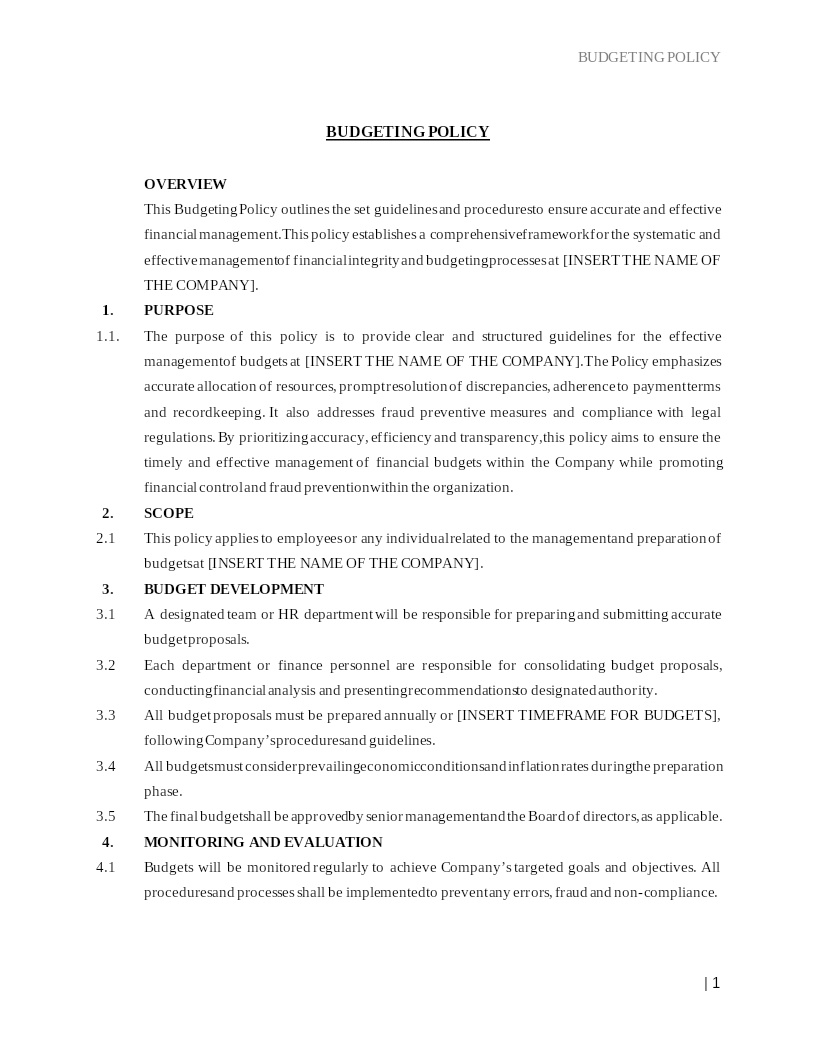
BUDGETING POLICY
How does it work?
1. Choose this template
Start by clicking on "Fill out the template"
2. Complete the document
Answer a few questions and your document is created automatically.
3. Save - Print
Your document is ready! You will receive it in Word and PDF formats. You will be able to modify it.
Establishing Clear Financial Planning and Spending Controls in U.S. Organizations
Whether you’re managing the finances of a business, nonprofit, government entity, or large project, it’s essential to have a clear and reliable framework for how budgets are created, approved, and monitored. A Budgeting Policy provides that structure. It outlines how financial resources will be allocated, who has spending authority, and how performance will be reviewed to ensure accountability and fiscal responsibility.
Having a Budgeting Policy in place helps organizations plan effectively, avoid overspending, support long-term financial goals, and ensure that every department or team understands their role in maintaining financial discipline.
Where Budgeting Policies Are Commonly Used
Budgeting policies are standard across many organizational environments, including:
- Corporate financial management, quarterly planning, and annual budget cycles
- Nonprofits managing grants, donor funds, and program budgets
- Government agencies subject to financial accountability and reporting laws
- Schools, universities, and academic institutions handling multi-department budgets
- Healthcare organizations allocating funds for operations, staffing, and compliance
- Startups and small businesses planning cash flow and growth strategies
- Large projects requiring controlled spending and milestone-based allocation
Any organization that manages money benefits from a formal budgeting framework.
Different Types of Budgeting Policies You May Encounter
- Operational Budget Policy: Covers everyday expenses such as salaries, utilities, and operational costs.
- Capital Budget Policy: Applies to long-term investments like buildings, equipment, and infrastructure.
- Project-Based Budget Policy: Used for specific initiatives with defined timelines and resource needs.
- Departmental Budget Policy: Establishes financial guidelines for each organizational unit or team.
When Legal Guidance Becomes Helpful
Legal or compliance support becomes valuable when:
- The budgeting policy must comply with federal, state, or industry-specific regulations
- Funds are tied to grants, donors, regulated programs, or restricted spending
- The organization operates across multiple jurisdictions with different rules
- Financial mismanagement risks create exposure to audits or penalties
- Policies involve approval rights, spending limits, or fiduciary responsibilities
- There are major structural changes, mergers, or reorganizations
Legal review helps ensure the policy supports compliance, minimizes risk, and aligns with governance standards.
How to Work with This Template
- Identify the purpose and scope of the budgeting process
- Outline each department's or individual’s budgeting responsibilities
- Define timelines for planning, submission, review, and approval
- Specify who has authority for spending and budget modifications
- Include reporting requirements, performance reviews, and accountability measures
- Review with finance teams and leadership (legal review optional)
- Implement the policy organization-wide and update annually
This template follows financial governance practices widely recognized across the United States.
Frequently Asked Questions
Q1. Why is a Budgeting Policy important for an organization?
A Budgeting Policy ensures financial resources are used efficiently and strategically. It creates a standardized process for planning, allocating, and reviewing funds across departments. This helps prevent overspending and improves transparency. It also supports long-term financial stability and operational growth.
Q2. What should a Budgeting Policy typically include?
A comprehensive policy outlines budgeting responsibilities, approval authorities, timelines, spending guidelines, and reporting requirements. It may also include procedures for variance analysis, performance tracking, and corrective actions. These elements ensure that budgets are realistic, measurable, and enforceable.
Q3. How does a Budgeting Policy support financial accountability?
By defining who can authorize expenses and how funds must be monitored, the policy ensures clear oversight. Regular audits, reviews, and variance reports help identify inefficiencies or misuse. The policy promotes transparency and reduces the risk of errors or intentional mismanagement.
Q4. Can a Budgeting Policy help with long-term financial planning?
Yes. A strong budgeting framework aligns short-term spending with long-term organizational goals. It supports forecasting, resource planning, and investment decisions. Organizations can identify future financial needs, evaluate risks, and adjust strategies based on trends and performance metrics.
Q5. How does this policy assist in cost control?
The policy establishes limits, spending rules, and approval workflows that help prevent unnecessary expenditures. It enables management to identify cost-saving opportunities and avoid budget overruns. This disciplined approach promotes operational efficiency and financial health.
Q6. Is a Budgeting Policy useful for nonprofits and grant-funded programs?
Absolutely. Nonprofits must follow strict financial accountability and use funds according to donor or grant requirements. A budgeting policy ensures compliance, supports accurate reporting, and protects against financial mismanagement. It helps organizations maintain credibility with stakeholders.
Q7. How often should a Budgeting Policy be reviewed or updated?
Policies should be reviewed annually or whenever major financial or structural changes occur. Market conditions, regulatory requirements, and organizational priorities evolve over time. Regular updates ensure the budgeting process remains effective, compliant, and aligned with strategic goals.
Q8. Can a Budgeting Policy reduce financial risk?
Yes. The policy helps identify potential financial vulnerabilities early, such as cash flow shortages or overspending patterns. It also ensures contingency planning and risk mitigation strategies are in place. This proactive approach strengthens the organization’s financial resilience.