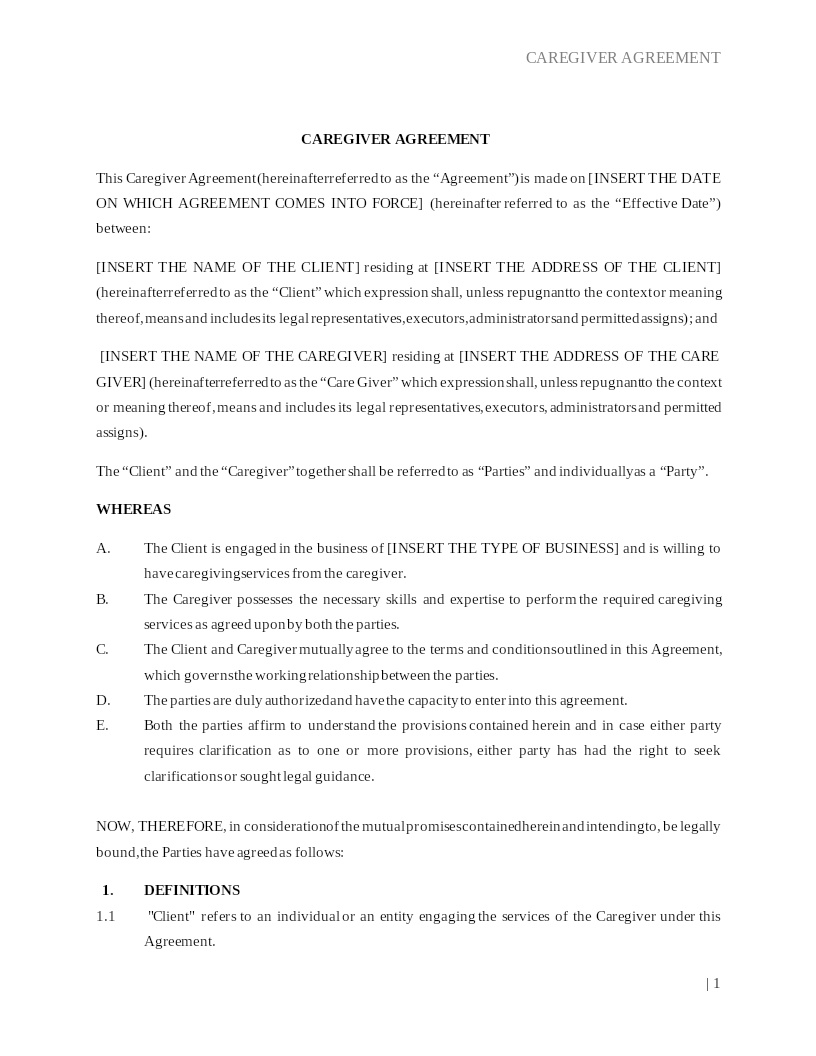
CAREGIVER AGREEMENT
How does it work?
1. Choose this template
Start by clicking on "Fill out the template"
2. Complete the document
Answer a few questions and your document is created automatically.
3. Save - Print
Your document is ready! You will receive it in Word and PDF formats. You will be able to modify it.
Understanding Caregiver Agreement in U.S.
A Caregiver Agreement is a legally binding contract between a caregiver and a patient, family member, or healthcare provider that outlines the terms under which caregiving services will be provided. This agreement includes specific details such as duties, work hours, compensation, confidentiality requirements, and termination conditions. It ensures both parties understand their responsibilities, promotes transparent communication, and provides legal protection in compliance with U.S. employment and healthcare laws.
A properly drafted Caregiver Agreement prevents misunderstandings, establishes clear expectations, and creates a professional framework for the caregiving relationship. It also allows families to document payments for Medicaid reimbursement and long-term care planning.
Where Caregiver Agreements Are Commonly Used
Caregiver Agreements are used in:
- Home-based caregiving for elderly, disabled, or chronically ill individuals
- Family caregiving arrangements seeking Medicaid eligibility documentation
- Professional in-home care services provided by agencies or private caregivers
- Short-term recovery care following surgery or medical treatment
- Long-term care arrangements involving dementia, Alzheimer’s, or mobility impairment
- Live-in caregiving roles with structured compensation and schedules
Any setting requiring ongoing or structured personal care benefits from a clearly defined Caregiver Agreement.
Different Types of Caregiver Agreements You May Encounter
- Family Caregiver Agreement: Used when family members provide compensated care to loved ones.
- Professional Caregiver Agreement: Used between a licensed caregiver or agency and the recipient.
- Live-In Caregiver Agreement: Covers situations where the caregiver resides on the premises.
- Specialised Medical Caregiver Agreement: Used for skilled services such as wound care, medication management, or mobility assistance.
When Legal Guidance Becomes Helpful
Legal consultation is important when:
- Medicaid rules require proper documentation of caregiver payments
- The caregiver provides specialized medical or skilled care
- The arrangement includes live-in requirements or housing benefits
- Confidentiality requirements involve HIPAA compliance
- Compensation affects taxes or requires IRS reporting
- Multiple family members share financial or decision-making responsibilities
- Termination rules, liability protections, or insurance clauses need customizing
Professional review ensures the agreement is enforceable, compliant, and tailored to the patient’s care needs.
How to Work With This Caregiver Agreement
- Identify caregiver duties, work hours, and care expectations
- Outline payment terms, rate of compensation, and pay schedule
- Include confidentiality rules and HIPAA-related obligations
- Define liability limitations and emergency procedures
- Clarify grounds for termination and notice requirements
- Document Medicaid-compliant care logs, if applicable
- Review and sign electronically or in hard copy
Frequently Asked Questions
Q1. Why is a Caregiver Agreement important?
A Caregiver Agreement formally documents caregiving responsibilities, preventing misunderstandings between the caregiver and the family. It protects both parties, ensures fair compensation, and creates a clear framework for care expectations. It is especially important when applying for Medicaid benefits or long-term care planning.
Q2. Is a Caregiver Agreement legally binding in the U.S.?
Yes. When drafted properly, it is a legally enforceable contract that outlines obligations and rights for both caregiver and care recipient. Courts recognize these agreements as valid when they include clear terms, compensation details, and signed consent from both parties.
Q3. Can a family member be paid under a Caregiver Agreement?
Absolutely. Many families use Caregiver Agreements to compensate relatives who provide regular care. Proper documentation is required to comply with Medicaid rules and IRS tax requirements. A written agreement also helps avoid disputes among family members.
Q4. What tasks can be included in a Caregiver Agreement?
Tasks may include personal care (bathing, dressing), household assistance (meal preparation, cleaning), transportation, medication reminders, and companionship. The agreement can also specify whether medical or skilled care tasks are included, depending on licensure requirements.
Q5. Does the Caregiver Agreement need to follow HIPAA rules?
Yes, if the caregiver has access to medical records or protected health information. HIPAA-compliant confidentiality clauses ensure the patient’s privacy and protect caregivers from liability. This is essential for professional or medically involved caregiving roles.
Q6. Are taxes required for caregiver payments?
In many cases, yes. Caregiver income may be taxable depending on the nature of the relationship and payment structure. Families often consult tax professionals to ensure proper withholding, payroll procedures, and compliance with IRS guidelines.
Q7. Can a Caregiver Agreement be modified later?
Yes. Changes in care needs, compensation, schedule, or responsibilities can be updated through a written amendment signed by both parties. Keeping the agreement current helps prevent disputes and ensures the caregiving arrangement remains fair and transparent.
Q8. What happens if either party wants to end the agreement?
Termination rules should be clearly stated, including notice periods and valid grounds for ending the arrangement. This protects both caregiver and family from abrupt cancellations. In cases involving misconduct or emergencies, immediate termination provisions may apply.