CAREGIVER AUTHORIZATION LETTER
How does it work?
1. Choose this template
Start by clicking on "Fill out the template"
2. Complete the document
Answer a few questions and your document is created automatically.
3. Save - Print
Your document is ready! You will receive it in Word and PDF formats. You will be able to modify it.
Establishing Temporary Legal Authority for Child Care and Decision-Making in the United States
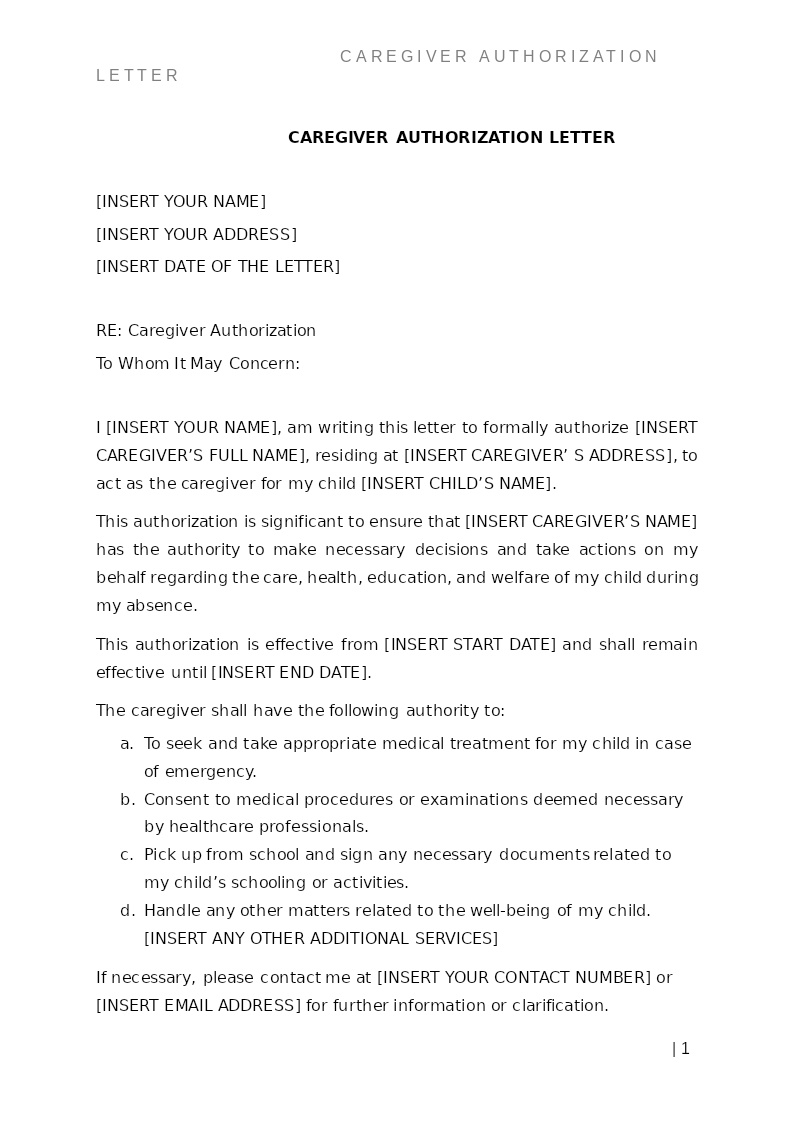
When parents or legal guardians are temporarily unavailable due to travel, medical treatment, work obligations, or emergencies, it’s important to have a clear framework outlining who is authorized to care for their child or dependent. A Caregiver Authorization Letter provides that structure. It grants temporary authority to a trusted caregiver, allowing them to make medical, educational, and day-to-day decisions while ensuring the dependent’s needs are fully met.
Putting this letter in place builds confidence for all parties involved. It ensures the child receives uninterrupted care, allows institutions to recognize the caregiver’s authority, and reduces the risk of delays, confusion, or legal challenges during urgent situations.
Where Caregiver Authorization Letters Are Commonly Used
Caregiver authorization is often used in a wide variety of real-life situations, including:
- When parents travel for work, family emergencies, or extended trips
- During medical procedures or recovery periods that limit availability
- While children reside temporarily with relatives or trusted friends
- For school enrollment, parent-teacher communication, or educational decisions
- For routine or emergency medical care, vaccinations, and doctor visits
- When a caregiver needs documented authority for daily supervision and support
Any time a non-parent is responsible for a dependent, a written authorization letter strengthens clarity and ensures the dependent’s access to essential care.
Different Types of Caregiver Authorization Letters You May Encounter
- Temporary Child Care Authorization: Allows a caregiver to provide day-to-day care for a specific period.
- Medical Authorization for Minors: Grants authority to consent to medical treatment, exams, and emergency care.
- Educational Authorization Letter: Empowers the caregiver to make school-related decisions, attend meetings, and communicate with teachers.
- General Caregiver Authorization: Covers broad responsibilities; including health, education, transportation, and daily needs.
When Legal Guidance Becomes Helpful
Most caregiver authorization letters are straightforward, but legal assistance becomes valuable when:
- The child will be living with the caregiver for an extended period
- The authorization must comply with specific state laws or school district rules
- The child has medical conditions requiring specialized consent arrangements
- Multiple caregivers need shared or limited authority
- The authorization may conflict with custody orders or parenting plans
- International travel or multi-state jurisdiction issues are involved
Legal review ensures the authorization is enforceable, compliant with state regulations, and aligned with existing custody or guardianship arrangements.
How to Work with This Template
- Clearly identify the parents/guardians, the caregiver, and the dependent
- Specify the scope of authority; medical, educational, daily care, or all of the above
- Include the effective dates and any limitations or special instructions
- Provide emergency contact details and relevant medical information
- Review the document together (legal review optional but beneficial)
- Sign with the required witnesses or notarization if state law requires it
- Provide copies to schools, healthcare providers, and the caregiver
This template aligns with commonly accepted standards across the United States and can be executed through simple written documentation or notarization where required.
Frequently Asked Questions
Q1. What is the purpose of a Caregiver Authorization Letter?
A Caregiver Authorization Letter gives a trusted adult the legal authority to make decisions for a child or dependent when the parent or guardian is unavailable. This includes medical, educational, and daily care decisions. It ensures uninterrupted access to necessary services and support. The letter serves as a clear, documented reference for schools, doctors, and institutions.
Q2. Is a Caregiver Authorization Letter legally binding in the U.S.?
Yes, most states recognize caregiver authorization letters as valid temporary decision-making authority. However, the rules vary by state, some require notarization or specific language. The letter provides essential legal clarity for institutions that otherwise may not act without parental consent. Properly drafted authorization greatly reduces delays in emergencies.
Q3. Who can be designated as a caregiver in this letter?
Parents typically choose a trusted adult such as a grandparent, relative, close friend, or babysitter. The designated caregiver should be someone reliable, available, and capable of handling health, school, and daily care responsibilities. The letter formalizes the relationship and ensures the caregiver has the authority needed to act responsibly. Selecting someone familiar with the child’s needs is ideal.
Q4. How long does a Caregiver Authorization Letter remain valid?
Validity depends on the duration specified in the letter. Some parents authorize care for a few days or weeks, while others set it for months during extended absences. Institutions will follow the timelines stated in the document. If the parent returns earlier or needs to extend authority, they can easily update or revoke the letter.
Q5. Does this letter allow a caregiver to consent to medical treatment?
Yes, when medical authority is included. Caregiver authorization commonly covers doctor visits, dental care, vaccinations, emergency treatment, and routine checkups. Without written authorization, healthcare providers may hesitate to treat the child. Including medical consent prevents delays and ensures the child receives timely care.
Q6. Can a caregiver interact with schools using this letter?
Absolutely. The letter allows the caregiver to enroll the child, communicate with educators, attend school meetings, and make academic decisions. Schools often require written proof of caregiver authority before granting access to records or information. This ensures the child’s education continues smoothly even when parents are unavailable.
Q7. Does this letter affect parental rights or custody?
No. A Caregiver Authorization Letter does not transfer custody or remove parental rights. It simply grants temporary authority to handle essential tasks in the parent’s absence. Parents maintain full legal control and can revoke the authorization at any time. The document is meant to support, not replace parental responsibility.
Q8. Should the Caregiver Authorization Letter be notarized?
Notarization is recommended and required by some states for added legal validity. A notarized letter provides stronger proof of authenticity, making institutions more confident in accepting it. Notarization also helps avoid disputes regarding the legitimacy of the authorization. It’s a simple step that enhances legal enforceability.