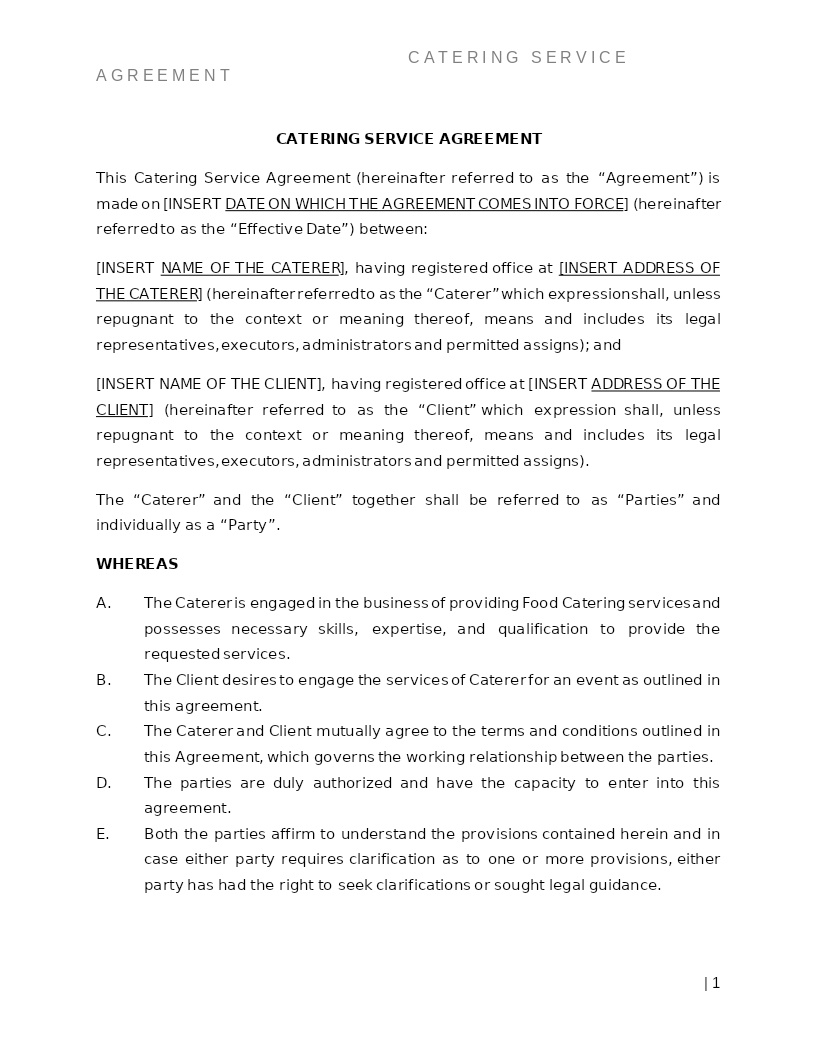
CATERING SERVICE AGREEMENT
How does it work?
1. Choose this template
Start by clicking on "Fill out the template"
2. Complete the document
Answer a few questions and your document is created automatically.
3. Save - Print
Your document is ready! You will receive it in Word and PDF formats. You will be able to modify it.
Understanding a Catering Service Agreement
A Catering Service Agreement is a formal contract that defines the terms under which a catering company provides food and related services for an event. It outlines the event details, menu selections, service style, staffing needs, equipment requirements, and timelines for preparation and delivery. The agreement also specifies payment obligations, refund rules, safety practices, and cancellation procedures.
By clearly establishing expectations, this agreement helps ensure seamless event execution, protects both parties from misunderstandings, and provides a reliable framework for managing food quality, service standards, and logistical arrangements.
Where Catering Service Agreements Are Commonly Used
Catering contracts are widely used in a variety of event-based settings, including:
- Weddings, receptions, and private parties
- Corporate meetings, conferences, and retreats
- Fundraisers, galas, and public gatherings
- Festivals, school events, and community programs
- Production sets, backstage services, and entertainment industry events
- Restaurants providing off-site catering services
- Hotels, banquet halls, and event management companies
Any situation involving catered food or beverage service benefits from a structured agreement to protect both the service provider and the client.
Different Types of Catering Service Agreements You May Encounter
- Full-Service Catering Agreement: Includes food preparation, service staff, setup, cleanup, rentals, and equipment.
- Drop-Off Catering Agreement: The catering company prepares and delivers food but does not provide staffing or on-site service.
- Event-Specific Catering Agreement: Tailored for one-time events such as weddings, corporate gatherings, or private celebrations.
- Recurring / Corporate Catering Agreement: Used when a business needs ongoing catering services, such as weekly lunches or monthly events.
- Beverage-Only or Bar Service Agreement: Focuses specifically on alcoholic/non-alcoholic beverage service, bartending staff, and licensing rules.
- Venue-Exclusive Catering Agreement: Used when a venue requires clients to use an in-house or approved caterer under specific terms.
When Legal Guidance Becomes Helpful
Most catering arrangements are straightforward, but legal review may be necessary when:
- The event involves large guest counts or high-value contracts
- Alcohol service requires compliance with state liquor laws
- Multiple vendors (venue, decorators, entertainers) must coordinate responsibilities
- Custom menus involve allergen disclosures or special dietary obligations
- The event spans multiple days or involves complex logistical requirements
- The agreement allocates liability for equipment damage or accidents
- The client requires insurance provisions, indemnities, or strict cancellation terms
Legal professionals can help tailor the agreement to minimize risk and ensure compliance with state and local regulations.
How to Work with This Agreement
- Specify the event details (date, time, location, guest count)
- Select the menu items, service style, and equipment needs
- Define staffing requirements and service timelines
- Clarify payment schedules, deposits, and refund terms
- Identify cancellation rules and modification procedures
- Include health, safety, and food handling obligations
- Confirm venue access hours and setup restrictions
- Ensure both parties sign the agreement before services begin
These steps help ensure smooth execution and consistent expectations between the parties.
Frequently Asked Questions
Q1. What details should be included in a Catering Service Agreement?
A Catering Service Agreement should include the event date, location, guest count, service style, menu selections, and staffing requirements. It must also outline payment terms, cancellation rules, equipment needs, and timelines. Including detailed expectations reduces misunderstandings and ensures the caterer delivers exactly what the client expects.
Q2. Is a deposit required when booking a catering company?
Most catering providers require a non-refundable deposit to secure the date and begin preparing resources. The agreement should clearly state the deposit amount, due date, and refund conditions. Deposits help the caterer reserve staff, ingredients, and equipment while ensuring financial commitment from the client.
Q3. What happens if the event is canceled or rescheduled?
Catering agreements typically include cancellation and rescheduling policies that outline deadlines and applicable fees. The caterer may retain the deposit or charge additional fees depending on how close the cancellation is to the event date. Having these terms in writing protects both parties and ensures fairness in unforeseen circumstances.
Q4. How are dietary restrictions or allergies handled?
Clients should inform the caterer of any dietary requirements, including allergies, religious preferences, or vegan/vegetarian needs. The agreement should specify the caterer's responsibility for labeling food and preventing cross-contamination. Clear communication ensures safe meal preparation and protects guests with special dietary needs.
Q5. Can the client request additional services such as decorations or table setup?
Yes, many catering companies offer add-on services such as tableware, decorations, rentals, or event setup. These extras should be listed in the agreement with associated fees and service descriptions. Including them ensures the client receives all requested services and the caterer is compensated appropriately.
Q6. What liability protections should be included in a Catering Service Agreement?
The agreement should clarify each party’s responsibility for damages, venue restrictions, or guest-related incidents. It may require the caterer to carry general liability insurance, especially when serving alcohol. Proper liability clauses protect both parties from unexpected legal and financial consequences.
Q7. How does staffing work for catered events?
The caterer may provide chefs, servers, bartenders, or cleanup staff depending on the agreement. The contract should specify the number of staff, their responsibilities, arrival times, and service duration. This ensures the event runs smoothly and the client understands the level of support being provided.
Q8. Are changes allowed once the menu is finalized?
Most catering companies allow modifications before a certain deadline, usually tied to ingredient purchasing and staff scheduling. The agreement should specify when changes are permitted and any additional costs that may apply. Clear modification terms help avoid confusion and ensure the caterer can deliver high-quality service.