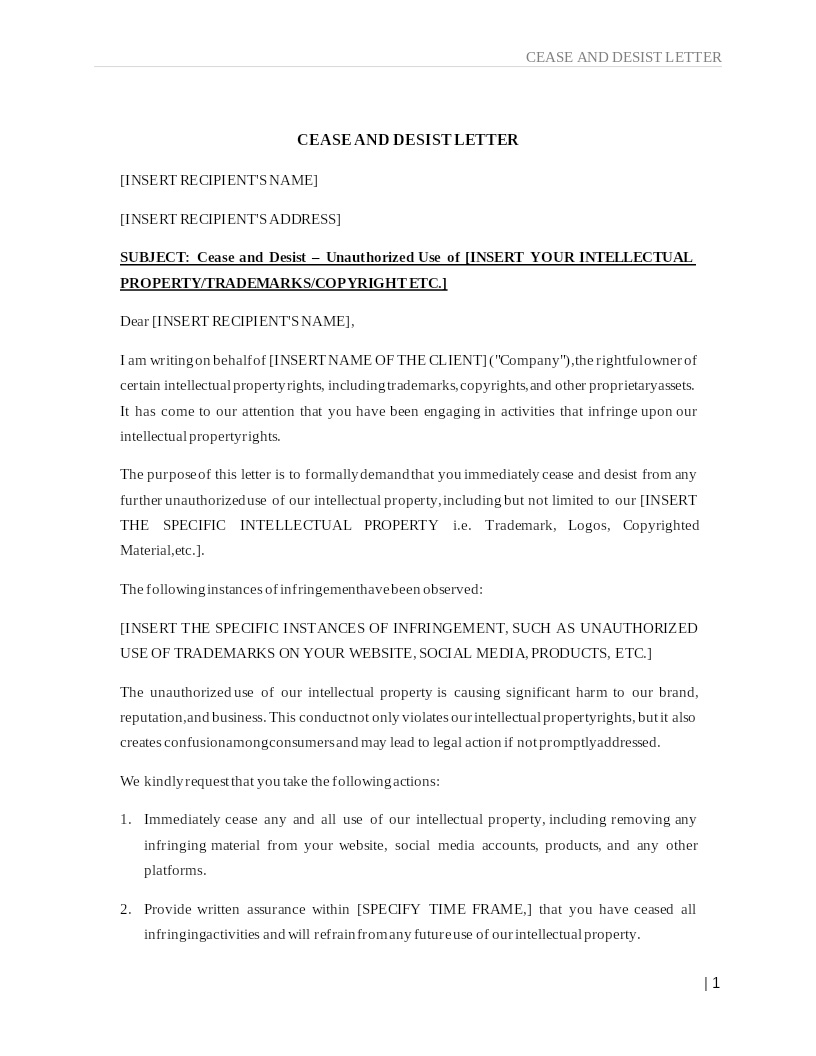
CEASE AND DESIST LETTER
How does it work?
1. Choose this template
Start by clicking on "Fill out the template"
2. Complete the document
Answer a few questions and your document is created automatically.
3. Save - Print
Your document is ready! You will receive it in Word and PDF formats. You will be able to modify it.
Understanding Crease and Desist Letter in U.S.
A Cease and Desist Letter is a formal written demand instructing an individual or organization to stop engaging in unlawful, harmful, or rights-violating behavior. It serves as an official warning that further misconduct may result in legal action. This document provides the recipient with a clear understanding of the alleged violation and offers them the opportunity to correct their actions without escalating the matter to court.
A well-structured Cease and Desist Letter helps protect the sender’s rights under U.S. law, establishes a clear legal record of notice, and encourages voluntary compliance.
Where Cease and Desist Letters Are Commonly Used
Organizations and individuals use Cease and Desist Letters in a wide range of situations, including:
• Copyright, trademark, or intellectual property infringement
• Defamation, slander, or online reputation harm
• Harassment, threats, or stalking
• Breach of contract or unlawful business practices
• Fraud, impersonation, or misuse of personal information
• Unauthorized commercial use of content or brand assets
• Debt collection harassment or unlawful communication
• Misuse of confidential, proprietary, or trade secret information
Any time harmful conduct must be stopped immediately, a Cease and Desist Letter provides a structured legal warning.
Different Types of Cease and Desist Letters You May Encounter
- Intellectual Property Cease and Desist Letter: Used when copyrighted material, trademarks, or proprietary content is being unlawfully used, reproduced, or distributed.
- Defamation or Harassment Cease and Desist Letter: Issued when false statements, harassment, or threatening behavior harms a person’s safety, reputation, or business.
- Contractual or Business Misconduct Cease and Desist Letter: Applied in cases of breach of agreement, unfair competition, non-payment, or unauthorized commercial activity.
- Debt Collection Harassment Cease and Desist Letter: Sent to debt collectors violating the Fair Debt Collection Practices Act (FDCPA) by engaging in abusive or unlawful communication.
- Cyber Misconduct Cease and Desist Letter: Used to address impersonation, online harassment, data misuse, unauthorized access, or cyberbullying.
When Legal Guidance Becomes Helpful
Legal support becomes essential when:
• Violations involve intellectual property, proprietary data, or brand misuse
• The conduct crosses state lines or involves multiple jurisdictions
• Defamation or harassment presents risk to safety or reputation
• The recipient is a business entity, corporation, or legal representative
• The sender wants to pursue damages, injunctions, or litigation if ignored
• Industry-specific regulations (HIPAA, GDPR, FTC rules) apply
• The matter involves ongoing business relationships or contractual disputes
While Cease and Desist Letters can be sent without an attorney, legal review strengthens enforceability and ensures the notice aligns with U.S. law.
How to Work With This Cease and Desist Letter
• Identify and clearly describe the unlawful behavior or rights violation
• Provide supporting evidence, dates, and specific examples
• Reference applicable U.S. federal or state laws and regulations
• Explain the actions the recipient must immediately stop
• Outline the potential legal consequences of non-compliance
• Set a reasonable deadline for response or corrective action
• Retain a copy for your records to establish proof of notice
• Update and customize the letter as new information arises
Following these steps ensures the recipient clearly understands the violation and your expectations for resolution.
Frequently Asked Questions
Q1. Are Cease and Desist Letters legally enforceable in the United States?
A Cease and Desist Letter itself is not a court order, but it is legally significant because it formally notifies the recipient of their wrongful actions. If the behavior continues, the letter serves as strong evidence that the recipient knowingly ignored a lawful warning, supporting future legal claims and strengthening the sender’s position in court.
Q2. Do I need a lawyer to send a Cease and Desist Letter?
No, you can send one without an attorney. However, having a lawyer draft or review the letter ensures it references the correct statutes, clearly outlines violations, and avoids language that could weaken your claim. Legal review is especially helpful in cases involving defamation, IP infringement, or harassment.
Q3. What happens if the recipient ignores a Cease and Desist Letter?
If the recipient refuses to comply, the sender may pursue additional action such as filing a lawsuit, seeking damages, or requesting an injunction from a court. The ignored letter becomes a valuable piece of evidence demonstrating the recipient’s refusal to stop harmful conduct despite formal notice.
Q4. Can a Cease and Desist Letter stop online harassment or defamation?
Yes. These letters are commonly used to demand removal of defamatory content, stop harassment, and address cyber misconduct. They clearly outline the wrongful behavior and the consequences of continuing it, providing a structured way to resolve digital disputes without immediately involving law enforcement or litigation.
Q5. Is a Cease and Desist Letter legally required before filing a lawsuit?
In many cases, no—lawsuits can be filed without prior notice. However, sending the letter first is considered good legal practice because it shows your attempt to resolve the matter amicably. Courts often view this effort favorably, and it may speed up negotiations or settlement discussions.
Q6. How quickly must the recipient respond to a Cease and Desist Letter?
Most letters include a specified response deadline, typically between 5 to 14 days depending on the urgency. This timeframe gives the recipient an opportunity to correct their actions or provide a formal reply. A reasonable deadline demonstrates fairness and strengthens the sender’s legal position.
Q7. Can Cease and Desist Letters address intellectual property violations?
Absolutely. They are one of the primary tools used to stop unauthorized use of trademarks, copyrighted content, designs, branding materials, software, or proprietary information. The letter informs the recipient of the legal violation and demands immediate removal or cessation of the infringing activity.
Q8. Does sending a Cease and Desist Letter guarantee the behavior will stop?
While many recipients comply to avoid legal consequences, compliance is not guaranteed. If the behavior continues, the sender may escalate the matter through legal action. However, most disputes are resolved at the letter stage because it signals seriousness and outlines potential penalties clearly.