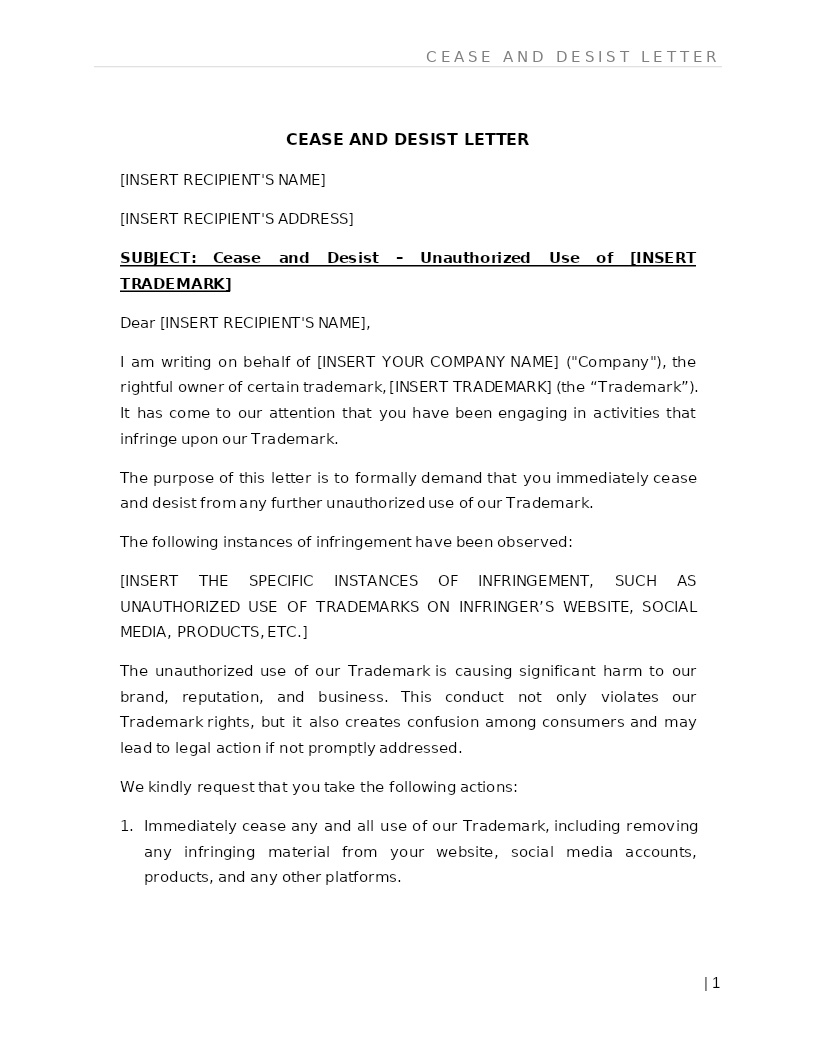
CEASE AND DESIST LETTER (TRADEMARK)
How does it work?
1. Choose this template
Start by clicking on "Fill out the template"
2. Complete the document
Answer a few questions and your document is created automatically.
3. Save - Print
Your document is ready! You will receive it in Word and PDF formats. You will be able to modify it.
Issuing a Cease-and-Desist Letter to Stop Unauthorized Trademark Use in the United States
A Cease-and-Desist Letter for Trademark is a formal notice sent to an individual or entity that is unlawfully using a trademark without authorization. It alerts the recipient that their actions constitute trademark infringement, provides evidence of the unauthorized use, and demands that the infringing behavior stop immediately. The letter outlines the owner’s legal rights, specifies the protected trademark details, and sets a deadline for compliance.
By issuing this notice, trademark owners protect their brand identity, maintain exclusive usage rights, and take the first crucial step toward stopping infringement without immediately resorting to litigation.
Where Cease-and-Desist Letters for Trademark Are Commonly Used
These letters are widely used across U.S. industries, especially where brand protection and consumer trust are essential:
- Online businesses facing domain, logo, or product copycat issues
- Retail brands experiencing counterfeit product sales
- Service providers whose branding is being misused by competitors
- Marketing agencies encountering unauthorized use of copyrighted logos
- E-commerce platforms dealing with brand impersonation
- Startups protecting their early-stage brand identity
Any time a trademarked name, logo, slogan, or design is used without permission, a formal notice helps stop infringement quickly and asserts legal ownership.
Different Types of Trademark Infringement Notices You May Encounter
- Standard Trademark Cease and Desist Letter: Demands immediate cessation of unauthorized use and outlines the consequences for non-compliance.
- Online or Digital Infringement Notice: Addresses misuse on websites, social platforms, domain names, or marketplaces like Amazon or Etsy.
- Counterfeit Product Notice: Targets parties manufacturing or selling counterfeit goods using a protected mark.
- Brand Impersonation or Passing-Off Notice: Used when a business or individual attempts to appear affiliated with the trademark owner.
- Unauthorized Licensing or Distribution Notice: Sent when trademarks are used in marketing, packaging, or promotional materials without permission.
When Legal Guidance Becomes Helpful
Although many trademark violations can be addressed through direct written notice, legal counsel becomes essential when:
- Infringement is willful, repeated, or financially damaging
- The dispute involves multiple states or international jurisdictions
- The infringer refuses compliance or challenges trademark ownership
- Complex issues arise regarding fair use, parody, or comparative advertising
- Counterfeiting, fraud, or online impersonation is involved
- The business needs to escalate the matter to litigation or pursue damages
Legal review ensures the letter is authoritative, enforceable, and aligned with U.S. trademark law, increasing the likelihood of quick and voluntary compliance.
How to Work with This Template
- Identify the trademark owner and the infringing party
- Clearly state the protected trademark details (name, logo, registration number)
- Describe the unauthorized use with supporting evidence
- Define the actions required (stop use, remove materials, transfer domain, etc.)
- Provide a compliance deadline and potential consequences
- Select governing U.S. state law for enforcement
- Review and finalize language—legal review optional but recommended
- Send electronically or via certified mail for proof of delivery
This template follows U.S. intellectual-property standards and is suitable for individuals, companies, and brand owners seeking to enforce trademark rights.
Frequently Asked Questions
Q1. Why is a Cease-and-Desist Letter for Trademark important?
It provides official written notice of infringement and establishes a record that the trademark owner took action to protect their rights. This step is often required before pursuing litigation. It stops unauthorized use quickly and helps prevent further damage to brand reputation.
Q2. Does sending a Cease-and-Desist Letter help avoid legal action?
Yes. In many cases, infringers comply once they understand the legal consequences. The letter gives them an opportunity to stop the violation voluntarily. This saves both parties time, money, and the cost of court proceedings, making it an effective pre-litigation tool.
Q3. Can this letter be used for online trademark infringement?
Absolutely. Many U.S. trademark disputes arise on websites, social media, digital ads, and e-commerce marketplaces. This letter can demand removal of the infringing content, suspension of sales, domain transfer, or correction of branding. It also strengthens future takedown requests.
Q4. What information should be included in the letter?
A strong letter includes details of the protected trademark, registration status, evidence of the infringing use, and clear instructions for stopping the violation. It should also provide a deadline for compliance and warn of potential legal outcomes. This ensures the infringer understands the seriousness of the issue.
Q5. Is this letter legally enforceable without filing a lawsuit?
While it is not a court order, it carries significant legal weight. U.S. courts often look favorably on trademark owners who take reasonable steps before initiating litigation. It demonstrates ownership, formal notice, and attempts to resolve the matter professionally.
Q6. What if the infringing party ignores the letter?
If the recipient refuses to comply, trademark owners may pursue further legal action, including injunctions, damages, or trademark opposition proceedings. The letter serves as documented proof that the infringer was warned. Escalating the matter becomes easier and legally stronger.
Q7. Are electronic signatures valid for sending this type of notice?
Yes. Under U.S. federal e-signature laws, electronically signed notices are generally valid. However, many trademark owners also send a physical copy via certified mail for delivery confirmation, especially in high-value or disputed cases. This strengthens enforceability and documentation.
Q8. Can small businesses or startups use Cease-and-Desist Letters effectively?
Definitely. Smaller companies often rely on these letters to protect early branding and prevent competitors from copying logos, domain names, or marketing materials. A well-drafted letter asserts legal ownership and deters misuse, helping smaller brands maintain credibility and exclusivity.