CHANGE MANAGEMENT POLICY AND PROCEDURES
How does it work?
1. Choose this template
Start by clicking on "Fill out the template"
2. Complete the document
Answer a few questions and your document is created automatically.
3. Save - Print
Your document is ready! You will receive it in Word and PDF formats. You will be able to modify it.
Understanding the Purpose and Use of a Change Management Policy and Procedure
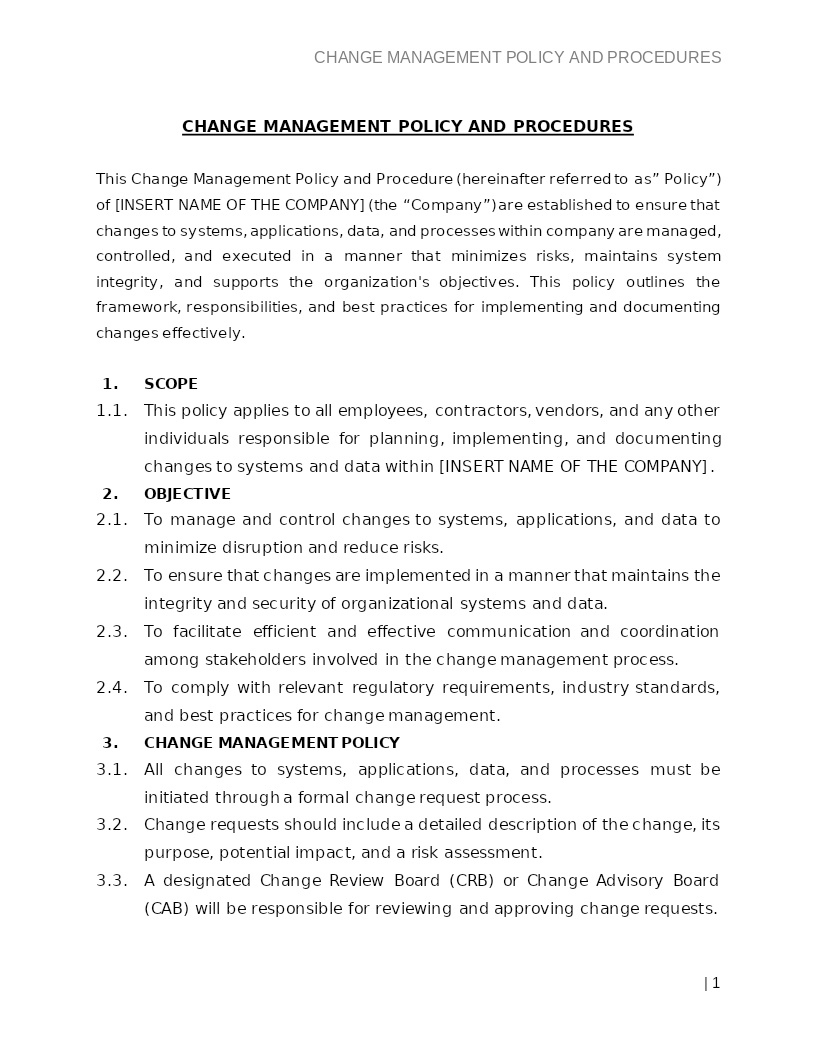
When an organization undergoes updates to its systems, workflows, technology platforms, or internal structures, it becomes essential to manage those changes in a consistent, controlled, and strategic way. A Change Management Policy and Procedure provides that structure. It outlines how changes should be proposed, assessed, documented, approved, implemented, and reviewed to minimize disruption and ensure alignment with organizational objectives.
Having this policy in place strengthens operational stability, reduces risks, and promotes transparency during transitions. It helps employees understand their roles, provides clarity on how changes will be communicated, and ensures that every modification supports long-term business goals.
Where Change Management Policies Are Commonly Used
Structured change procedures are widely implemented across U.S. industries, including:
- Technology companies managing software deployments or system upgrades
- Healthcare and financial institutions regulated by strict compliance standards
- Manufacturing, logistics, and industrial sectors requiring operational continuity
- Government agencies implementing procedural or structural changes
- Corporations undergoing reorganizations, mergers, or process improvements
- HR departments introducing new policies, platforms, or performance systems
- IT teams modifying infrastructure, security controls, or user-access settings
Any organization introducing changes that affect people, processes, systems, or compliance requirements benefits from a consistent change management framework.
Different Types of Change Management Procedures You May Encounter
- Standard or Routine Changes: Pre-approved, low-risk changes that follow a predictable process, such as system updates.
- Emergency Changes: Changes implemented urgently to address critical issues, such as outages or security threats.
- Major or Strategic Changes: Significant organizational changes requiring cross-departmental coordination, such as new software rollouts.
- Operational Process Changes: Modifications to workflows, policies, or department procedures to improve efficiency and performance.
When Legal Guidance Becomes Helpful
Most everyday changes can be managed internally, but legal counsel becomes essential when:
- Changes affect compliance with federal or state regulations (e.g., HIPAA, SOX, OSHA).
- System or process changes involve data privacy, security protocols, or employee monitoring.
- Structural changes impact employee rights, contracts, or labor law obligations.
- Vendor agreements, service-level commitments, or licensing terms intersect with proposed changes.
- Cross-border operations must comply with varied international regulatory requirements.
- Mergers, acquisitions, or large-scale reorganizations introduce legal risks.
Legal review ensures that all changes are carried out in a compliant, enforceable, and risk-aware manner.
How to Work with This Template
- Identify the type of change and document its purpose and expected impact.
- Define approval workflows, responsible stakeholders, and evaluation requirements.
- Establish communication steps to inform affected teams and employees.
- Select governing state laws and ensure alignment with regulatory or contractual obligations.
- Review the policy with internal leadership or legal counsel (optional).
- Implement, monitor, and track changes according to defined procedures.
This policy aligns with widely recognized change management standards across the United States and supports effective business continuity.
Frequently Asked Questions
Q1. Why is a Change Management Policy important for U.S. businesses?
A Change Management Policy is essential because it provides a consistent and controlled method for handling organizational updates, whether they involve systems, workflows, or structural changes. It reduces the likelihood of disruptions by ensuring proper planning and review before any change is implemented. The policy also establishes accountability, clarifies responsibilities, and supports strategic alignment with long-term organizational goals. By standardizing change processes, businesses maintain operational stability while improving adaptability.
Q2. How does this policy minimize risks during organizational changes?
The policy identifies potential risks early by requiring structured assessments, stakeholder evaluation, and detailed planning before a change is approved. This reduces the chance of system failures, compliance breaches, or workflow interruptions. It ensures that every change is tested, reviewed, and documented so that the organization can anticipate and mitigate challenges. As a result, operational continuity is protected, and the business can transition smoothly.
Q3. Does this policy improve communication during changes?
Yes, the policy strengthens communication by establishing clear guidelines for informing affected departments, teams, and employees before changes occur. It outlines who needs to be notified, how information should be delivered, and what details must be shared. This transparency builds trust and reduces confusion, ensuring everyone understands the scope and impact of the change. Ultimately, it creates a more coordinated and engaged workforce.
Q4. Can this policy support IT and technology-related changes?
Absolutely. The policy is widely used in IT environments for system upgrades, cybersecurity enhancements, infrastructure adjustments, and new software rollouts. It requires impact analysis, testing, documentation, and approvals before implementation, which helps prevent outages or technical disruptions. By standardizing how technical changes are handled, the policy ensures stability and reduces the risk of unauthorized or unverified modifications.
Q5. Does this policy help maintain business continuity?
Yes, the policy plays a critical role in protecting business continuity by requiring careful planning, fallback strategies, and monitoring throughout the change process. It ensures that essential operations continue while changes are implemented, minimizing downtime and productivity loss. By anticipating potential disruptions and establishing response plans, organizations can manage transitions without jeopardizing service delivery. This safeguards revenue, customer trust, and operational flow.
Q6. Are employees involved in the change management process?
Yes, employee involvement is a key part of effective change management. The policy encourages participation from team members, subject-matter experts, and department heads during planning and evaluation stages. Involving employees reduces resistance because they feel included and informed rather than surprised by changes. It also ensures smoother adoption by providing training, clarity, and support throughout the transition.
Q7. Can this policy help meet regulatory or industry standards?
Yes, many industries, including healthcare, finance, and technology—require documented and controlled change processes to comply with legal and regulatory standards. This policy ensures that all modifications are traceable, authorized, and compliant with federal and state requirements. It also strengthens audit readiness by maintaining detailed records of approvals, tests, and risk assessments. By adhering to regulatory expectations, companies reduce liability and maintain certification standards.
Q8. Is this policy useful for small businesses?
Definitely. Small businesses benefit just as much from structured procedures as large organizations do. This policy helps them avoid costly mistakes, miscommunication, and operational disruptions by standardizing how changes are proposed and approved. It ensures accountability and supports smoother growth by creating a scalable framework for future changes. Even with limited staff, a change management policy improves efficiency and long-term stability.