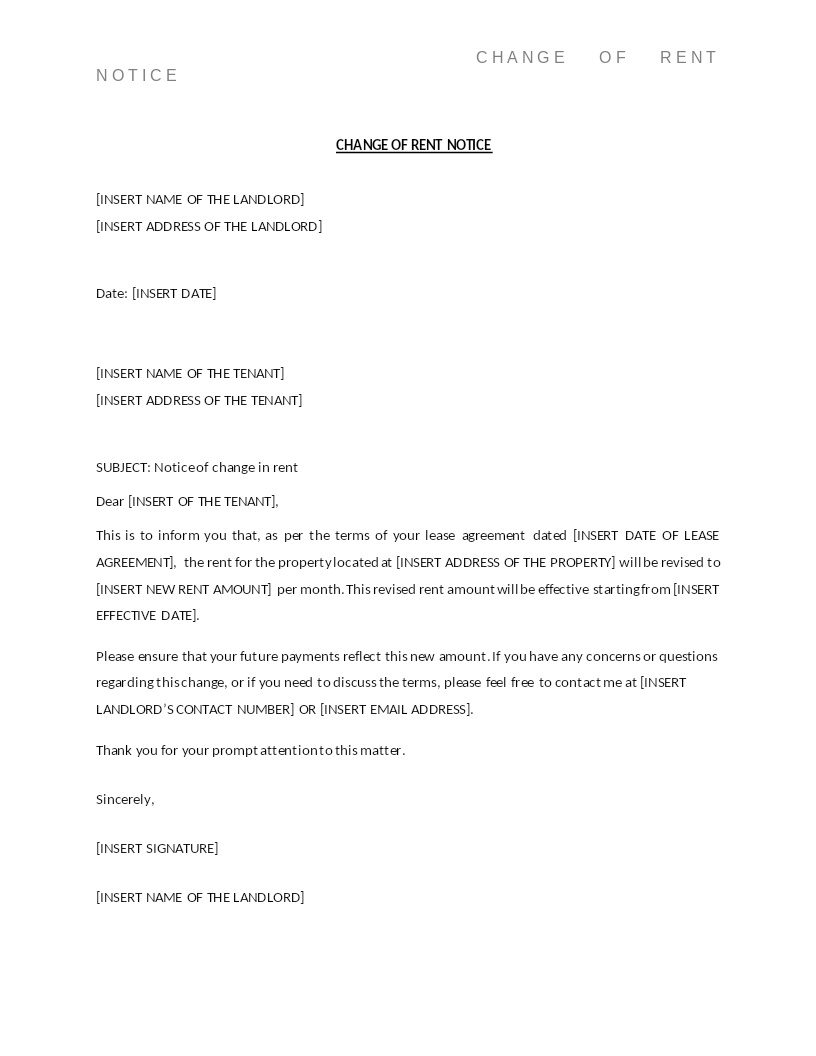
CHANGE OF RENT NOTICE
How does it work?
1. Choose this template
Start by clicking on "Fill out the template"
2. Complete the document
Answer a few questions and your document is created automatically.
3. Save - Print
Your document is ready! You will receive it in Word and PDF formats. You will be able to modify it.
Ensuring Transparent and Lawful Communication When Adjusting Rental Rates in the United States
When a landlord needs to adjust the rental amount for a property, it’s essential to follow a clear and legally compliant communication process. A Change of Rent Notice provides that structure. It formally informs the tenant of the new rent amount, specifies when the change will take effect, and outlines any relevant terms required by the lease or local housing laws.
Providing this notice establishes clarity, helps avoid disputes, and ensures both parties understand their rights and obligations before the updated rent period begins. It also supports a cooperative landlord–tenant relationship by maintaining professionalism and transparency.
Where Change of Rent Notices Are Commonly Used
Rent increase or adjustment notices are used in a variety of rental situations, including:
- Month-to-month tenancies where periodic adjustments are allowed
- Annual or scheduled rent increases under lease terms
- Adjustments due to operating cost changes or market conditions
- Notices required for rent-controlled or regulated units
- When landlords and tenants renegotiate terms for renewal
- Situations requiring written communication for legal compliance
Any time a landlord changes the rent amount, a written notice ensures the increase is communicated clearly and lawfully.
Different Types of Change of Rent Notices You May Encounter
- Standard Rent Increase Notice: Used when the landlord raises the rent at the end of a lease term or during periodic tenancy.
- Rent Reduction or Adjustment Notice: Issued when rental amounts change due to renovations, repairs, or negotiated amendments.
- Regulatory Rent Notice: Required for properties under rent control, stabilization, or local housing authority regulations.
- Lease Renewal with New Rent Terms: Combines renewal options with updated rental amounts and conditions.
When Legal Guidance Becomes Helpful
Most rent adjustment notices are straightforward, but legal assistance is advisable when:
- The property is located in a rent-controlled or rent-stabilized jurisdiction
- The increase may be considered unusually high or subject to legal limits
- The tenant challenges the validity or timing of the notice
- You’re adjusting rent during an active fixed-term lease
- You’re addressing multiple units, commercial tenants, or multi-jurisdictional properties
- There are concerns about retaliation, discrimination, or procedural compliance
Legal review ensures the notice aligns with state and local housing laws and reduces the risk of disputes or invalid increases.
How to Work with This Template
- Identify the landlord, tenant, and rental property address
- Specify the new rent amount and the exact effective date of the change
- Reference the lease provision or state law requiring written notice
- Provide the required notice period based on local regulations
- Include instructions for acceptance, renewal, or additional communication
- Review the terms together (legal review optional but helpful)
- Deliver the notice through mail, email, or other approved methods
This template follows widely accepted landlord–tenant standards across the United States and ensures the notice is professionally documented.
Frequently Asked Questions
Q1. Why is a Change of Rent Notice important?
A Change of Rent Notice ensures the tenant is informed of any rental adjustment in writing, creating a clear and documented record. It prevents confusion or disputes by stating the new amount, effective date, and legal basis for the change. This protects both parties and ensures compliance with state and local housing laws. Written notices also support fairness and transparency.
Q2. How much notice is required before the new rent takes effect?
Notice requirements vary by state, but most jurisdictions require between 30 and 60 days for rent increases. Some cities with rent regulations may require more. Providing the correct notice period ensures the change is legally valid. Tenants need this time to plan financially or discuss concerns with the landlord.
Q3. Can a landlord raise the rent during a fixed-term lease?
Typically, rent cannot be increased during a fixed-term lease unless the agreement explicitly allows mid-term adjustments. Most increases occur at renewal or during month-to-month tenancies. A written notice documents the timing and terms of the increase. Reviewing the lease helps confirm whether mid-term changes are permitted.
Q4. Does the tenant have to accept the rent increase?
Tenants may choose to accept the new rent, negotiate the terms, or decline and move out at the end of the notice period. A written notice helps facilitate these discussions clearly and professionally. If the tenant disagrees, local laws may provide additional rights or dispute pathways. Communication is key to avoiding misunderstandings.
Q5. Can a rent increase be disputed by the tenant?
Yes. Tenants may raise concerns regarding affordability, improper notice, or rent-control violations. They can also request justification for the increase. A formal notice gives tenants time to seek clarification or legal advice. Proper documentation strengthens both parties’ positions in any dispute.
Q6. Is a Change of Rent Notice required for rent reductions?
Yes. Even decreases or adjustments should be communicated in writing for record-keeping and legal clarity. Documentation helps both parties track changes over time and prevents future confusion. It also ensures that tenants understand revised terms such as temporary discounts or incentives.
Q7. How should the Change of Rent Notice be delivered?
Delivery methods may include certified mail, standard mail, email (if permitted by the lease), or hand delivery. Trackable methods provide proof of notice in case of future disagreements. Tenants should keep copies for their records. Landlords benefit from documenting the delivery date to demonstrate compliance.
Q8. What happens if the landlord fails to provide proper notice?
If a landlord does not follow the legal notice requirements, the rent increase may be invalid. In such cases, the tenant typically continues paying the original rent until proper notice is given. Failure to comply can also expose the landlord to disputes or penalties. Proper written notice ensures lawful enforcement of the new rental terms.