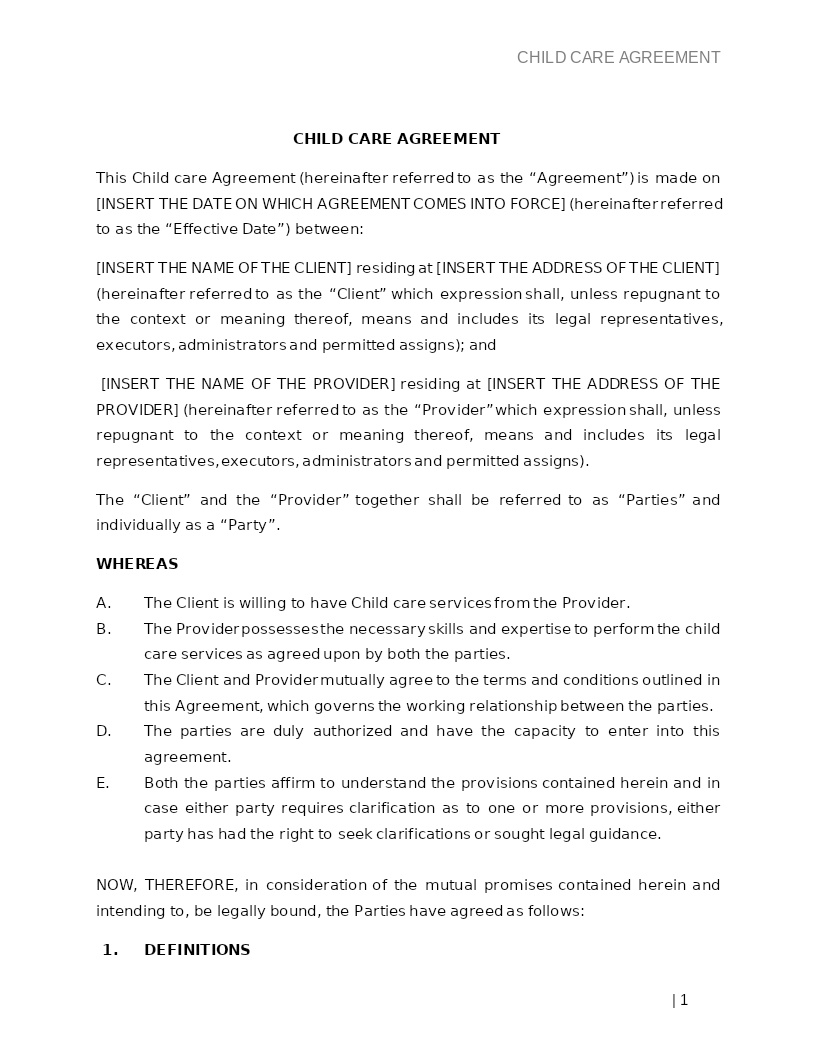
CHILD CARE AGREEMENT
How does it work?
1. Choose this template
Start by clicking on "Fill out the template"
2. Complete the document
Answer a few questions and your document is created automatically.
3. Save - Print
Your document is ready! You will receive it in Word and PDF formats. You will be able to modify it.
Establishing Clear Expectations and Safe Child Care Arrangements in the United States
When parents or guardians seek professional childcare services, it’s essential to define expectations clearly to ensure the child’s safety, comfort, and well-being. A Child Care Agreement provides that structure. It outlines the responsibilities of the child care provider, the parent’s obligations, and the standards under which the child will be cared for.
Putting a Child Care Agreement in place builds trust, ensures consistency in the child’s routine, and creates a framework that allows both parties to communicate openly. It protects the child's best interests while reducing the risk of misunderstandings or disputes.
Where Child Care Agreements Are Commonly Used
Child Care agreements are used in a wide range of caregiving settings, including:
- Home-based child care and nanny services
- Daycare centers, preschools, and early learning programs
- After-school programs, activity centers, and tutoring environments
- Temporary child-care arrangements or backup/emergency care
- Part-time, full-time, or weekend child-care setups
- Professional caregiving agencies and licensed facilities
Any time a caregiver is entrusted with a child, a written agreement provides clarity and legal protection.
Different Types of Child Care Agreements You May Encounter
- Full-Time Child Care Agreement: Covers ongoing daily care, meals, routines, and educational activities.
- Part-Time or Drop-In Care Agreement: Designed for flexible, occasional, or limited-hour care.
- Nanny or In-Home Child Care Contract: Used when the caregiver provides services inside the family’s home.
- Special Needs Child Care Agreement: Includes custom protocols, medical considerations, and specialized support.
When Legal Guidance Becomes Helpful
Most child care arrangements are straightforward, but legal assistance becomes valuable when:
- The child has medical, behavioral, or special care requirements
- The care provider handles sensitive health or educational information
- Payment structures, overtime rules, or employment regulations are complex
- The arrangement intersects with custody, guardianship, or parental rights
- Multiple caregivers or agencies are involved
- The care environment must comply with state licensing or safety laws
Legal review ensures the agreement is enforceable, compliant with regulations, and protective of the child’s well-being.
How to Work with This Template
- Identify all parties: parent/guardian and child care provider
- Clearly outline the scope of child care services and daily schedule
- Specify payment terms, due dates, late fees, and refund policies
- Include routines, meal guidelines, discipline policies, and activities
- Define safety procedures and emergency protocols
- Review obligations together (legal review optional but helpful)
- Sign electronically or in hard copy for official documentation
This template follows standards widely recognized by child care providers and parents across the United States.
Frequently Asked Questions
Q1. Why is a Child Care Agreement important for parents and caregivers?
A Child Care Agreement ensures that both parties understand expectations for the child’s daily routine, safety, meals, and behavior guidelines. It clarifies responsibilities, reduces misunderstandings, and provides a written record of the arrangement. This promotes trust and consistency in the child’s day-to-day care. It also protects both parties if disputes arise.
Q2. What should be included in a Child Care Agreement?
A strong agreement includes service hours, payment terms, emergency procedures, discipline policies, and details about meals and activities. It also covers drop-off and pick-up rules, illness guidelines, and confidentiality requirements. These elements ensure a structured and safe care environment. The more detailed the contract, the smoother the caregiving arrangement.
Q3. Does a Child Care Agreement provide legal protection?
Yes. It formally documents expectations and protects both the parent and caregiver in case of disagreements. If payment disputes, safety concerns, or routine conflicts occur, the agreement offers a written reference. This reduces liability and sets clear standards for performance and communication. It also strengthens the child’s overall protection.
Q4. Can a Child Care Agreement include emergency and medical instructions?
Absolutely. Emergency procedures, allergy information, and medical authorization provisions are essential for child safety. These instructions allow caregivers to act quickly and appropriately during urgent situations. Including such details helps avoid delays in treatment and provides peace of mind for parents. Many providers require written authorization for medical decisions.
Q5. How does this agreement help maintain consistency in a child’s routine?
It outlines daily expectations such as nap times, discipline methods, meals, and learning activities. Consistency supports the child’s emotional stability and development. When both caregiver and parent follow the same guidance, it minimizes confusion for the child. Written guidelines ensure routines are followed even if caregivers rotate or schedules change.
Q6. Is payment structure addressed in a Child Care Agreement?
Yes. The agreement sets clear terms for fees, due dates, late charges, and refund rules. This prevents financial misunderstandings and promotes predictable billing. Clear payment policies support a stable childcare environment for both parties. It also helps caregivers plan their schedules and resources effectively.
Q7. Can this agreement cover confidentiality and data privacy?
Yes. Many child care agreements include clauses protecting personal, medical, and family information. This ensures sensitive data is handled responsibly and kept private. Confidentiality is especially important in settings involving health details or behavioral needs. These clauses support trust and professional care standards.
Q8. How does the agreement address termination or changes in care?
The agreement specifies how either party can end the arrangement, including notice periods and refund rules. It may also cover policy updates, schedule changes, or temporary suspensions of care. This clarity allows parents and caregivers to plan ahead and adjust smoothly. Proper termination procedures also prevent disputes.