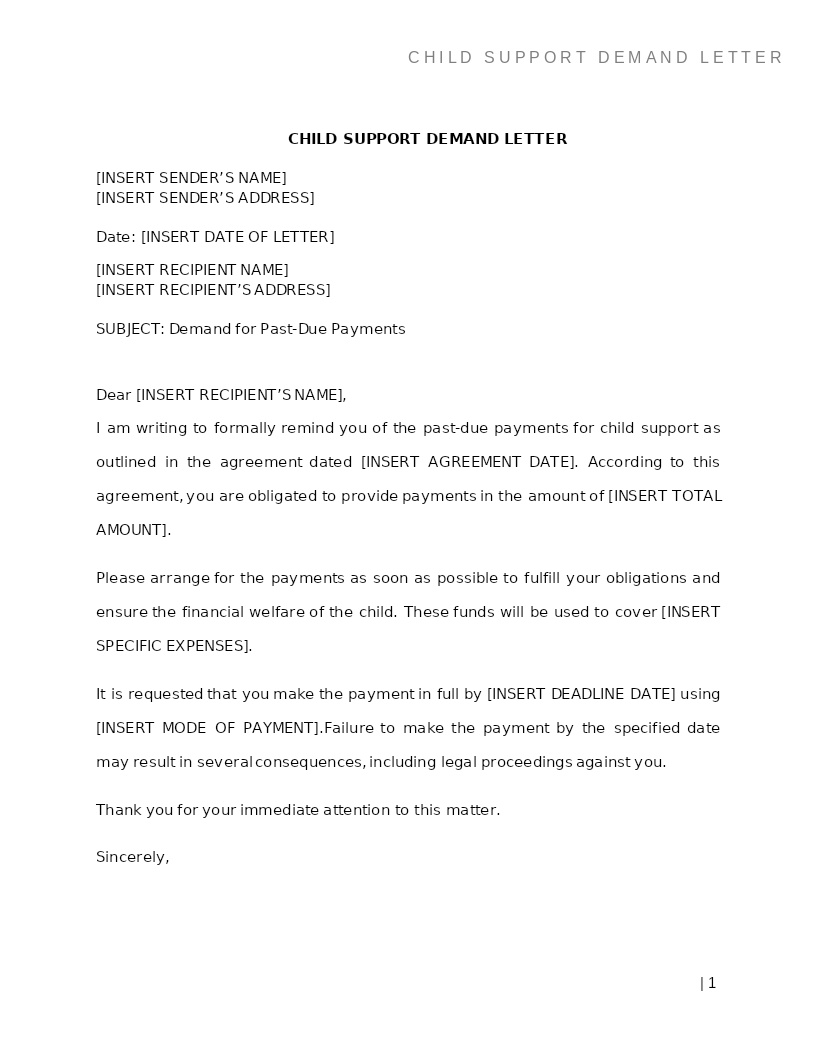
CHILD SUPPORT DEMAND LETTER
How does it work?
1. Choose this template
Start by clicking on "Fill out the template"
2. Complete the document
Answer a few questions and your document is created automatically.
3. Save - Print
Your document is ready! You will receive it in Word and PDF formats. You will be able to modify it.
Addressing Missed Child Support Payments Through Formal Written Notices in the United States
When a parent fails to meet their child support obligations, it’s important to have a clear and documented framework that guides how overdue payments should be addressed. A Child Support Demand Letter provides that structure. It outlines the missed payment amounts, requests repayment by a specific deadline, and serves as an official communication notifying the responsible parent of their legal and financial duties.
Sending this letter creates a level of accountability that allows both parents to communicate clearly, resolve payment issues, and protect the child’s well-being. It also ensures you have a written record of your efforts should enforcement proceedings, court intervention, or legal follow-up become necessary.
Where Child Support Demand Letters Are Commonly Used
Formal demand letters are frequently used in a range of child support-related circumstances, including:
- When a parent has fallen behind on scheduled child support payments
- Before beginning wage garnishment or enforcement actions
- When informal reminders or conversations have not resulted in payment
- When documenting non-payment is necessary for court filings
- During negotiations or modifications of support arrangements
- When interstate enforcement or state agency involvement may become necessary
Any time there are missed payments, a demand letter creates a reliable, time-stamped record of notice and attempts at resolution.
Different Types of Child Support Demand Letters You May Encounter
- Initial Late Payment Notice: Used when payments have just begun to fall behind and the receiving parent seeks quick resolution.
- Formal Demand for Overdue Support: A stronger notice outlining accumulated arrears, deadlines, and potential follow-up actions.
- Final Demand Before Legal Enforcement: Sent when prior notices have been ignored and legal action may be imminent.
- Agency-Directed Demand Letters: Sometimes prepared for submission to child support agencies or state enforcement authorities.
When Legal Guidance Becomes Helpful
Most missed payment situations can be handled with a straightforward demand letter, but professional legal advice becomes valuable when:
- Significant arrears have accumulated, or payments have been missed for months
- The other parent lives in a different state
- Formal enforcement methods (wage garnishment, liens, court motions) may be needed
- The original child support order may need modification
- There are disputes about custody, income changes, or enforceability
- The letter may be used as evidence in court or agency proceedings
Legal review isn’t always required, but it helps reduce risk when the situation is complex, cross-jurisdictional, or emotionally sensitive.
How to Work with This Template
- Identify both parents clearly, including the child’s information
- Specify the overdue amount, due dates, and payment breakdown
- State the deadline for bringing payments up to date
- Mention acceptable payment methods and where payments should be sent
- Refer to the original court order or support agreement
- Review the terms carefully (legal review optional)
- Send the letter through a trackable method for documentation
The template follows common standards used across the United States and provides a clear, professional communication structure.
Frequently Asked Questions
Q1. What is the purpose of a Child Support Demand Letter?
A Child Support Demand Letter formally notifies the other parent that payments are overdue and must be made by a set deadline. It clearly outlines missed amounts, due dates, and expectations for repayment. This ensures there is a documented attempt to resolve the issue before moving to court or enforcement agencies. It also protects the child’s financial needs by prompting timely action.
Q2. Is a Child Support Demand Letter legally required before taking enforcement action?
While not always required, many states encourage or expect some form of written notice before beginning legal enforcement. Providing written documentation shows good-faith effort to resolve the matter. It also strengthens your position if you later seek wage garnishment, contempt motions, or agency involvement. Sending the letter early can help avoid the time and cost of court proceedings.
Q3. What information should be included in a Child Support Demand Letter?
The letter should list the overdue amount, the dates missed, and the total arrears. It should reference the original child support order, include a deadline for payment, and specify how payments should be made. Mentioning consequences of continued non-payment, such as legal action, provides additional clarity. A thorough letter is more effective and more credible if legal action becomes necessary.
Q4. Can a Child Support Demand Letter help avoid going to court?
Yes. Many parents respond once they receive a formal written notice because it highlights the seriousness of the situation. The letter gives the delinquent parent an opportunity to catch up on payments without court intervention. By providing a clear timeline and instructions, the letter can encourage voluntary compliance. This saves time, stress, and legal expenses for both sides.
Q5. Is a Child Support Demand Letter enforceable by itself?
The letter is not an enforceable order, but it becomes a powerful piece of evidence if the matter escalates. Courts and child support agencies often review past notices to understand the communication history. The letter shows that the parent was made aware of arrears and failed to act. This can strengthen your case for stronger enforcement measures.
Q6. What if the parent ignores the Child Support Demand Letter?
If the letter is ignored, you may pursue options such as filing a motion for enforcement, contacting your state child support agency, seeking wage garnishment, or requesting contempt proceedings. The letter helps demonstrate that you took reasonable steps to seek payment voluntarily. It also provides the documentation needed to support these next steps. Continued non-payment after written notice is taken seriously by courts.
Q7. Can I send a Child Support Demand Letter if the other parent lives in a different state?
Yes. Child support obligations are enforceable across states under federal law. You can send the letter directly to the parent’s current address and then work with your state agency if enforcement becomes needed. Providing a written notice is especially important in interstate cases because it creates a documented timeline. This helps when coordinating with agencies under the Uniform Interstate Family Support Act (UIFSA).
Q8. Should I send the Child Support Demand Letter by certified mail?
Sending the letter via certified mail, return receipt requested, is recommended for proof of delivery. This ensures you have evidence that the parent received the notice, which strengthens your position if enforcement becomes necessary. Trackable delivery methods help establish clear documentation and prevent disputes about whether the letter was received. Maintaining copies of all communications is also advisable.