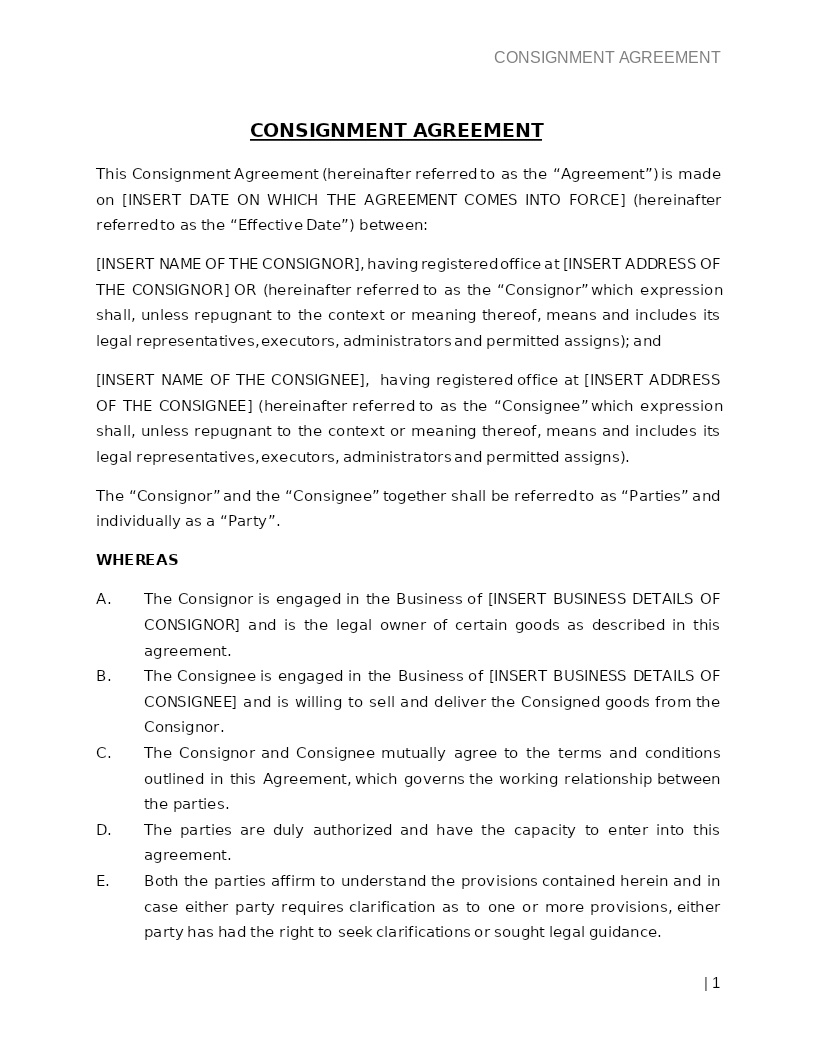
CONSIGNMENT AGREEMENT
How does it work?
1. Choose this template
Start by clicking on "Fill out the template"
2. Complete the document
Answer a few questions and your document is created automatically.
3. Save - Print
Your document is ready! You will receive it in Word and PDF formats. You will be able to modify it.
Understanding Consignment Relationships in the United States
A Consignment Agreement is a legally binding contract between a consignor (the owner of goods) and a consignee (the seller or retailer) that outlines the terms under which goods are placed for sale. Under U.S. law, the consignor retains ownership of the goods until they are sold, and the consignee earns a commission or fee for selling them.
These agreements are common in retail, art galleries, boutiques, furniture stores, antique shops, online marketplaces, and specialty stores. A well-drafted Consignment Agreement establishes the rights and responsibilities of both parties, ensuring transparency, accountability, and legal protection throughout the consignment process.
Where Consignment Agreements Are Commonly Used
Consignment Agreements are widely used for:
- Clothing, jewelry, and boutique merchandise
- Art pieces, photography, and creative works
- Furniture, antiques, and collectibles
- Handmade crafts and artisan products
- Books, music, and specialty retail items
- Online consignment stores and marketplace sellers
- Small businesses looking to expand inventory without upfront costs
Any time goods are displayed and sold by a party who is not the owner, a written agreement ensures clarity and reduces risk.
Different Types of Consignment Agreements You May Encounter
- Retail Consignment Agreement: Used by boutiques, shops, and online sellers to display and sell goods owned by consignors.
- Art or Gallery Consignment Agreement: Specifies terms for displaying, promoting, and selling artwork in galleries or exhibitions.
- Furniture or Antique Consignment Agreement: Used by consignment shops or dealers who sell high-value or specialty items.
- Online Marketplace Consignment Agreement: Applies when goods are listed through online platforms by a third-party seller.
- Exclusive Consignment Agreement: Grants the consignee exclusive rights to sell specified goods within a defined area.
- Non-Exclusive Consignment Agreement: Allows the consignor to place goods with multiple retailers simultaneously.
When Legal Guidance Becomes Helpful
Consignment arrangements involve transfer of possession, not ownership, making legal clarity essential. Legal consultation is especially useful when:
- High-value items such as luxury goods, art, or antiques are involved
- The consignee handles inventory across multiple U.S. states
- Sales include warranties, returns, or customer service responsibilities
- The consignee stores goods in warehouses or shared retail environments
- Loss, theft, or damage risks require insurance and liability coverage
- Payments, commissions, or deductions are complex
- Intellectual property affects the display, marketing, or branding of goods
- The business wants strong protection against fraud or mismanagement
Legal review helps ensure compliance with UCC Article 9, state retail laws, and consumer protection regulations.
How to Work With This Template
- Identify both parties with complete legal details
- Describe the goods being consigned, including condition and valuation
- Specify commission rates, payment schedules, and return policies
- Explain the consignee’s responsibilities for marketing, display, and storage
- Include risk allocation, insurance requirements, and loss/damage responsibilities
- Outline reporting procedures, sales records, and inventory reconciliation
- Add provisions for termination, return of goods, and final payment
- Select applicable U.S. state law and dispute resolution methods
- Review terms jointly (legal consultation recommended)
- Sign electronically or in print
This template follows widely recognized U.S. commercial and retail practices and is compatible with major e-signature platforms.
Frequently Asked Questions
Q1. Why is a Consignment Agreement important for consignors and retailers?
A Consignment Agreement ensures both parties understand who owns the goods, how they will be sold, and how commissions will be calculated. It prevents disputes about pricing, sales reporting, damage, or returns. This protects consignors from losing property and helps consignees operate transparently.
Q2. Does the consignor keep ownership of the goods until they are sold?
Yes. Under U.S. consignment law, the consignor retains ownership until the item is sold. This protects the consignor from losing inventory if the shop closes, faces bankruptcy, or disputes arise. The agreement clearly documents this ownership to avoid legal complications.
Q3. Who is responsible for loss, theft, or damage to consigned goods?
Responsibility is determined by the terms in the agreement. Many Consignment Agreements require the consignee to exercise reasonable care or maintain insurance. By outlining liability clearly, both parties protect themselves from unexpected financial loss or blame.
Q4. How are commissions and payments handled?
The agreement defines commission percentages, payment deadlines, deductions, and refund policies. This transparency ensures the consignor receives accurate payments and the consignee knows exactly how revenue is allocated. Clear payment terms help maintain trust and avoid conflicts.
Q5. Can the consignee discount or negotiate prices without permission?
Only if allowed in the agreement. Many consignors restrict markdowns or require pre-approval to protect the value of their goods. Pricing rules in the agreement prevent disputes and ensure the consignor’s financial interests are respected.
Q6. What happens to unsold inventory at the end of the consignment period?
The agreement typically requires unsold goods to be returned to the consignor within a specific timeframe. This prevents items from being lost, discounted without permission, or sold without proper compensation.
Q7. Does the agreement include inventory tracking and reporting requirements?
Yes. Consignment Agreements often require the consignee to maintain accurate records and provide regular sales reports. This ensures transparency, helps reconcile discrepancies, and supports tax and accounting compliance for both parties.
Q8. Can the agreement be used for online or multi-state consignment sales?
Absolutely. The agreement can be adapted for online marketplaces or consignment stores operating across multiple states. In such cases, it may include additional clauses for shipping costs, returns, digital listings, taxes, and multi-jurisdiction compliance.