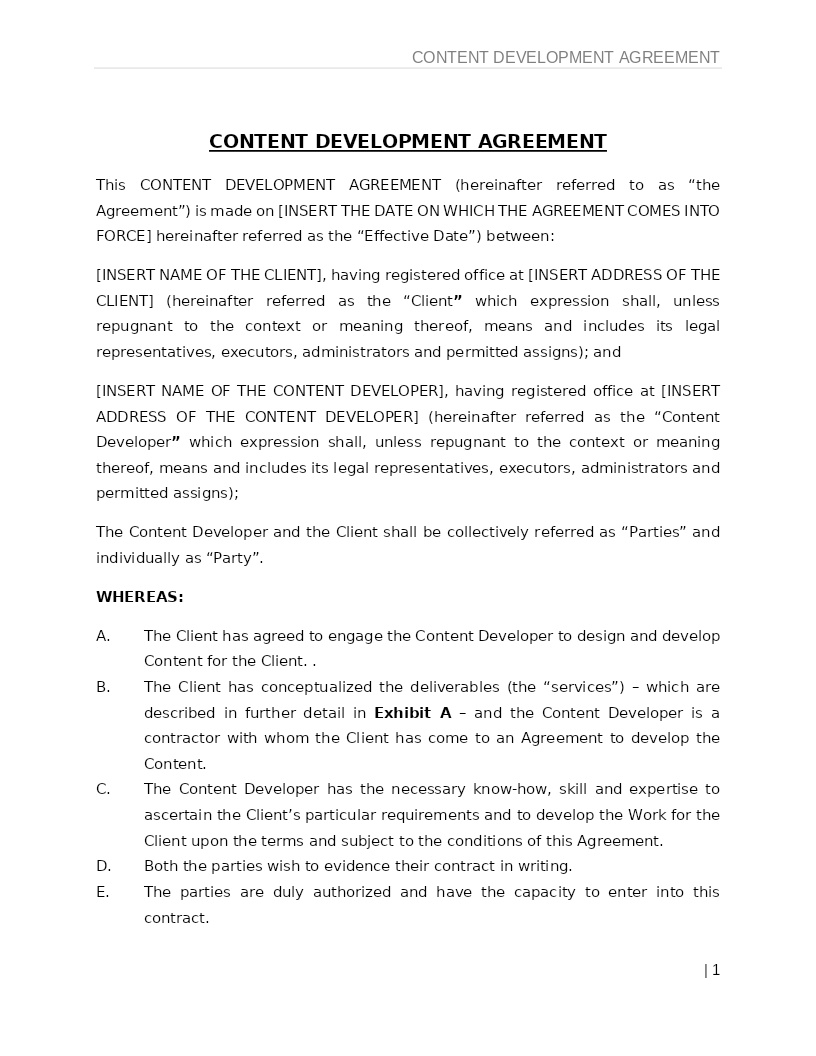
CONTENT DEVELOPMENT AGREEMENT
How does it work?
1. Choose this template
Start by clicking on "Fill out the template"
2. Complete the document
Answer a few questions and your document is created automatically.
3. Save - Print
Your document is ready! You will receive it in Word and PDF formats. You will be able to modify it.
Understanding Content Development Agreements
A Content Development Agreement is a legally binding contract between a client and a content creator, writer, designer, or creative agency that outlines the terms under which original content will be produced. This agreement clarifies the scope of work, content specifications, deadlines, intellectual property ownership, revisions, confidentiality obligations, payment terms, and usage rights.
In the United States, Content Development Agreements are governed by state contract law, federal copyright law, digital media regulations, and industry-specific standards. The agreement ensures that both parties understand their obligations and protects the creator’s intellectual property while giving the client clear rights to use the final content.
Where Content Development Agreements Are Commonly Used
Content Development Agreements are widely used across digital, creative, and commercial industries, such as:
- Website and blog content development
- Social media campaigns and digital marketing content
- Corporate communications and branding materials
- E-books, guides, and long-form writing
- Video scripts, storyboards, and creative concepts
- SEO content, keyword-focused pieces, and marketing articles
- Graphic design, product descriptions, and advertising materials
- Content creation for apps, platforms, and online businesses
Any time a business or individual hires a creator to produce original content, this agreement provides structure and legal protection.
Different Types of Content Development Services You May Encounter
- Written Content Development: Articles, blogs, web pages, scripts, reports, and whitepapers.
- Graphic or Visual Content Creation: Logos, infographics, digital illustrations, and marketing creatives.
- Multimedia Content: Video scripts, audio recordings, animations, podcasts, and editing.
- Marketing & SEO Content: Keyword optimization, social captions, advertising copy, and email campaigns.
- Brand Content Development: Brand stories, creative concepts, content strategies, and messaging frameworks.
When Legal Guidance Becomes Helpful
Legal review is beneficial when:
- Content includes copyright-sensitive materials, brand assets, or confidential information
- The agreement includes detailed IP assignment and usage rights
- Content will be used for commercial marketing or distributed widely
- The creator works with subcontractors or uses stock images and third-party assets
- The project involves complex revisions, milestones, or strict deadlines
- The agreement touches on royalties, licensing fees, or ongoing content maintenance
- A business must ensure compliance with FTC advertising rules or SEO guidelines
Legal guidance helps avoid copyright infringement, ensures clarity of ownership, and protects both the creator and the client.
How to Work with This Template
- Identify the client and content creator
- Define the scope of work, deliverables, and content format
- Outline timelines, milestones, and submission schedules
- Clarify compensation, invoicing, and revision policies
- Specify IP ownership assignment or licensed usage
- Add confidentiality, data protection, and non-disclosure clauses
- Choose the governing U.S. state law
- Set quality standards and approval processes
- Sign electronically or in hard copy according to state contract requirements
This template follows standard U.S. creative industry practices and works seamlessly with digital signature platforms.
Frequently Asked Questions
Q1. What is a Content Development Agreement and why is it important?
A Content Development Agreement outlines how a creator will produce original content for a client. It is important because it defines responsibilities, deadlines, IP rights, and payment terms, ensuring both parties have clear expectations and legal protection.
Q2. Who owns the content created under the agreement?
Ownership depends on the contract. Some agreements include work-for-hire or IP assignment clauses transferring full ownership to the client. Others allow creators to retain ownership while granting the client a license. Clear IP terms prevent future disputes.
Q3. Are Content Development Agreements legally enforceable in the U.S.?
Yes. These agreements are enforceable under U.S. contract and copyright laws. They protect both parties when disagreements arise regarding scope, revisions, usage rights, or compensation.
Q4. Can the agreement include multiple rounds of revisions?
Absolutely. Most agreements specify how many revisions are included, timelines for revisions, and charges for extra rounds. Clear revision terms help manage workload and avoid misunderstandings.
Q5. What types of content are covered by this agreement?
The agreement can cover written content, graphics, videos, marketing materials, SEO content, apps, and more. The scope of work section outlines the exact deliverables.
Q6. Can third-party materials be included in the content?
Yes, but the agreement should address licensing, permissions, or usage rights for any stock images, music, or external materials. This prevents copyright infringement and ensures lawful use.
Q7. Can a Content Development Agreement be terminated early?
Yes. Most agreements include termination clauses for non-performance, late payments, or mutual consent. Terms for refunds, partial payments, or unfinished work are typically defined.
Q8. Are electronic signatures valid for Content Development Agreements?
Yes. Under the U.S. ESIGN Act, electronic signatures are legally enforceable. Clients and creators commonly use e-signature platforms for faster approvals.
Q9. Is confidentiality included in a Content Development Agreement?
Yes. Many projects involve sensitive information, drafts, or proprietary materials. Confidentiality clauses help protect trade secrets and prevent unauthorized disclosure.
Q10. Is this agreement suitable for freelancers, agencies, and businesses?
Definitely. Whether working with freelancers, agencies, or in-house teams, a Content Development Agreement ensures clarity, professionalism, and legal protection for all parties involved.