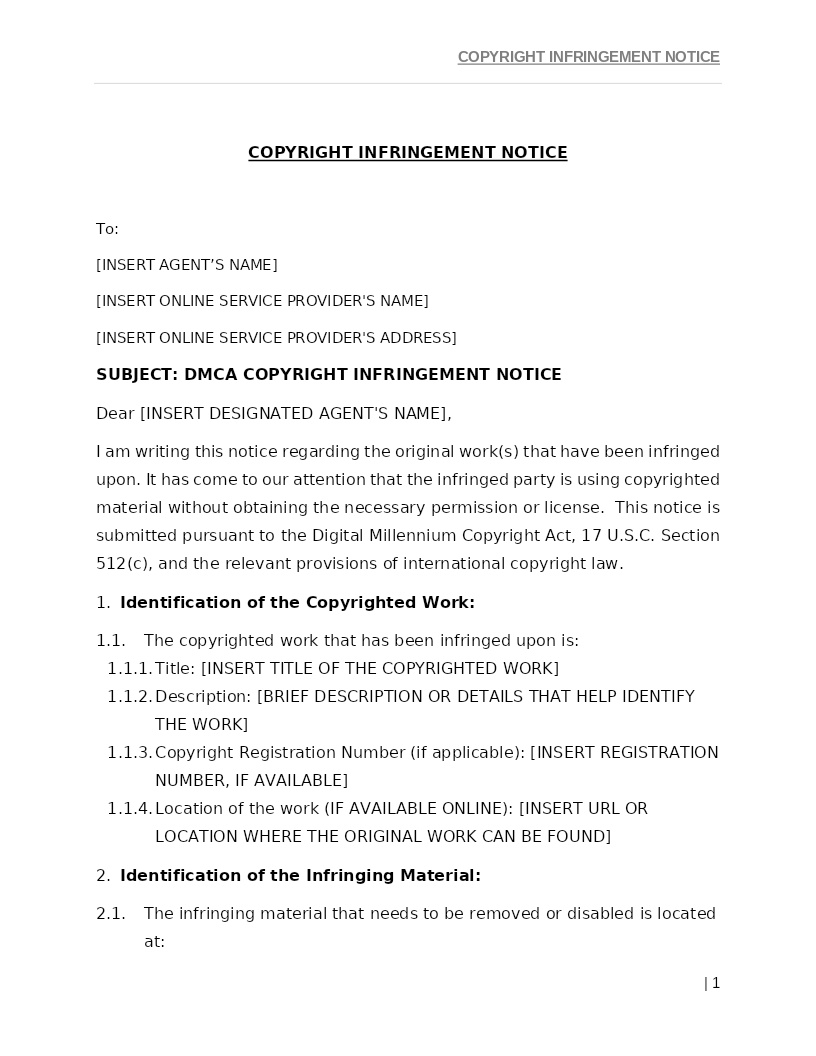
COPYRIGHT INFRINGEMENT NOTICE
How does it work?
1. Choose this template
Start by clicking on "Fill out the template"
2. Complete the document
Answer a few questions and your document is created automatically.
3. Save - Print
Your document is ready! You will receive it in Word and PDF formats. You will be able to modify it.
Protecting Intellectual Property Rights Through a Copyright Infringement Notice
A Copyright Infringement Notice is a formal written communication used to notify an individual, organization, service provider, or online platform that copyrighted material has been used, reproduced, distributed, displayed, or communicated without proper authorization. Drafted in accordance with the U.S. Copyright Act, the Digital Millennium Copyright Act (DMCA), and applicable case law, this notice functions as an official demand for the immediate removal, cessation, or correction of unauthorized use. It articulates the copyright owner’s legal rights, presents evidence of ownership, identifies the infringing material, and outlines the legal remedies available if the infringement continues. This notice is a critical compliance tool for ensuring holders of copyrights including businesses, creators, authors, and rights-management organizations can enforce their exclusive rights while minimizing the need for litigation. By issuing such a notice, the copyright holder demonstrates proactive protection of intellectual property and ensures adherence to federal copyright requirements.
A comprehensive Copyright Infringement Notice details the copyrighted work at issue, including titles, registration information (if applicable), dates of creation, and publication history. It identifies the specific infringing activity, which may include online reproductions, unauthorized downloads, derivative works, commercial exploitation, or use on social media, websites, or printed materials. The notice also provides URLs, screenshots, timestamps, and other evidentiary support demonstrating the infringement. It explains the copyright owner’s legal position, cites the applicable statutory rights, and demands prompt corrective action such as removal, takedown, destruction of unauthorized copies, or cessation of unauthorized distribution.
For online infringements, the document may serve as a DMCA Takedown Notice sent to an Internet service provider (ISP) or hosting platform, invoking safe-harbor provisions requiring expeditious removal of infringing content. The notice further advises on potential legal consequences including statutory damages, injunctive relief, and attorneys’ fees while emphasizing that the issuer seeks resolution without escalating to litigation. This structured, legally compliant process protects intellectual property while maintaining clarity and fairness.
Where Copyright Infringement Notices Are Commonly Used
Copyright Infringement Notices are used across many sectors, including:
- Digital content creators, publishers, musicians, artists, photographers, and designers
- Software companies protecting source code, applications, or licensed libraries
- E-commerce platforms addressing unauthorized use of images or product descriptions
- Educational institutions managing copyrighted teaching materials
- Businesses protecting branding, written content, graphics, or marketing assets
- Media companies managing film, broadcast, and licensing rights
- Nonprofits and research institutions safeguarding original publications
- Anyone whose work has been copied, reproduced, or redistributed without permission
Any individual or entity with copyrighted material may benefit from issuing such a notice.
Different Types of Copyright Infringement Notices You May Encounter
1. DMCA Takedown Notices: Used to request removal of infringing material from online platforms and ISPs.
2. Cease and Desist Notices: Demand immediate cessation of unauthorized use and warn of legal action.
3. Pre-Litigation Demand Letters: Seek compensation or settlement before filing a lawsuit.
4. Unauthorized Distribution Notices: Address illegal sharing, duplication, or sale of copyrighted content.
5. Digital Platform Removal Requests: Sent to marketplaces, social media platforms, or hosting providers.
When Legal Guidance Becomes Helpful
Legal consultation may be needed when:
- The infringement is commercial, widespread, or financially significant
- Registration status affects eligibility for statutory damages under U.S. law
- The infringer refuses to comply with the notice
- The ownership of the work may be disputed
- The material is used in a way that raises “fair use” questions
- International infringement or cross-border jurisdiction issues exist
- A lawsuit may be required to enforce copyright rights
Legal review strengthens the notice and ensures proper enforcement strategy.
How to Work with This Template
- Clearly identify the copyrighted work, including authorship and registration details
- Document the infringing activity with URLs, screenshots, or physical evidence
- Specify the actions required (removal, takedown, destruction of copies, etc.)
- Cite the applicable legal rights under the Copyright Act and DMCA
- Provide a reasonable timeline for compliance
- Include contact information for follow-up or dispute resolution
- Preserve copies of the notice for legal documentation
- Review the notice with counsel when infringement is substantial or complex
- Update the notice for accuracy if additional infringements surface
- Use appropriate channels (legal mail, platform submission forms, or email) for delivery
This template aligns with U.S. intellectual property enforcement standards and DMCA-compliant practices.
Frequently Asked Questions
Q1. What is a Copyright Infringement Notice, and why is it important?
It is a formal notice informing an individual or platform of unauthorized use of copyrighted material. It is important because it protects intellectual property and supports legal enforcement under U.S. copyright law.
Q2. Does a Copyright Infringement Notice have to follow the DMCA?
Only if the infringement occurs online and the notice is sent to a service provider. DMCA compliance ensures takedown obligations are triggered.
Q3. Do I need to register my work with the U.S. Copyright Office before sending a notice?
No, registration is not required for issuing a notice. However, registration is required for filing a lawsuit and obtaining statutory damages.
Q4. What evidence should be included in the notice?
Copies of the original work, screenshots, URLs, timestamps, and any documentation proving unauthorized use.
Q5. What happens if the infringer ignores the notice?
You may escalate to legal action, issue a cease-and-desist letter, or file a DMCA claim with the platform hosting the content.
Q6. Can a Copyright Infringement Notice request compensation?
Yes. Some notices may request settlement, licensing fees, or reimbursement, depending on the circumstances.
Q7. Does this notice apply to social media infringements?
Absolutely. Social platforms must follow DMCA guidelines when properly notified.
Q8. Can fair use apply to the infringing content?
Possibly. Courts examine purpose, amount used, nature of the work, and effect on market value. A notice should still be sent unless fair use is clear.
Q9. Are businesses required to respond to infringement notices?
Online platforms and ISPs must respond under the DMCA; individuals and businesses risk legal action if they ignore the notice.
Q10. Should legal counsel review a Copyright Infringement Notice?
Yes. Legal review ensures accuracy, strengthens enforceability, and reduces risk of counterclaims.