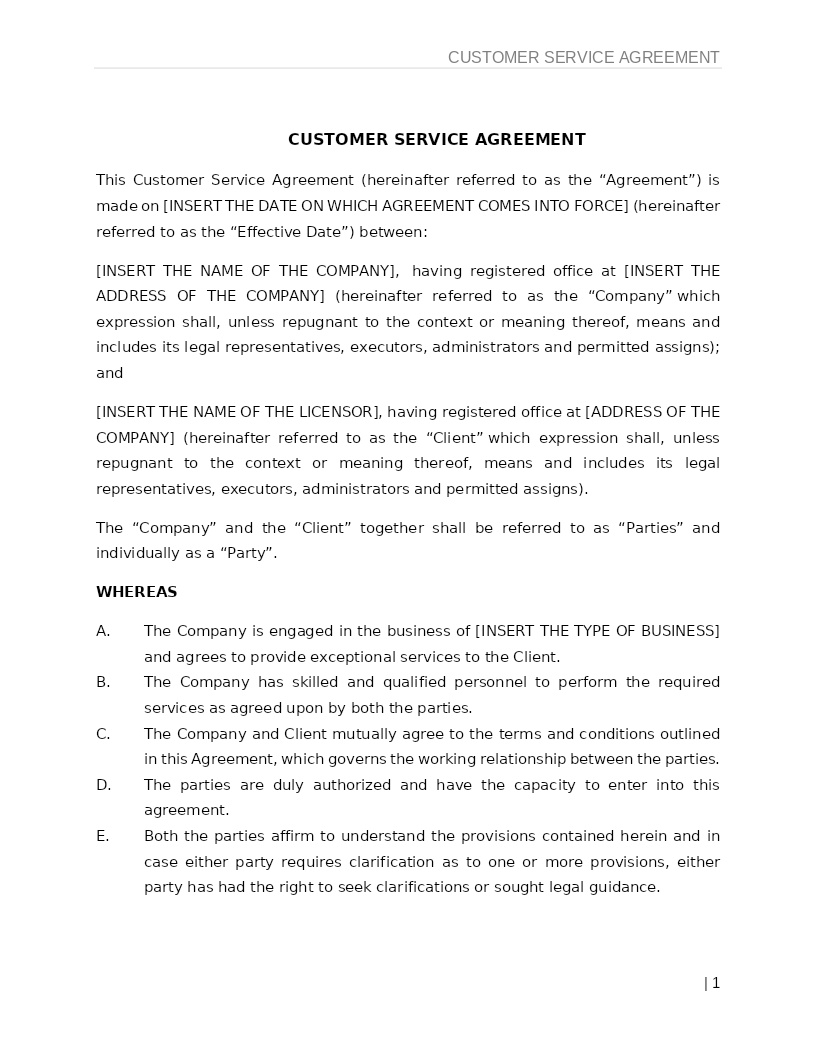
CUSTOMER SERVICE AGREEMENT
How does it work?
1. Choose this template
Start by clicking on "Fill out the template"
2. Complete the document
Answer a few questions and your document is created automatically.
3. Save - Print
Your document is ready! You will receive it in Word and PDF formats. You will be able to modify it.
Understanding Customer Service Agreement in U.S.
A Customer Service Agreement is a legally binding contract between a business and its customer that clearly outlines the terms and conditions for delivering services. It defines the service scope, responsibilities of both parties, performance expectations, payment obligations, confidentiality rules, warranties, and liability limitations. In the United States, this agreement helps ensure compliance with consumer protection laws, industry standards, and contractual best practices. A well-structured Customer Service Agreement protects both parties, increases transparency, and ensures consistent service delivery while minimizing disputes and misunderstandings.
Where a Customer Service Agreement Is Commonly Used
- Service-based businesses (IT, consulting, HR, marketing, maintenance, etc.)
- Professional service firms such as law, accounting, engineering, or design
- SaaS providers and software companies
- Healthcare, wellness, and personal care service providers
- Home services, repair companies, and contractors
- Freelancers, agencies, and independent consultants
- Customer support and helpdesk operations
Different Types of Customer Service Agreements
- Standard Service Agreements: Used for general service-based relationships across industries.
- IT & Technical Support Service Agreements: Include uptime guarantees, response times, and cybersecurity obligations.
- Professional Services Agreements: Cover consulting, legal, accounting, architecture, and similar services.
- Maintenance and Repair Service Agreements: Define recurring services, inspections, repairs, and replacement responsibilities.
- SaaS & Subscription Service Agreements: Address digital service delivery, support levels, and data privacy obligations.
- Customized or Industry-Specific Agreements: Tailored to specialized fields such as healthcare, finance, or security services.
When Legal Guidance Becomes Helpful
Professional legal review ensures the agreement complies with U.S. consumer laws, industry regulations, and contractual standards. Lawyers help:
- Tailor service scope and risk allocation
- Establish enforceable rights and liabilities for both parties
- Ensure compliance with state and federal regulations
- Draft clear payment, termination, and dispute resolution clauses
- Address data privacy, intellectual property, and confidentiality obligations
- Reduce exposure to lawsuits, penalties, or disputes
- Incorporate protective clauses for warranties, disclaimers, and indemnities
- Adapt the contract to industry-specific regulatory frameworks
Legal consultation guarantees that your agreement is thorough, compliant, and aligned with your business model and risks.
How to Use This Agreement
- Provide it to customers before starting any service
- Use it as a reference for service quality, timelines, and responsibilities
- Integrate into onboarding or customer intake processes
- Review it annually to stay compliant with updated U.S. laws
- Keep signed copies for legal and operational purposes
Frequently Asked Questions
Q1. What is the purpose of a Customer Service Agreement?
A Customer Service Agreement outlines the expectations, responsibilities, and service standards between a business and its customers. Its purpose is to prevent misunderstandings, protect both parties legally, and ensure consistent service delivery. It provides a clear reference point for rights, obligations, and service limitations.
Q2. Is a Customer Service Agreement legally binding in the United States?
Yes. Once signed by both parties, it becomes a legally enforceable contract. U.S. contract law recognizes written agreements that clearly outline terms, consideration, and mutual consent. This ensures both parties are protected if disputes arise or obligations are not fulfilled.
Q3. What should be included in a Customer Service Agreement?
A comprehensive agreement typically includes service scope, responsibilities, payment terms, warranties, confidentiality rules, liability limitations, service levels, termination clauses, and dispute resolution procedures. These elements create a transparent and manageable business relationship.
Q4. Does this agreement protect the business from liability?
Yes. The agreement includes clauses that limit liability, disclaim certain risks, and define responsibilities clearly. While it cannot eliminate all liability, it significantly reduces legal exposure by outlining what the service provider is and is not responsible for under U.S. contract law.
Q5. Can customers request modifications to the agreement?
Customers may request changes depending on the nature of services. Customizations are common for long-term, high-value, or specialized service relationships. Any modifications should be reviewed by legal counsel to ensure they remain enforceable and compliant with applicable laws.
Q6. How does the agreement handle disputes or complaints?
Most agreements include a structured dispute resolution process, such as negotiation, mediation, or arbitration. This helps resolve issues faster and at a lower cost than litigation. Clear procedures also prevent escalation and ensure fair handling of customer complaints.
Q7. Are payment terms covered in a Customer Service Agreement?
Yes. Payment schedules, invoicing cycles, accepted payment methods, penalties for late payments, and refund policies are clearly defined. Transparent payment terms help avoid billing disputes and ensure smooth financial transactions between the parties.
Q8. How often should a Customer Service Agreement be updated?
It is recommended to review and update the agreement annually or whenever industry regulations, business processes, or service offerings change. Regular updates help maintain compliance with U.S. federal, state, and industry-specific laws while protecting your business from new risks.