CUSTOMER SERVICE POLICY
How does it work?
1. Choose this template
Start by clicking on "Fill out the template"
2. Complete the document
Answer a few questions and your document is created automatically.
3. Save - Print
Your document is ready! You will receive it in Word and PDF formats. You will be able to modify it.
Understanding Customer Service Policies
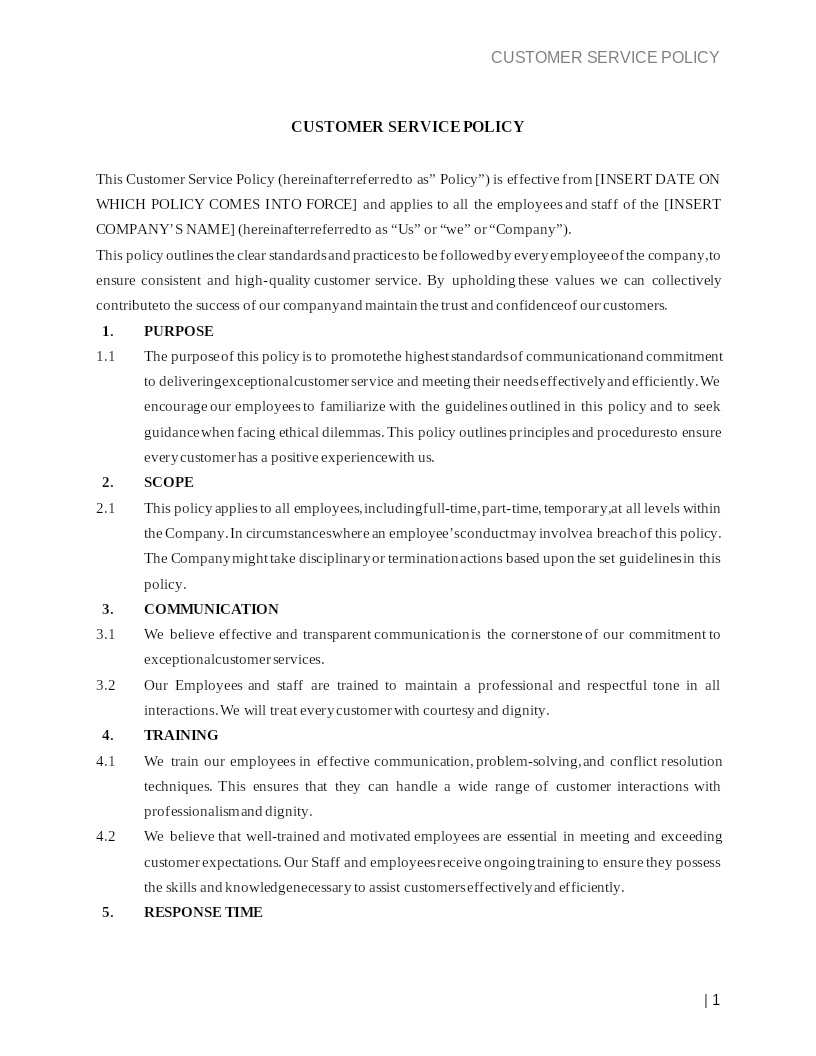
A Customer Service Policy outlines the standards, procedures, and expectations that guide how an organization interacts with its customers. It defines how employees should deliver assistance, respond to inquiries, resolve complaints, and maintain a positive customer experience. A clear, written policy ensures consistent service across the organization, protects customer relationships, and strengthens brand reputation.
In the United States, Customer Service Policies may also reference consumer protection laws, accessibility standards, privacy regulations, and industry-specific guidelines to ensure compliant and ethical service practices.
Where Customer Service Policies Are Commonly Used
Customer Service Policies are essential in nearly all industries, including:
• Retail stores and e-commerce platforms
• Hospitality, travel, and tourism
• Financial services and fintech platforms
• Healthcare and wellness services
• Technology companies and SaaS businesses
• Telecommunications and utility providers
• Professional services and consulting firms
Different Types of Customer Service Guidelines You May Encounter
- General Service Standards: Define expected response times, communication tone, and quality benchmarks.
- Complaint Resolution Procedures: Outline steps for handling customer concerns, escalation levels, and issue tracking.
- Refund, Exchange & Return Protocols: Explain conditions under which refunds or replacements can be granted.
- Accessibility and Inclusivity Guidelines: Ensure compliance with ADA requirements and accessible communication practices.
- Technical Support or Helpdesk Procedures: Specify how support teams assist users with product or service-related issues.
When Legal Guidance Becomes Helpful
Most organizations can draft a basic Customer Service Policy on their own, but legal review is useful when:
• The policy applies to regulated industries (e.g., fintech, healthcare)
• The business collects or uses personal data during support interactions
• Refunds, warranties, or guarantees may create contractual obligations
• The business serves customers across multiple U.S. states
• Accessibility requirements (ADA, Section 508) may apply
• Terms of service, disclaimers, or liabilities need clarification
How to Work with This Template
• Define your company’s core values and service commitments
• Specify communication channels (email, chat, phone, in-person)
• Set response time expectations and escalation procedures
• Include customer privacy and data-handling requirements
• Record complaint resolution steps and follow-up guidelines
• Choose the governing U.S. state law
• Review internally (legal review optional)
• Publish and share the policy with all employees
Frequently Asked Questions
Q1. Why is a Customer Service Policy important for a business?
A Customer Service Policy ensures consistent and professional interactions with customers. It sets clear expectations for employees, supports brand reputation, and helps prevent misunderstandings, especially in industries where service quality directly affects customer retention.
Q2. Does a Customer Service Policy help reduce customer complaints?
Yes. When employees follow standardized procedures, issues are handled faster and more efficiently. A clear policy also gives customers confidence that their concerns will be addressed fairly and transparently.
Q3. What elements should be included in a strong Customer Service Policy?
Essential elements include service standards, communication guidelines, response times, complaint procedures, return/refund rules, escalation steps, and employee responsibilities. These components ensure a complete and functional customer service framework.
Q4. Is a Customer Service Policy legally binding?
Internally, it is binding on employees as part of workplace rules. Externally, if published publicly, certain parts—such as refund or guarantee language may create legal obligations. This is why accuracy and clarity matter.
Q5. Should a Customer Service Policy include accessibility provisions?
Yes. U.S. accessibility laws, such as the Americans with Disabilities Act (ADA), may require accommodations for customers with disabilities. Including accessibility guidelines ensures compliance and inclusive service delivery.
Q6. How often should a Customer Service Policy be updated?
Most organizations review it annually or when service channels, technology, or regulations change. Regular updates keep the policy relevant and effective.
Q7. Does a Customer Service Policy apply to online businesses?
Absolutely. E-commerce and SaaS companies rely heavily on customer interactions via email, chat, or helpdesk systems. A structured policy helps manage digital support effectively.
Q8. Can a Customer Service Policy help train new employees?
Yes. It serves as a foundational document for onboarding, outlining expectations and guiding new staff through appropriate communication and service behaviors.
Q9. Should a Customer Service Policy address refund or return requests?
If your business offers refunds, exchanges, or guarantees, these terms should be clearly stated. This helps avoid disputes and ensures consumer protection compliance.
Q10. Are electronic signatures or digital acceptance needed for this policy?
Not for customers this is typically an internal policy. However, employees may acknowledge the policy electronically as part of onboarding, which is valid under U.S. e-signature laws.