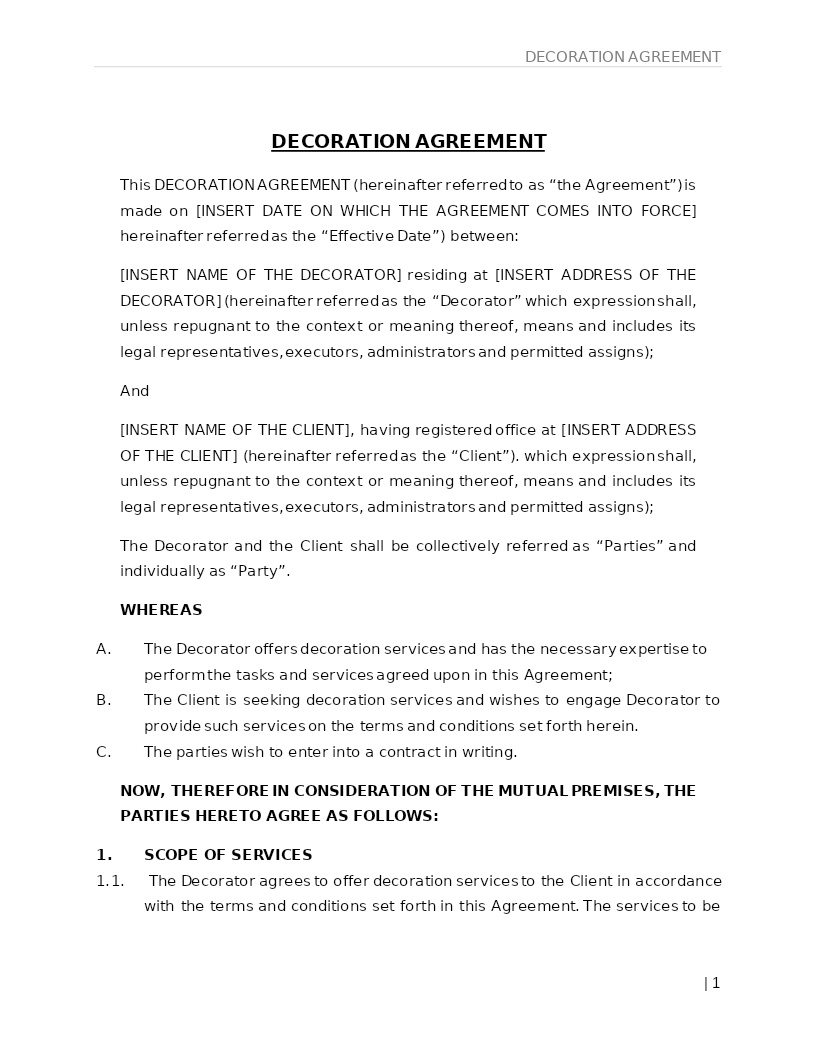
DECORATION AGREEMENT
How does it work?
1. Choose this template
Start by clicking on "Fill out the template"
2. Complete the document
Answer a few questions and your document is created automatically.
3. Save - Print
Your document is ready! You will receive it in Word and PDF formats. You will be able to modify it.
Understanding Decoration Services in the United States
A Decoration Agreement is a legally binding contract between a decorator and a client that outlines the design services to be provided for events, homes, commercial spaces, or special occasions. It defines the decoration theme, materials, installation process, timelines, teardown responsibilities, and overall scope of work.
In the United States, these agreements help prevent misunderstandings by clearly specifying expectations, budgets, payment terms, safety requirements, and liability obligations. They also ensure compliance with local venue rules, permits, and insurance requirements when applicable.
A well-drafted Decoration Agreement establishes professionalism, protects both parties, and ensures transparent communication throughout the project.
Where Decoration Agreements Are Commonly Used
Decoration Agreements are widely used in:
- Weddings, receptions, and private parties
- Corporate events and conferences
- Holiday, seasonal, and festival décor installations
- Commercial and retail space décor
- Home staging and interior stylization
- Trade shows, exhibitions, and promotional events
- Photoshoots, film sets, and creative projects
- Grand openings, brand activations, and pop-up events
Any time a decorator is hired to design, install, or remove decorations, a written agreement ensures accountability and smooth execution.
Different Types of Decoration Agreements You May Encounter
- Event Decoration Agreements: Cover décor planning, design, installation, and removal for weddings, parties, and corporate gatherings.
- Commercial/Business Decoration Agreements: Used for retail displays, holiday decorations, and themed installations in business spaces.
- Home & Interior Styling Agreements: Apply to residential décor projects, staging, or festive themes within homes.
- Seasonal or Long-Term Decor Agreements: Cover recurring services such as holiday décor, monthly redesigns, or seasonal themes.
- Rental-Based Decoration Agreements: Include decor items rented from the decorator, with specific terms for care, damage, and return.
When Legal Guidance Becomes Helpful
Legal guidance is valuable when:
- The project involves large budgets, expensive décor, or specialty installations
- Work must comply with venue rules, fire codes, or safety regulations
- Multiple subcontractors, vendors, or third-party rentals are involved
- Cancellations, damages, or weather-related risks may impact performance
- Intellectual property applies to original décor designs or creative concepts
- The decorator provides custom-made materials or artwork
- Insurance coverage, liability claims, or property damage are concerns
- The agreement includes complex payment milestones or non-refundable deposits
Attorneys ensure the contract complies with local U.S. regulations, protects creative rights, and minimizes legal risks.
How to Work With This Template
- Identify both parties with complete contact information
- Describe the decoration theme, materials, design concept, and services
- Outline installation setup, teardown timelines, and on-site requirements
- Specify total project cost, deposits, payment schedule, and refund rules
- Include safety requirements and venue compliance obligations
- Add cancellation, rescheduling, or weather-related terms
- Include liability, indemnity, and damage provisions
- Add IP ownership for custom designs or photos taken of the installation
- Select governing U.S. state law and dispute resolution methods
- Review together (legal consultation recommended)
- Sign electronically or on paper
This template follows general U.S. contracting standards and is compatible with all major e-signature platforms.
Frequently Asked Questions
Q1. Why is a Decoration Agreement important for U.S. clients and decorators?
A Decoration Agreement ensures both parties understand the full scope of services, timelines, and responsibilities before the project begins. It reduces misunderstandings about design expectations and protects both sides legally if disputes arise. This clarity is crucial for professional, stress-free event or décor planning.
Q2. Does a Decoration Agreement protect against damages or accidents?
Yes. The agreement typically includes liability, indemnity, and insurance-related clauses that specify who is responsible for damages to rented décor items, venue spaces, or property. These provisions help prevent unexpected financial disputes and ensure safety compliance.
Q3. Are payment terms and deposits included in the agreement?
Absolutely. The contract outlines total cost, deposits, installment payments, and refund policies. This ensures transparency and prevents conflicts, especially for events or custom décor where upfront costs are involved. Clear financial terms protect both parties from misunderstandings.
Q4. Can design changes or last-minute requests be included in the agreement?
Yes. Most Decoration Agreements include procedures for handling modifications, additional charges, and deadlines. This allows flexibility while ensuring that changes are documented and approved. A structured process helps avoid rushed decisions or disputes during the event.
Q5. Does the agreement include setup and removal timelines?
Yes. Timelines for installation, teardown, and cleanup are critical components. These details help coordinate with venue rules, event schedules, and other vendors. Clear timelines ensure efficiency, prevent delays, and minimize disruption to the event or property.
Q6. What if the event is canceled or postponed?
The agreement usually includes cancellation and rescheduling policies, which may involve partial refunds, non-refundable deposits, or transfer fees. These terms protect decorators from last-minute losses while giving clients clear expectations during unforeseen changes.
Q7. Are decorators allowed to use photos of their work?
Often, yes, but the agreement should specify usage rights for photographs, especially if people or proprietary content appear in the images. Clear IP rules prevent disputes and allow decorators to showcase their work while respecting client privacy and branding needs.
Q8. Can a Decoration Agreement be used for both small and large projects?
Definitely. Whether decorating a home, a small party, or a large commercial event, the agreement can be tailored to fit the project size. It scales easily with detailed clauses that address budget, materials, staffing, logistics, and liability requirements.