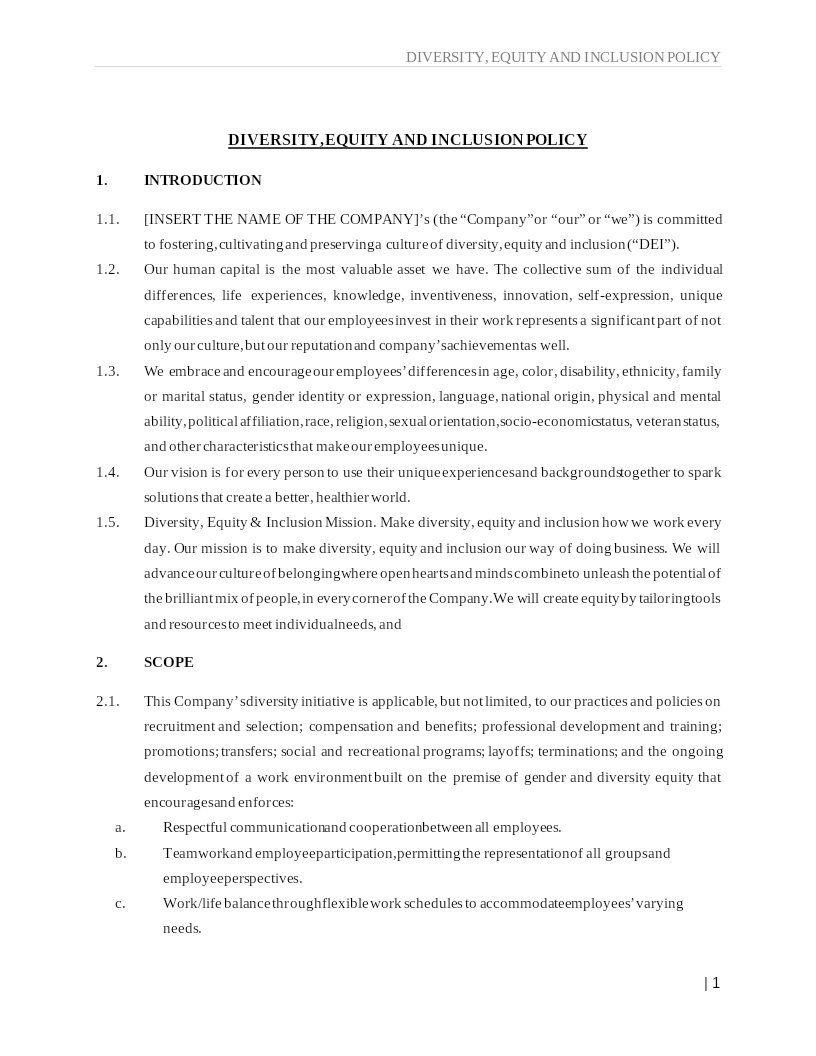
DIVERSITY,EQUITY AND INCLUSION POLICY
How does it work?
1. Choose this template
Start by clicking on "Fill out the template"
2. Complete the document
Answer a few questions and your document is created automatically.
3. Save - Print
Your document is ready! You will receive it in Word and PDF formats. You will be able to modify it.
Building a Workplace Rooted in Inclusivity and Equal Opportunity
A Diversity, Equity & Inclusion (DEI) Policy outlines an organization’s commitment to fair treatment, equal access, representation, and a respectful environment for all employees. This policy establishes the framework through which workplaces prevent discrimination, embrace diverse backgrounds, and implement equitable practices across hiring, training, promotions, and daily interactions.
In the United States, DEI policies align with federal and state laws such as Title VII of the Civil Rights Act, the Americans with Disabilities Act (ADA), the Age Discrimination in Employment Act (ADEA), and various state-level anti-discrimination standards. A DEI policy provides structure and guidance for organizations to operate ethically while meeting compliance requirements.
This policy enables employers and employees to foster a culture in which every individual feels valued, supported, and empowered to contribute to collective success.
Where DEI Policies Are Commonly Used
DEI policies are essential across modern workplaces, including:
• Corporations, startups, and small businesses
• Nonprofits, universities, and research institutions
• Government agencies and public sector offices
• Healthcare facilities, educational institutions, and hospitality organizations
• Tech companies, creative industries, and professional services
Different Components You May Encounter
- Diversity Standards: Guidelines promoting varied representation in culture, gender, ethnicity, ability, sexual orientation, and more.
- Equity Commitments: Actions ensuring fair opportunities, equal access to resources, and unbiased decision-making.
- Inclusion Practices: Measures that support employees feeling welcomed, respected, and heard at all organizational levels.
- Anti-Discrimination & Anti-Harassment Rules: Clear statements reinforcing zero tolerance for unlawful or inappropriate behaviors.
- Reasonable Accommodations: Support for employees with disabilities, religious needs, health conditions, or personal circumstances.
- Training & Education: Ongoing awareness initiatives to eliminate bias and strengthen cultural competence.
When Legal Guidance Becomes Helpful
While many DEI practices are straightforward, legal assistance is valuable when:
• The policy must comply with multi-state or federal employment regulations
• The workplace integrates DEI commitments into hiring, performance reviews, or promotions
• Training programs focus on sensitive areas such as unconscious bias or harassment
• The workplace experiences complaints, investigations, or disputes connected to discrimination
• Multiple departments or external partners must adopt consistent DEI standards
• The organization wants to publicly publish its DEI commitments or reporting metrics
How to Work with This Template
• Identify your organization’s DEI goals and commitments
• Reference applicable U.S. federal and state anti-discrimination laws
• Define workplace behaviors that support inclusion and respect
• Outline expectations for leaders, managers, and employees
• Establish procedures for reporting concerns or violations
• Assign responsibility for training and policy updates
• Sign or adopt the policy through internal approval channels
• Share the policy organization-wide and include it in onboarding
• Review and revise annually to reflect evolving standards
Frequently Asked Questions
Q1. What is the purpose of a Diversity, Equity & Inclusion (DEI) Policy?
A DEI Policy establishes an organization’s commitment to maintaining a workplace that values different backgrounds, ensures fair treatment, and creates inclusive opportunities for all employees. It guides actions, behaviors, and decisions to ensure everyone feels respected and supported.
Q2. Is a DEI Policy legally required in the United States?
While not mandatory by federal law, DEI policies help organizations comply with broader anti-discrimination laws. Many employers adopt these policies to reduce legal risks and demonstrate commitment to equal employment opportunity and fair workplace practices.
Q3. How does a DEI Policy benefit employees?
It promotes a safe and respectful environment where employees feel valued regardless of their identity or background. This leads to stronger morale, better collaboration, improved innovation, and reduced workplace conflicts.
Q4. Does a DEI Policy impact hiring and promotions?
Yes. A DEI policy encourages organizations to use fair and unbiased processes in recruiting, evaluating, and promoting employees. It reduces the risk of discrimination and supports equal access to growth opportunities.
Q5. Does this policy apply to remote or hybrid employees?
Absolutely. DEI principles apply to all employees, regardless of work location. Remote teams benefit from inclusive communication, equal access to tools, and non-discriminatory treatment in assignments or evaluations.
Q6. How does a DEI Policy address discrimination or harassment issues?
The policy defines prohibited behaviors, explains reporting procedures, and outlines how concerns will be investigated. It reinforces the organization’s zero-tolerance stance and ensures accountability for violations.
Q7. Are employers required to provide DEI training?
While not mandated universally, training supports compliance, raises awareness, and helps employees understand how to implement DEI principles in daily interactions. Many employers conduct annual or quarterly sessions.
Q8. What role do managers play in enforcing DEI commitments?
Managers must model inclusive behavior, ensure fair decision-making, address misconduct, and provide accommodations where appropriate. They play a key role in creating equitable opportunities within their teams.
Q9. Can DEI initiatives include accommodations for disabilities or religious practices?
Yes. Reasonable workplace accommodations are protected under federal and state laws. DEI policies support these accommodations by promoting accessibility and respect for individual needs.
Q10. How often should a DEI Policy be updated?
Annual review is recommended. U.S. employment laws evolve, and workplace expectations shift over time. Regular updates ensure the policy remains effective, compliant, and aligned with organizational values.