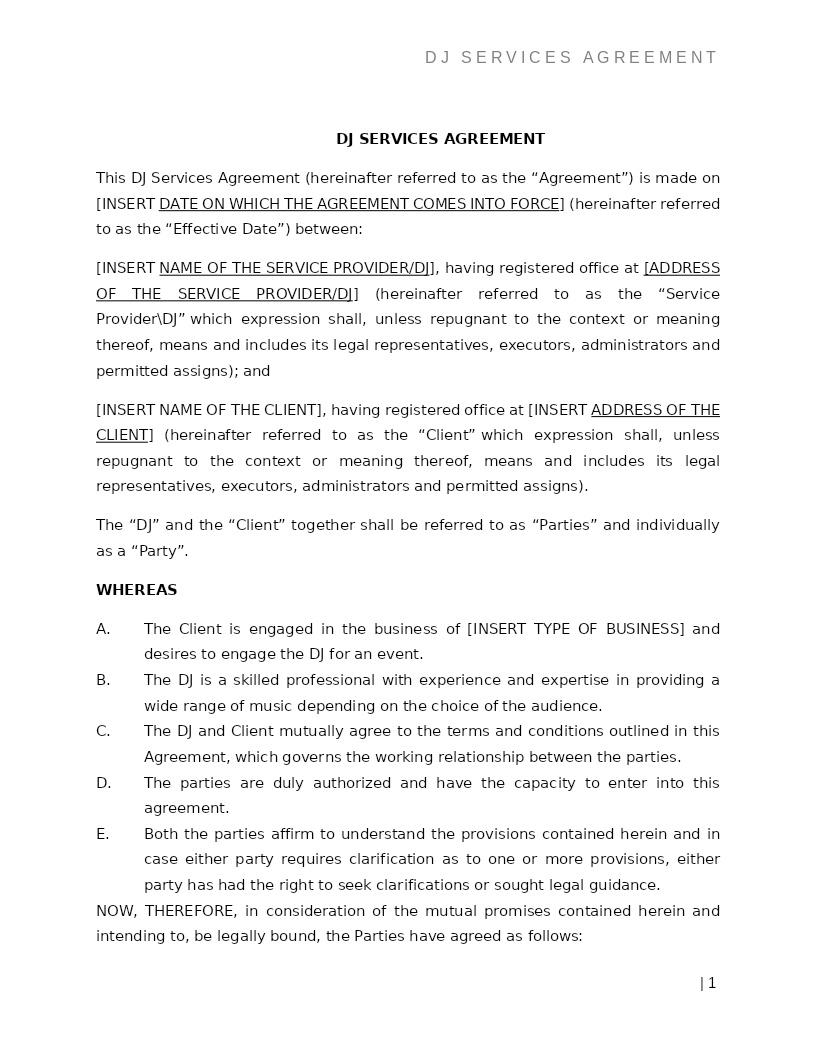
DJ SERVICES AGREEMENT
How does it work?
1. Choose this template
Start by clicking on "Fill out the template"
2. Complete the document
Answer a few questions and your document is created automatically.
3. Save - Print
Your document is ready! You will receive it in Word and PDF formats. You will be able to modify it.
Setting Clear Entertainment Expectations for Events Across the United States
When planning a wedding, corporate function, private party, or large-scale celebration, having a clear and reliable entertainment plan is essential. A DJ Services Agreement provides the structure needed to ensure both the DJ and the client understand what the event requires, how the music will be delivered, and what logistical arrangements must be in place. It outlines event details, equipment needs, performance timing, payment terms, and cancellation rules—ensuring a smooth, predictable, and professionally managed experience.
Putting a DJ contract in place builds trust, supports open communication, and helps both parties avoid common event-day problems such as late arrivals, equipment failures, or misunderstandings about song requests and overtime. It also provides legal protection if disputes arise, letting both sides move forward confidently and with clarity.
Where DJ Services Agreements Are Commonly Used
- Weddings and receptions
- Corporate events, award ceremonies, retreats, and brand activations
- Festivals, nightlife venues, and club performances
- School events, proms, and graduations
- Private parties, milestone celebrations, and community gatherings
Any setting that involves music, crowd engagement, or audio equipment benefits from clearly defined expectations and responsibilities.
Types of DJ Services Agreements You May Encounter
- Event-Specific DJ Agreement: Covers one-time events such as weddings, galas, or corporate gatherings.
- Residency or Recurring DJ Agreement: Used for clubs or venues where the DJ performs regularly.
- Corporate/Brand Event DJ Agreement: Tailored for business events involving production crews, brand guidelines, or technical compliance.
- Mobile DJ Agreement: For DJs who bring full equipment setups and require detailed technical coordination.
When Legal Guidance Becomes Helpful
Legal review is useful when:
- The event involves multiple vendors, sponsors, or production partners
- The DJ is traveling, working multiple days, or using specialized equipment
- Intellectual property (mixes, recorded sets, licensing) is involved
- The venue has noise restrictions, union rules, or liability concerns
- High-value payments, deposits, or cancellation risks exist
A lawyer can help tailor the agreement to reduce risks and ensure the contract is enforceable under U.S. law.
How to Work with This Template
- Identify the DJ and the client clearly
- List the event date, venue, schedule, and setup/teardown times
- Specify all equipment and technical needs
- Detail payment terms, deposits, refund rules, and overtime charges
- Outline playlist expectations, restrictions, and performance style
- Sign electronically or in hard copy to formalize the agreement
Frequently Asked Questions
Q1. Why is a DJ Services Agreement important for events in the U.S.?
A DJ Services Agreement ensures both parties understand the performance expectations, timeline, and services to be delivered. It protects against last-minute changes, miscommunications, or cancellations by outlining clear terms. In the U.S., where events often involve professional venues and liability concerns, having a written agreement provides legal clarity. It also ensures the DJ can prepare properly, leading to a smooth, reliable entertainment experience.
Q2. What should be included in a DJ Services Agreement?
A complete DJ contract should include event details, setup requirements, equipment responsibilities, playlist preferences, payment terms, and cancellation policies. Technical needs, such as power supply, microphones, and lighting, should be clearly documented. The agreement should also address overtime, travel fees, and backup planning to prevent interruptions. These elements help create accountability and smooth coordination between the DJ and the client.
Q3. How does a DJ Services Agreement protect the client?
The agreement ensures the DJ arrives on time, brings the required equipment, and performs for the agreed duration. It protects against issues such as last-minute substitutions, no-shows, or unprofessional behavior. Clients also gain legal recourse if services aren’t delivered as promised. This level of clarity reduces stress and ensures the entertainment portion of the event supports the overall experience.
Q4. How does the contract protect the DJ?
For DJs, the agreement secures payment terms, deposit protection, and compensation for overtime or travel. It clarifies the client’s responsibility to provide safe access, adequate space, and necessary electrical resources. DJs are protected from last-minute cancellations or unreasonable demands outside the scope of the original agreement. It also limits liability for equipment damage caused by guests or venue conditions.
Q5. Should equipment and technical details be included?
Yes, technical details are crucial. Sound systems, lighting rigs, speakers, DJ controllers, and microphones require specific setups and electrical outputs. The contract should outline who provides what equipment, how much space is needed, and when setup must begin. These details prevent technical issues that could interrupt the event and ensure both the venue and client prepare appropriately.
Q6. What happens if the event is delayed or runs longer than expected?
Most agreements include overtime provisions that specify additional hourly rates and conditions for extending performance. These clauses protect the DJ from uncompensated extra work and inform the client of potential additional costs. If delays occur due to venue issues or guest timing, the contract clarifies whether the DJ will wait, perform later, or charge extra. This prevents conflicts and ensures fair compensation.
Q7. Can clients request specific songs or playlists?
Yes. The agreement typically includes a section for playlist preferences, “must-play” songs, and “do-not-play” lists. This ensures the DJ prepares the right mixes and understands the event’s theme or mood. Having these preferences documented avoids misunderstandings and ensures the music aligns with the client’s expectations. It also helps the DJ determine whether additional downloads, remixes, or licensing considerations are required.
Q8. What if the DJ becomes unavailable on the event day?
The agreement should outline backup arrangements, such as providing a comparable substitute DJ or refunding the client. Professional DJs often maintain networks of replacements who can step in under emergency circumstances. The contract protects the client by ensuring continuity and protects the DJ by specifying that only legitimate emergencies qualify. This clause is essential for mitigating risk on both sides.