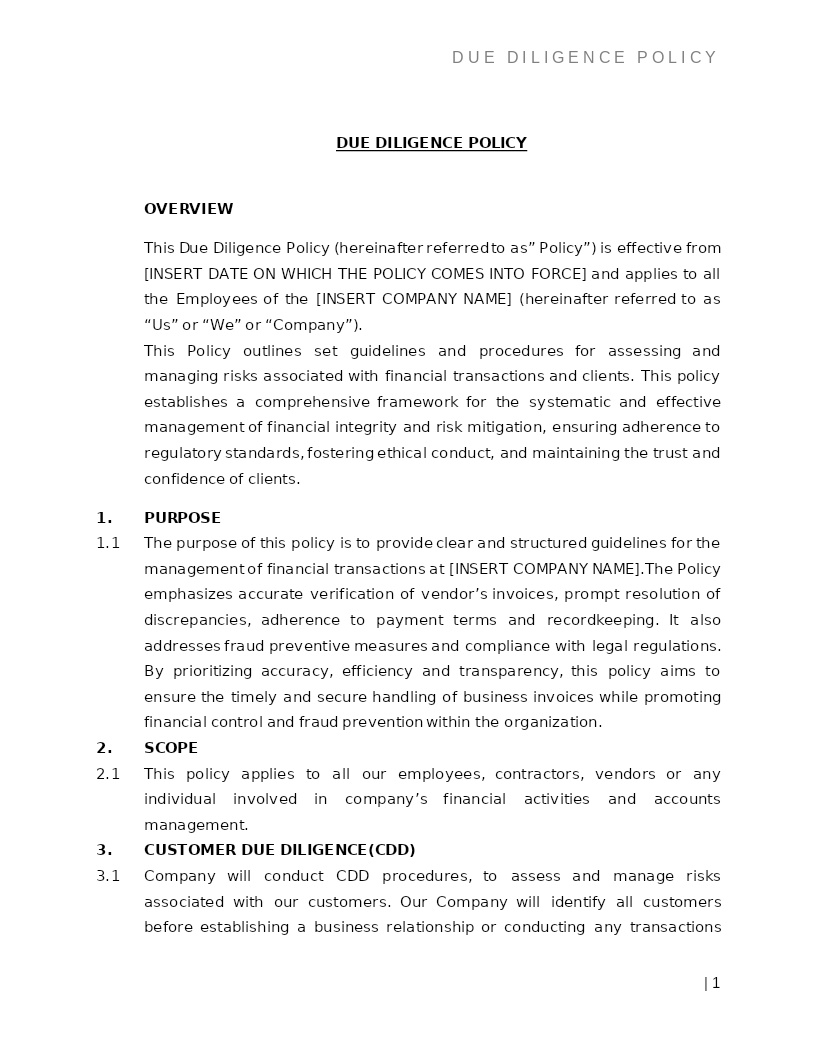
DUE DILIGENCE POLICY
How does it work?
1. Choose this template
Start by clicking on "Fill out the template"
2. Complete the document
Answer a few questions and your document is created automatically.
3. Save - Print
Your document is ready! You will receive it in Word and PDF formats. You will be able to modify it.
Understanding Due Diligence Policy In U.S.
A Due Diligence Policy is a structured framework that outlines the procedures an organization must follow to assess financial, legal, operational, and compliance-related risks before entering into business relationships or major transactions. This policy helps U.S. companies conduct thorough reviews of investments, mergers, acquisitions, vendors, partnerships, and high-value contracts. It ensures that all critical information, financial records, legal obligations, regulatory compliance, reputational risks, and business stability, is verified prior to making decisions. A well-designed Due Diligence Policy protects businesses from fraud, legal liabilities, and financial losses, while promoting ethical, informed, and responsible decision-making.
Where a Due Diligence Policy Is Commonly Used
• Mergers & acquisitions (M&A)
• Vendor screening and supplier onboarding
• Investment evaluations
• Franchise partnerships
• Joint ventures and strategic alliances
• Regulatory compliance and risk assessments
• Real estate acquisitions
• Contracting with high-risk third parties
Different Types of Due Diligence Policies
- Financial Due Diligence Policy: Analyzes financial statements, cash flow, revenue accuracy, debt, and liabilities.
- Legal Due Diligence Policy: Reviews contracts, lawsuits, compliance requirements, permits, and regulatory risks.
- Operational Due Diligence Policy: Assesses business operations, management processes, capacity, and internal controls.
- Compliance Due Diligence Policy: Ensures adherence to federal and state laws, including AML, FCPA, FTC, and sector-specific regulations.
- Reputational Due Diligence Policy: Verifies public history, ethical practices, media exposure, and background checks.
- Vendor & Third-Party Due Diligence Policy: Evaluates risks associated with onboarding suppliers, service providers, and contractors.
When Legal Guidance Becomes Helpful
Working with real-time lawyers or in-house counsel ensures your Due Diligence Policy complies with U.S. regulations such as the Federal Trade Commission (FTC Act), Foreign Corrupt Practices Act (FCPA), Securities Exchange Act, Anti-Money Laundering (AML) laws, and industry-specific federal and state requirements. Attorneys help:
• Define risk categories and compliance thresholds
• Establish documentation and verification procedures
• Tailor due diligence levels for high-risk relationships
• Draft legally compliant vendor, M&A, and investment review templates
• Identify gaps in risk assessment and regulatory adherence
• Create enforceable provisions for termination, monitoring, and reporting
• Protect the business from contractual and reputational liabilities
Legal guidance ensures your policy is enforceable, defensible, and aligned with corporate governance best practices.
How to Use This Due Diligence Policy
• Apply the policy before entering any high-value contract or strategic transaction
• Create standardized checklists for financial, legal, and operational reviews
• Maintain audit-ready documentation for all due diligence activities
• Train employees on risk identification and reporting protocols
• Review and update the policy regularly to stay compliant with U.S. regulations
Frequently Asked Questions
Q1. Why is a Due Diligence Policy important for U.S. businesses?
A Due Diligence Policy helps organizations identify risks before making major decisions, ensuring compliance with federal and state regulations. It protects companies from fraud, financial losses, contractual disputes, and regulatory penalties. This policy also strengthens internal controls and supports responsible business practices.
Q2. Is Due Diligence legally required in the United States?
While not always mandatory, due diligence is required in many regulated industries such as finance, healthcare, real estate, and securities. Even when not legally required, it is considered a best practice because it protects businesses from liability, misconduct claims, and reputational harm.
Q3. What areas does due diligence typically cover?
Due diligence commonly includes financial analysis, legal compliance checks, operational assessments, background verifications, reputation research, and risk evaluations. For high-risk industries, it may include cybersecurity, data privacy, AML, and environmental assessments to ensure full compliance.
Q4. How does a Due Diligence Policy reduce business risks?
By requiring structured evaluation processes, the policy helps detect red flags early, such as hidden liabilities, fraudulent records, or regulatory violations. This allows companies to make informed decisions and avoid high-risk partnerships or investments that could lead to financial and legal consequences.
Q5. Does a Due Diligence Policy improve decision-making?
Yes. With standardized guidelines and documented review procedures, decision-makers have access to reliable, verified data. This leads to better strategic choices, more accurate forecasting, and improved long-term business stability. It also promotes consistent evaluation across departments.
Q6. Who is responsible for conducting due diligence within an organization?
Responsibilities typically fall on compliance teams, legal counsel, finance departments, or senior management. In complex transactions, external auditors, lawyers, or industry experts may also be involved. The policy helps outline clear roles to ensure accountability and accuracy.
Q7. How often should due diligence procedures be updated?
Organizations should review their due diligence procedures annually or whenever new laws, regulations, or business risks arise. Frequent updates help ensure continued compliance with U.S. federal and state requirements and strengthen risk prevention strategies.
Q8. Can a Due Diligence Policy help avoid fraud and unethical partnerships?
Absolutely. The policy requires verification of credentials, background checks, financial reviews, and compliance screening. These steps help businesses avoid associating with fraudulent, non-compliant, or unethical entities, ultimately protecting their brand and reputation.