EDITOR SERVICES AGREEMENT
How does it work?
1. Choose this template
Start by clicking on "Fill out the template"
2. Complete the document
Answer a few questions and your document is created automatically.
3. Save - Print
Your document is ready! You will receive it in Word and PDF formats. You will be able to modify it.
Understanding Editing Services Agreement in U.S.
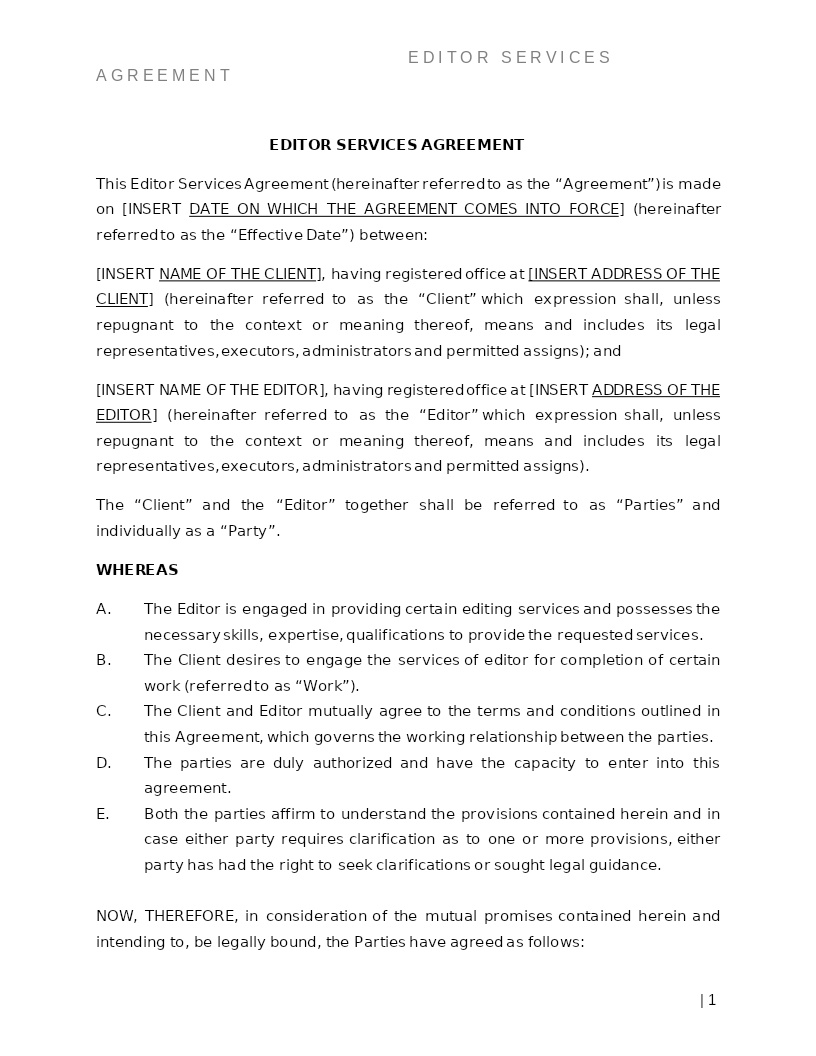
An Editing Services Agreement is a legally binding contract between an editor and a client that outlines the scope of editing services, deadlines, compensation, revision rules, confidentiality obligations, and intellectual property rights. It defines the specific type of editing required, such as proofreading, copy editing, or developmental editing, to ensure both parties share clear expectations. This agreement protects the editor’s professional rights while guaranteeing the client receives quality deliverables on time and in accordance with U.S. legal standards.
A well-structured Editing Services Agreement helps prevent misunderstandings, provides a clear workflow, and establishes the foundation for a professional and accountable editor–client relationship.
Where Editing Services Agreements Are Commonly Used
Editing Services Agreements are commonly used for:
- Manuscripts, books, and self-publishing projects
- Academic research papers, dissertations, and journal submissions
- Business content such as reports, proposals, and marketing material
- Websites, blogs, and digital content editing
- Script editing for film, media, and entertainment
- Corporate communications and internal documentation
- Long-term editing arrangements or ongoing content partnerships
Any project involving written content benefits from having a formal Editing Services Agreement.
Different Types of Editing Services Agreements You May Encounter
- Proofreading Agreement: Focuses on correcting grammar, spelling, punctuation, and minor errors.
- Copy Editing Agreement: Enhances clarity, consistency, style, and readability while correcting grammar.
- Developmental Editing Agreement: Addresses structure, flow, tone, and content organization for large projects.
- Ongoing Editing Services Contract: Used for recurring monthly editing tasks or long-term editorial partnerships.
When Legal Guidance Becomes Helpful
Legal consultation becomes important when:
- Intellectual property ownership or licensing needs detailed clarification
- The editor works with sensitive, confidential, or proprietary content
- Large publishing projects involve royalties, credits, or distribution rights
- Cross-border editing services require jurisdiction-specific terms
- Deadlines, revisions, or payments may involve significant commercial impact
- Dispute resolution or termination clauses need customization
- The client uses funded research or grant-based materials requiring compliance
Legal review ensures the agreement is enforceable, compliant, and protective of both parties.
How to Work With This Editing Services Agreement
- Define the editing type and deliverables with precision
- Set clear payment terms, timelines, and revision limits
- Include confidentiality obligations and data handling rules
- Clarify intellectual property rights and usage permissions
- Set policies for delays, cancellations, or project changes
- Establish communication expectations and feedback procedures
- Sign electronically or in print for proper documentation
Frequently Asked Questions
Q1. Why is an Editing Services Agreement important?
An Editing Services Agreement ensures that both parties understand the exact services being provided, preventing confusion about revisions, deadlines, and expectations. It protects the editor legally and ensures the client receives high-quality work. Clear documentation helps avoid disputes and supports accountability.
Q2. Does the agreement include intellectual property rights?
Yes. These agreements typically clarify who owns the edited content and whether the editor retains any rights. In most cases, the client owns the final work, but editors may keep samples for portfolios unless prohibited. Clear IP terms protect both parties from future conflicts.
Q3. What types of editing can be covered under this agreement?
Services may include proofreading, copy editing, line editing, substantive editing, developmental editing, or formatting support. The agreement specifies which services are included and prevents scope creep by outlining tasks, limits, and deliverables.
Q4. Are revision limits included in the agreement?
Most Editing Services Agreements set a specific number of revisions to avoid excessive rework. Additional revisions may require extra fees. Defining revision limits helps protect the editor’s time and ensures the client understands what services are included.
Q5. How are payment terms handled?
Payment terms usually include hourly rates, per-word fees, flat project rates, or milestone payments. Deadlines for payment, deposits, and extra charges are clearly outlined. Transparent payment terms prevent disputes and ensure timely compensation.
Q6. Does the agreement protect confidential content?
Yes. Confidentiality clauses safeguard sensitive or unpublished content, preventing unauthorized sharing or disclosure. This is crucial for academic works, unpublished manuscripts, business documents, and proprietary materials.
Q7. What happens if the project is delayed or canceled?
The agreement typically includes cancellation policies, including non-refundable deposits or partial payments for completed work. Delays caused by either party are managed through predefined terms, ensuring fairness and preventing financial misunderstandings.
Q8. Can the agreement be customized for ongoing editing work?
Absolutely. Many clients and editors enter long-term arrangements for recurring content. The agreement can be adapted for monthly retainers, bulk editing packages, or multi-phase editorial projects, providing stability and clarity for ongoing collaborations.