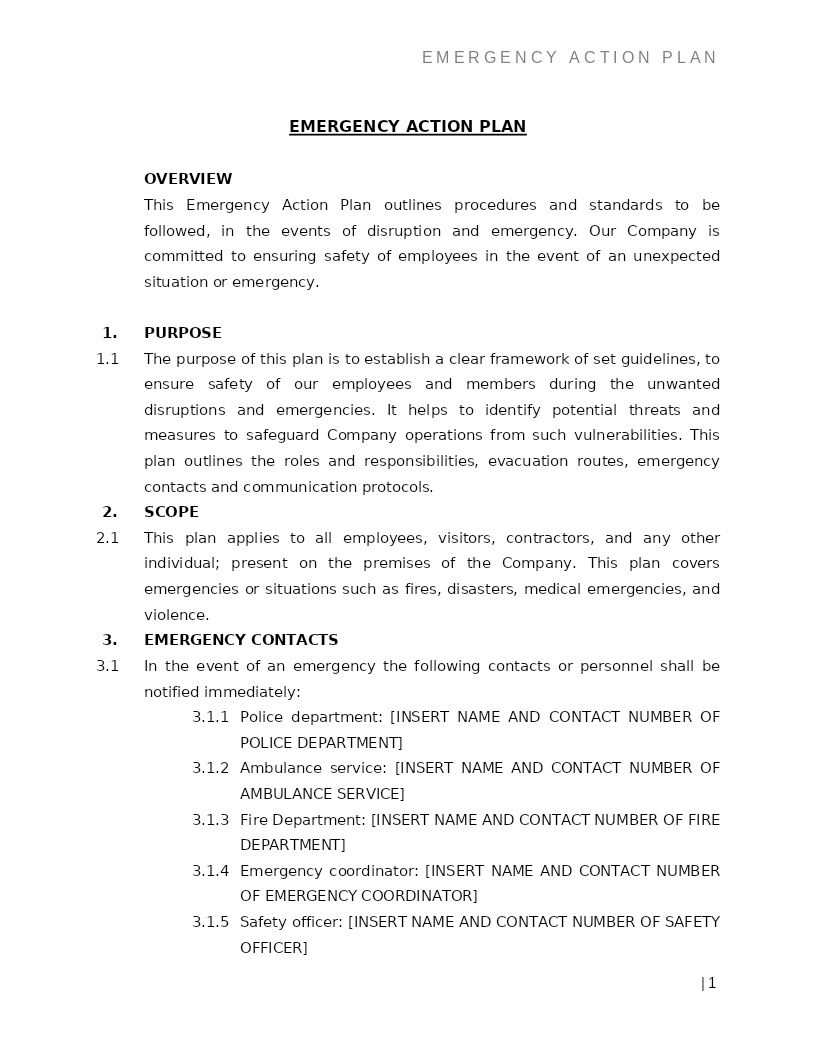
EMERGENCY ACTION PLAN
How does it work?
1. Choose this template
Start by clicking on "Fill out the template"
2. Complete the document
Answer a few questions and your document is created automatically.
3. Save - Print
Your document is ready! You will receive it in Word and PDF formats. You will be able to modify it.
Establishing Workplace Safety Protocols Through Emergency Action Planning
Businesses and organizations must be prepared to respond swiftly and effectively when unexpected emergencies occur. To ensure consistency, compliance, and safety, employers must adopt a clearly documented protocol that outlines the steps employees must follow during critical incidents. An Emergency Action Plan serves this purpose. It defines procedures for evacuation, communication, medical response, reporting, and coordination with emergency personnel in accordance with U.S. occupational safety laws, OSHA regulations (29 CFR 1910.38), and applicable state and local emergency requirements.
By implementing an Emergency Action Plan, employers create a structured and legally compliant framework that protects employees, reduces risk, and promotes organized decision-making during hazardous or life-threatening events such as fires, natural disasters, chemical spills, security threats, medical emergencies, or utility failures.
Where Emergency Action Plans Are Commonly Used
Emergency Action Plans (EAPs) are required or recommended in a wide range of operational settings, including:
- Office buildings, warehouses, factories, and manufacturing facilities
- Retail stores, restaurants, and hospitality establishments
- Schools, universities, and childcare centers
- Healthcare facilities and laboratories
- Construction sites and industrial workplaces
- Multi-tenant commercial properties
- Events, large gatherings, and public venues
- Government facilities and regulated institutions
Any workplace where employees may encounter fire, hazardous materials, weather emergencies, or violence must maintain an Emergency Action Plan to protect personnel and comply with U.S. safety laws.
Different Types of Emergency Action Plans You May Encounter
1. Fire and Evacuation Emergency Action Plans: Detail evacuation routes, alarms, signage, and assembly points.
2. Medical Emergency Response Plans: Address first aid, AED use, emergency medical contacts, and incident reporting.
3. Severe Weather and Natural Disaster Plans: Cover tornadoes, earthquakes, hurricanes, flooding, and shelter-in-place procedures.
4. Hazardous Materials Response Plans: Detail spill control, containment, and incident notification processes.
5. Workplace Violence or Security Threat Plans: Provide active-shooter, lockdown, and security breach procedures.
When Legal Guidance Becomes Helpful
Legal counsel may be advisable when:
- The workplace must comply with OSHA, NFPA, or state-mandated regulations
- Hazardous chemicals or regulated materials are present
- The facility accommodates large numbers of employees or visitors
- Industry-specific safety rules apply (healthcare, chemical, energy, transportation)
- The plan must integrate with multi-site or multi-agency emergency protocols
- The employer needs guidance on recordkeeping or employee training obligations
- The plan intersects with workers’ compensation, liability, or insurance requirements
Legal review ensures that the Emergency Action Plan meets U.S. workplace safety laws and mitigates potential legal exposure.
How to Work with This Template
- Identify the facility, employees, and emergency response duties
- Define evacuation routes, assembly points, and communication methods
- Specify alarm systems, emergency equipment, and medical response procedures
- Detail employee roles, responsibilities, and training requirements
- Outline reporting protocols and coordination with local emergency services
- Select governing law and incorporate applicable OSHA and state rules
- Review the plan regularly, update as needed, and communicate changes to staff
- Distribute the final plan electronically or in printed form
This template aligns with recognized U.S. occupational safety practices and can be integrated into employee handbooks, compliance programs, and digital workforce platforms.
Frequently Asked Questions
1. What is an Emergency Action Plan, and why is it required?
An Emergency Action Plan is an employer-prepared written document that outlines procedures for responding to emergencies such as fires, medical incidents, natural disasters, and security threats. It is required under OSHA 29 CFR 1910.38 for many U.S. workplaces and helps protect employees through clear and standardized safety procedures.
2. Which workplaces must have an Emergency Action Plan?
Most workplaces with more than 10 employees are required to maintain a written plan under OSHA regulations. Smaller employers may communicate procedures verbally, but written documentation is strongly recommended for legal and safety purposes.
3. What types of emergencies should the plan address?
The plan should cover fire, evacuation, severe weather, medical emergencies, hazardous materials, workplace violence, utility failures, and any risks relevant to the specific facility.
4. Are training and drills required?
Yes. OSHA and state authorities require employers to train employees on emergency procedures, conduct periodic drills, and ensure workers understand alarm systems, routes, and response duties.
5. Does an Emergency Action Plan include communication protocols?
Absolutely. The plan should include methods for notifying employees, contacting emergency responders, and communicating with management during an incident.
6. Who is responsible for maintaining the plan?
Employers must maintain, update, and communicate the plan. Designated employees may be assigned roles such as evacuation coordinators, safety officers, or floor wardens.
7. Can an emergency action plan also include shelter-in-place procedures?
Yes. Many emergencies such as severe weather or security threats require employees to remain indoors. The plan should provide clear instructions for such situations.
8. Are electronic versions of an EAP acceptable?
Yes. Employers may distribute the plan electronically and use digital acknowledgment systems, provided employees have easy access and understand the procedures.
9. What happens if the employer fails to maintain a compliant plan?
Non-compliance may result in OSHA citations, fines, increased liability, and greater risks during emergencies. A compliant plan helps safeguard employees and reduce legal exposure.
10. How often should the plan be updated?
The plan should be reviewed regularly, at least annually or whenever facility changes, staffing updates, or new hazards require revisions.