EMPLOYEE ATTENDANCE POLICY
How does it work?
1. Choose this template
Start by clicking on "Fill out the template"
2. Complete the document
Answer a few questions and your document is created automatically.
3. Save - Print
Your document is ready! You will receive it in Word and PDF formats. You will be able to modify it.
Understanding the Purpose of an Employee Attendance Policy
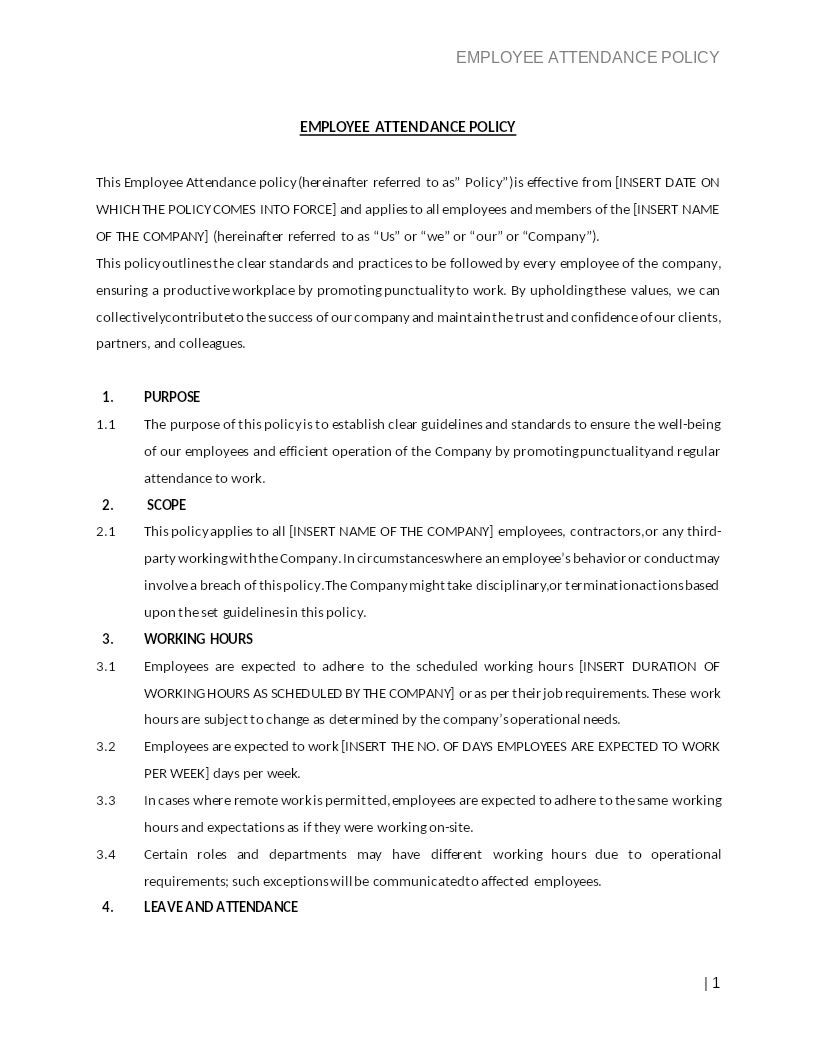
When employees are part of a shared work environment, it becomes essential to maintain a clear and consistent structure governing attendance, punctuality, and time-off procedures. An Employee Attendance Policy provides that framework. It outlines expectations regarding work hours, tardiness, breaks, overtime, approved leave, and unplanned absences, ensuring that employees understand their obligations from the outset.
A well-defined attendance policy promotes reliability, minimizes disruptions, and helps maintain productivity across teams. It also supports fairness, reduces scheduling conflicts, and allows management to apply attendance rules consistently throughout the organization.
Where Employee Attendance Policies Are Commonly Used
Attendance policies are utilized across various industries and operational settings, including:
- Corporate offices, administrative teams, and customer service departments
- Manufacturing units, logistics centers, and field-based operations
- Healthcare, education, hospitality, and retail environments
- Startups and hybrid or remote-work arrangements
- Organizations with shift-based or time-sensitive workflows
- Any workplace requiring predictable staffing and performance standards
Whenever consistent presence is needed to support business operations, an attendance policy ensures structure and accountability.
Different Types of Employee Attendance Policies You May Encounter
- Standard Attendance & Punctuality Policy: Sets expectations for daily attendance, tardiness, timekeeping, and approved absences.
- Flexible or Remote Attendance Policy: Used for hybrid or virtual teams, focusing on availability, communication, and digital time tracking.
- Shift-Based Attendance Policy: Designed for workplaces with rotating shifts, mandatory coverage, or time-sensitive operations.
- Paid & Unpaid Leave Policy: Establishes rules for sick leave, vacation, personal leave, and family-related absences.
- Progressive Discipline Attendance Policy: Defines consequences for repeated tardiness or absenteeism using a structured corrective approach.
When Legal Guidance Becomes Helpful
Attendance rules may seem straightforward, but legal advice becomes valuable when:
- Policies involve wage-and-hour rules under the FLSA (breaks, overtime, clock-in/out rules)
- The organization operates across multiple U.S. states with differing leave and time-tracking laws
- Regulations such as FMLA, ADA accommodations, or paid sick leave apply
- Remote-work monitoring or digital tracking tools raise privacy concerns
- Disciplinary actions, termination risks, or attendance scoring systems are used
- Industry-specific union agreements or safety requirements must be incorporated
Legal review ensures the policy remains compliant and enforceable while reducing the risk of labor disputes.
How to Work with This Template
- Identify employee groups and define clear attendance expectations
- Outline procedures for reporting absences, requesting leave, and documenting time
- Clarify rules for breaks, overtime, tardiness, and timekeeping systems
- Align the policy with state and federal labor laws
- Establish consistent disciplinary measures for attendance violations
- Review the final policy with HR and legal teams before distribution
This template aligns with widely recognized U.S. employment-law and HR standards and can be adapted for companies of any size or industry.
Frequently Asked Questions
Q1. What is an Employee Attendance Policy and why is it important?
An Employee Attendance Policy outlines rules for punctuality, work hours, approved absences, and time-off procedures. It provides employees with structure and clear expectations, which helps avoid misunderstandings. For employers, it ensures consistent operations and reduces disruptions. A strong policy strengthens accountability and workplace discipline.
Q2. How does an attendance policy reduce workplace disruptions?
By setting clear rules for reporting absences, requesting leave, and handling tardiness, the policy helps teams plan workloads effectively. When employees follow consistent attendance procedures, managers can schedule tasks without last-minute challenges. This minimizes workflow interruptions. Reliable attendance supports smooth and predictable operations.
Q3. Does an attendance policy help with legal compliance?
Yes. Attendance rules often intersect with federal and state regulations covering breaks, overtime, paid sick leave, and protected absences. A compliant policy helps employers meet these requirements and avoid labor-law violations. It also protects employees by clearly defining their rights. Legal alignment is essential for multi-state organizations.
Q4. What areas should a comprehensive attendance policy cover?
A strong policy includes expectations for punctuality, absence reporting, timekeeping, overtime rules, paid and unpaid leave types, and disciplinary actions. It may also address remote-work attendance, shift coverage, and emergency leave procedures. Covering these elements ensures clarity and fairness. It also helps maintain consistent workforce management.
Q5. Can an attendance policy support workplace fairness?
Absolutely. Clear and uniform rules prevent favoritism and ensure all employees are held to the same standards. When expectations are transparent, employees feel more secure and informed. This consistency fosters respect and fairness. It also reduces disputes or claims of unequal treatment.
Q6. Should an attendance policy be customized for remote or hybrid employees?
Yes. Remote and hybrid environments require specialized guidelines for availability, communication, digital time tracking, and responsiveness. Customizing the policy ensures fairness between in-office and remote staff. It also maintains productivity and accountability. Tailored rules reflect modern workplace structures.
Q7. What disciplinary actions can be included in an attendance policy?
Policies may include verbal warnings, written warnings, attendance-point systems, suspension, or termination depending on the severity of violations. The key is consistency and alignment with company procedures. Clearly outlining consequences helps employees understand the implications. This transparency supports a fair disciplinary process.
Q8. How often should an Employee Attendance Policy be reviewed?
Policies should be reviewed annually or when legal requirements, business operations, or workforce structures change. Regular updates ensure compliance with evolving labor laws and organizational needs. Updated policies reduce confusion and keep employees informed. Continuous review ensures the policy remains effective and relevant.