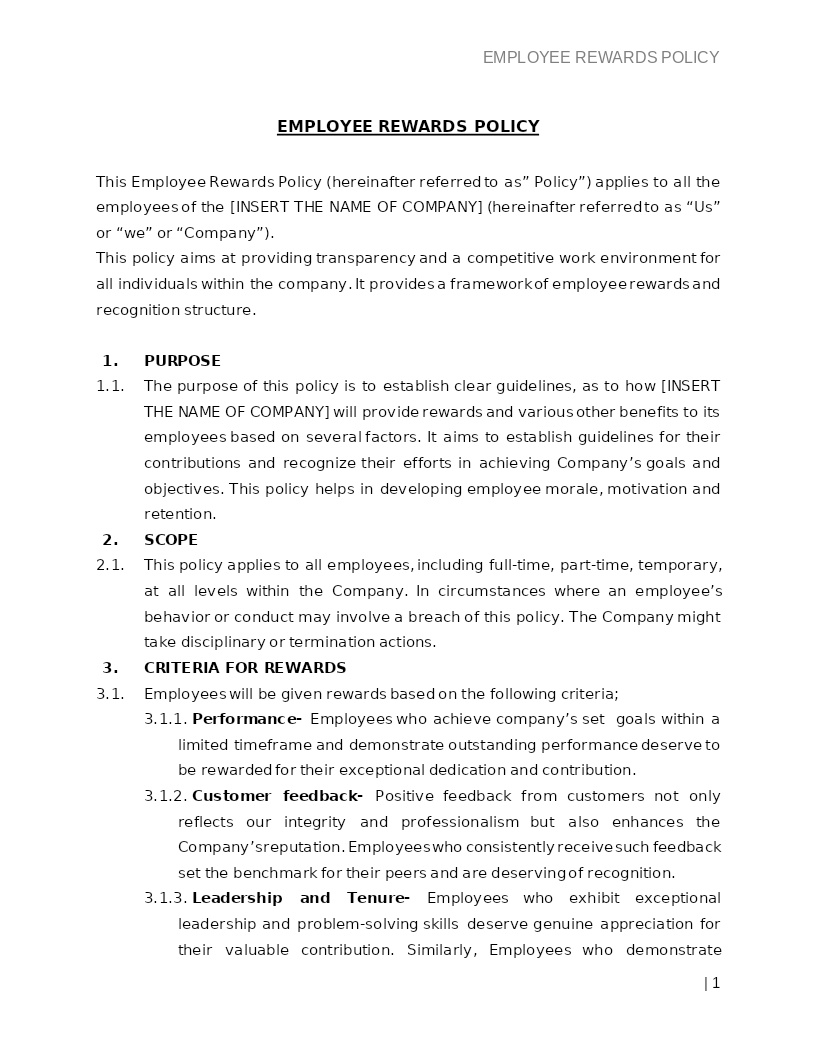
EMPLOYEE REWARD POLICY
How does it work?
1. Choose this template
Start by clicking on "Fill out the template"
2. Complete the document
Answer a few questions and your document is created automatically.
3. Save - Print
Your document is ready! You will receive it in Word and PDF formats. You will be able to modify it.
Understanding Employee Reward Policy in U.S.
An Employee Reward Policy is a formal organizational framework that outlines how employees are recognized and rewarded for their performance, achievements, and contributions. This policy establishes clear guidelines for monetary and non-monetary rewards, incentive programs, recognition procedures, and eligibility criteria. Designed to support fairness, motivation, and employee satisfaction, the policy ensures that rewards are distributed consistently and in compliance with U.S. employment laws, anti-discrimination regulations, and tax requirements. A well-structured Employee Reward Policy strengthens workplace culture, drives productivity, and supports long-term organizational success.
Where an Employee Reward Policy Is Commonly Used
- Corporate offices and large enterprises
- Startups seeking to retain and motivate talent
- Sales, marketing, and performance-driven industries
- Manufacturing, logistics, and labor-intensive sectors
- Educational institutions and nonprofit organizations
- Healthcare and service-based industries
- Any organization promoting performance-based growth
Different Types of Employee Reward Policies
- Performance-Based Reward Policy: Recognizes employees based on measurable performance metrics and achievements.
- Recognition & Appreciation Policy: Covers non-monetary recognition such as awards, certificates, and public appreciation.
- Incentive & Bonus Policy: Provides cash bonuses, profit-sharing, commissions, or milestone-based incentives.
- Benefits & Perks Policy: Includes paid time off, wellness rewards, flexible schedules, and professional development perks.
- Spot Reward Policy: Allows managers to instantly reward employees for exceptional contributions.
- Long-Term Service & Loyalty Reward Policy: Celebrates employee tenure, loyalty, and long-term commitment.
When Legal Guidance becomes Helpful
Legal and in-house counsel ensure:
- Compliance with U.S. labor laws, anti-discrimination rules, and wage regulations
- Proper tax treatment of bonuses, benefits, and cash rewards
- Clear eligibility criteria to avoid claims of favoritism or unfair treatment
- Risk mitigation against potential disputes related to compensation
- Customized rules that align with internal budgets, culture, and growth plans
- Effective dispute-resolution strategies and enforceable policy clauses
- Confidentiality and protection of sensitive employee performance data
Legal review ensures the policy is fair, compliant, enforceable, and tailored to your organization’s needs.
How to Use This Policy
- Include in employee handbooks or HR systems
- Communicate during onboarding and performance reviews
- Apply consistently across departments
- Update annually to reflect legal and organizational changes
Frequently Asked Questions
Q1. What types of rewards can be included in an Employee Reward Policy?
Rewards may include cash bonuses, gift cards, recognition certificates, profit-sharing, paid time off, wellness perks, and professional development opportunities. Each reward type aligns with specific company goals and performance standards. A structured policy ensures rewards are distributed fairly and consistently.
Q2. How does an employer decide which employees qualify for rewards?
Eligibility is usually based on performance evaluations, goal achievement, attendance, teamwork, and overall contribution to the organization. Clear criteria help avoid bias and create a transparent reward system. This encourages employees to align their efforts with defined performance expectations.
Q3. Are employee rewards taxable in the United States?
Yes. Most monetary rewards and certain non-cash incentives are considered taxable income by the IRS. Employers must follow federal tax guidelines when issuing bonuses, gift cards, or cash awards. A legally reviewed policy ensures proper tax reporting and compliance.
Q4. How does an Employee Reward Policy help improve workplace productivity?
A well-designed policy motivates employees to excel by linking rewards to measurable outcomes. It encourages healthy competition, enhances engagement, and improves overall job satisfaction. Motivated employees tend to be more committed, leading to higher organizational productivity.
Q5. Can small businesses benefit from having an Employee Reward Policy?
Absolutely. Even small businesses can implement cost-effective recognition programs, such as appreciation events, verbal recognition, or milestone certificates. A formal policy ensures fairness and motivates employees without requiring large financial commitments.
Q6. What is the difference between monetary and non-monetary rewards?
Monetary rewards include bonuses, salary increases, and financial incentives, while non-monetary rewards include certificates, flexible hours, public appreciation, or training opportunities. Both contribute to employee morale, but non-monetary rewards often have long-term engagement benefits.
Q7. How can companies ensure fairness in their reward programs?
By establishing objective criteria, standardized evaluation processes, and transparent reward structures. Managers must apply the policy consistently and document all performance-related decisions. Fairness prevents discrimination claims and builds employee trust.
Q8. What happens if an employee disagrees with a reward decision?
The policy should include a grievance or appeal process that allows employees to request clarification or review of decisions. HR or management evaluates the concern based on documented performance and policy criteria. This structured approach reduces conflict and maintains transparency.