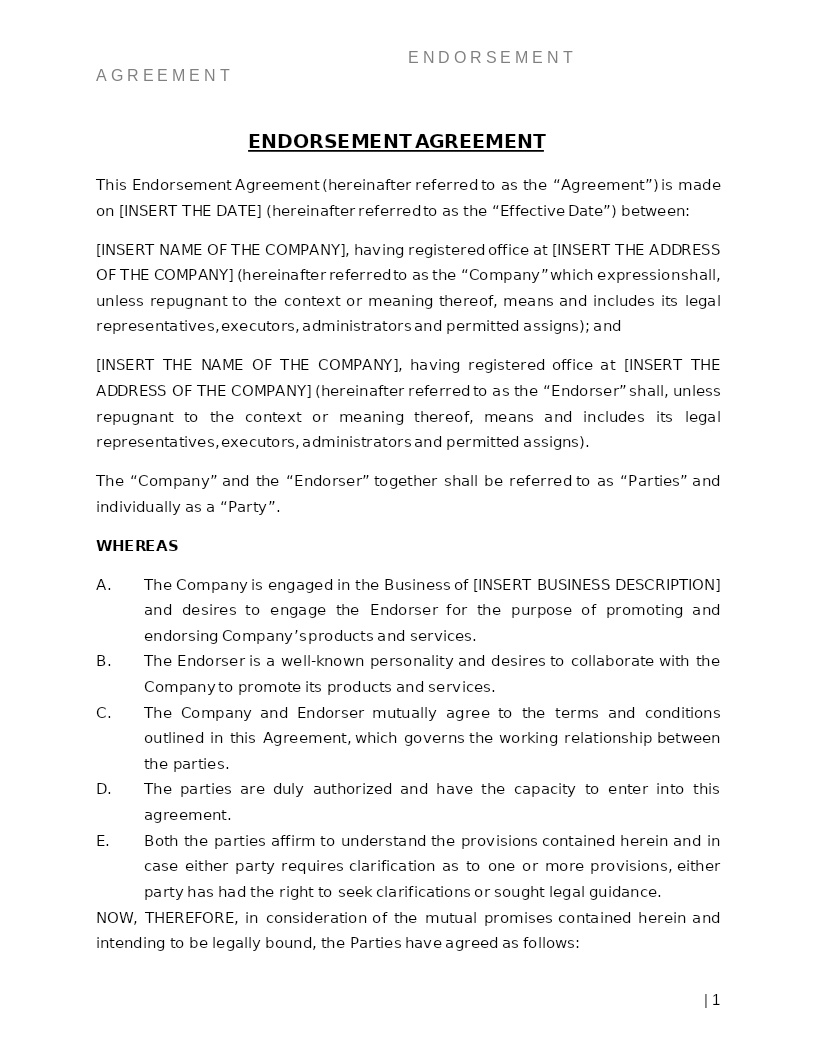
ENDORSEMENT AGREEMENT
How does it work?
1. Choose this template
Start by clicking on "Fill out the template"
2. Complete the document
Answer a few questions and your document is created automatically.
3. Save - Print
Your document is ready! You will receive it in Word and PDF formats. You will be able to modify it.
Establishing Endorsement Rights in Marketing and Promotional Arrangements
When parties enter a commercial arrangement whereby a talent, influencer, public figure, or representative agrees to endorse, promote, or publicly support a brand, product, or service, it is essential to establish a formal contractual framework. An Endorsement Agreement fulfills this purpose. It sets forth the terms under which the endorser grants the Company specific rights to use the endorser’s name, likeness, image, statements, and performance in promotional activities, in compliance with U.S. advertising laws, Federal Trade Commission (FTC) endorsement guidelines, and applicable state right-of-publicity statutes.
By executing an Endorsement Agreement, the parties create a legally binding record that governs usage rights, compensation, disclosure obligations, restrictions on competing endorsements, publicity rights, and termination. This ensures that promotional activities are conducted lawfully while protecting the Endorser’s reputation and the Company’s commercial interests.
Where Endorsement Agreements Are Commonly Used
Endorsement Agreements are widely used in numerous commercial, entertainment, and digital marketing environments, including:
- Influencer and social media brand partnerships
- Celebrity endorsements for consumer goods, apparel, or lifestyle products
- Sports endorsements and athlete promotional contracts
- Product launch campaigns and sponsored content
- Affiliate marketing, brand ambassadorships, and partnership programs
- Advertising campaigns involving public figures or personalities
- Sponsored appearances, photoshoots, and promotional events
- Digital marketing promotions and online testimonials
Any time an individual or entity publicly endorses a product or service, an endorsement agreement establishes the legal terms governing such promotion.
Different Types of Endorsement Agreements You May Encounter
1. Social Media and Influencer Endorsement Agreements: Cover posts, stories, videos, and promotional content on digital platforms.
2. Celebrity or Talent Endorsement Agreements: Apply to actors, musicians, athletes, and entertainers endorsing commercial products or services.
3. Brand Ambassador Agreements: Provide long-term, recurring promotional obligations.
4. Product Placement or Usage Agreements: Grant rights for the endorser to use or feature the product in public appearances or content.
5. Event Endorsement and Appearance Agreements: Govern promotional appearances, signings, live events, and media engagements.
When Legal Guidance Becomes Helpful
Legal review may be advisable when:
- The endorsement involves high-value compensation or long-term commitments
- FTC advertising and disclosure rules must be strictly followed
- The Endorser’s image, likeness, or social media accounts are extensively used
- The agreement restricts competing endorsements or imposes exclusivity
- Intellectual property (e.g., photos, videos, recordings) will be created
- Sponsored claims must comply with truth-in-advertising laws
- Talent representation, agents, or management companies are involved
- The promotion concerns regulated goods (health, finance, alcohol, etc.)
Legal counsel helps ensure compliance with U.S. marketing and publicity laws and prevents reputational or financial disputes.
How to Work With This Template
- Identify the Company and the Endorser
- Clearly describe the promotional services to be performed
- Specify how the Endorser’s name, image, likeness, and statements may be used
- Outline compensation terms, payment schedules, and benefits provided
- Include required FTC disclosures and advertising compliance obligations
- Describe exclusivity, non-compete, and conflict-free requirements
- Select governing law and jurisdiction
- Review the terms for accuracy and alignment with U.S. regulations
- Execute the agreement electronically or in written form
This template is consistent with recognized advertising, marketing, and publicity-rights practices in the United States and is compatible with major e-signature platforms.
Frequently Asked Questions
1. What is an Endorsement Agreement, and why is it important?
An Endorsement Agreement is a legally binding contract allowing a Company to use an individual’s name, image, likeness, or testimonial to promote its products or services. It is important because it protects both parties by defining rights, compensation, obligations, and compliance with U.S. advertising and publicity laws.
2. Are FTC disclosures required in endorsement arrangements?
Yes. Under FTC guidelines, endorsers must clearly disclose any material connection to the brand, such as compensation, gifts, or benefits. Proper disclosure prevents misleading advertising and ensures legal compliance.
3. What rights does the Company receive under an Endorsement Agreement?
Depending on the contract, the Company may receive rights to use the Endorser’s image, likeness, statements, performances, or social media content for advertising, marketing, and promotional purposes. The agreement should specify the media, platforms, and duration.
4. Can the Endorser work with competing brands?
Only if the agreement allows it. Many Endorsement Agreements include exclusivity clauses preventing the Endorser from endorsing competing products for a defined period.
5. What compensation is typical in endorsement deals?
Compensation may include flat fees, appearance fees, royalties, sponsorship payments, commissions, product benefits, or performance-based incentives. The agreement should detail all payment structures.
6. Who owns the content created during endorsement activities?
Ownership depends on the agreement. Many contracts grant the Company full rights to promotional content produced, while some allow joint ownership or limited usage rights.
7. Can endorsements be revoked or terminated early?
Yes. Most agreements include termination rights for breach, reputational harm, failure to perform obligations, or events that materially damage the endorsement relationship.
8. Are electronic signatures valid for Endorsement Agreements?
Yes. Under the U.S. ESIGN Act, electronic signatures are legally enforceable and widely used in advertising, entertainment, and influencer agreements.
9. Are there restrictions on claims an Endorser can make?
Yes. Endorsers may only make truthful, substantiated claims about a product. False or misleading statements may violate FTC truth-in-advertising laws.
10. Does an Endorsement Agreement cover social media promotions?
It can. Most modern endorsement arrangements explicitly address social media content, platform requirements, posting schedules, and disclosure obligations.
11. What happens if the Endorser engages in conduct harming the brand’s reputation?
Many agreements include “morals clauses” allowing the Company to terminate the agreement if the Endorser engages in conduct that damages the Company’s reputation or public perception.