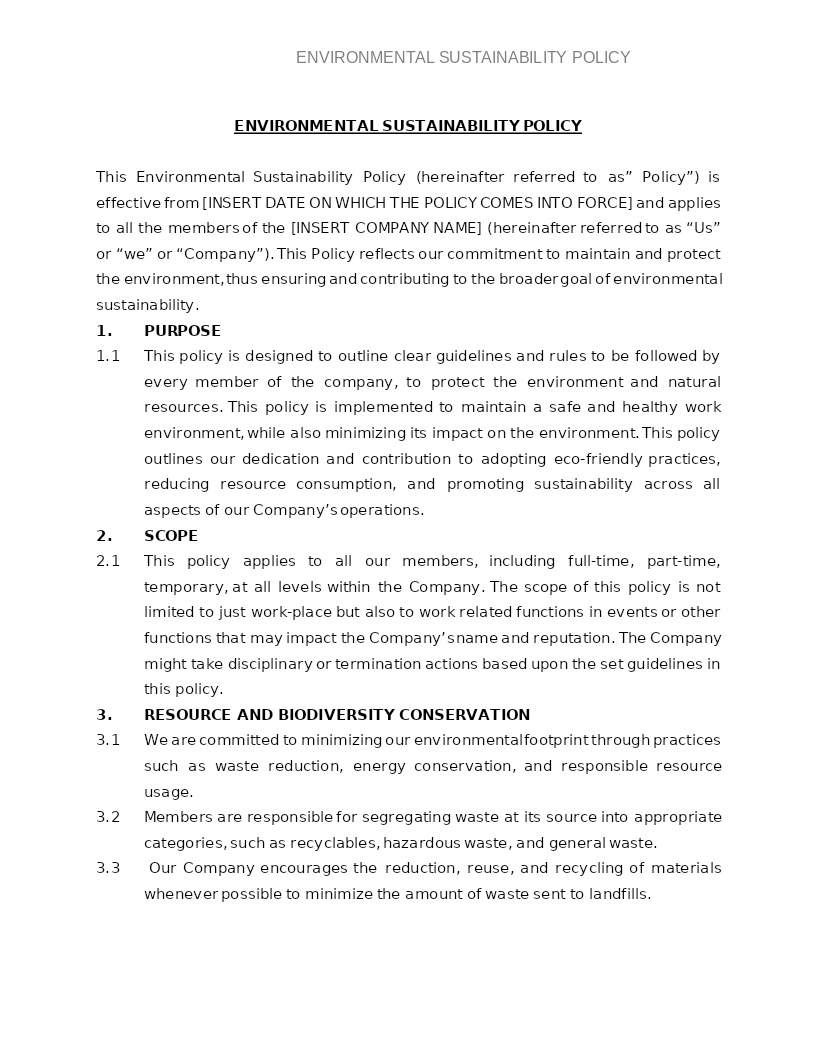
ENVIRONMENTAL SUSTAINABILITY POLICY
How does it work?
1. Choose this template
Start by clicking on "Fill out the template"
2. Complete the document
Answer a few questions and your document is created automatically.
3. Save - Print
Your document is ready! You will receive it in Word and PDF formats. You will be able to modify it.
Understanding the Purpose and Use of an Environmental Sustainability Policy
When an organization aims to reduce its environmental footprint and operate responsibly, it becomes essential to establish a clear framework that guides sustainable practices. An Environmental Sustainability Policy provides that structure. It defines the company’s environmental commitments, outlines standards for energy efficiency, waste reduction, eco-friendly sourcing, and resource conservation, and ensures compliance with federal, state, and industry-specific regulations.
Having this policy in place strengthens corporate responsibility, supports long-term operational efficiency, and demonstrates the organization’s dedication to sustainability. It helps businesses contribute to environmental protection while improving internal processes, reducing costs, and enhancing their public reputation.
Where Environmental Sustainability Policies Are Commonly Used
Sustainability policies are widely adopted across U.S. industries, including:
- Corporations implementing ESG (Environmental, Social, Governance) strategies
- Manufacturing, logistics, and industrial companies focused on reducing emissions
- Healthcare, education, and government sectors with regulatory compliance requirements
- Technology companies promoting energy-efficient operations
- Retail and consumer brands committed to eco-friendly supply chains
- Hospitality and real estate sectors prioritizing sustainable facilities management
- Nonprofits and environmentally conscious organizations driving green initiatives
Any organization seeking to reduce waste, lower environmental risks, and adopt greener processes benefits from a written sustainability policy.
Different Types of Environmental Sustainability Practices You May Encounter
- Waste Reduction and Recycling Programs: Encourages responsible disposal, recycling initiatives, and minimized waste generation.
- Energy Efficiency Standards: Promotes the use of energy-efficient equipment, reduced consumption, and renewable energy sources.
- Water Conservation Measures: Guides responsible water use, leak prevention, and adoption of efficient fixtures.
- Sustainable Sourcing Policies: Ensures procurement from environmentally responsible suppliers and ethical supply chains.
- Pollution Prevention Strategies: Addresses emissions reduction, safe chemical management, and proper disposal practices.
When Legal Guidance Becomes Helpful
Most organizations can adopt basic sustainability practices independently, but legal and in-house counsel review becomes important when:
- Operations fall under federal or state environmental regulations (EPA, OSHA, state-specific laws).
- The company handles hazardous materials, chemicals, or industrial waste.
- Sustainability goals intersect with contractual obligations, certifications, or supply chain compliance.
- Multi-state operations require alignment with differing environmental laws.
- The organization publishes environmental claims that must comply with advertising and consumer protection laws.
- Industry standards (LEED, ENERGY STAR, ISO certifications) influence policy requirements.
Legal review ensures the policy is enforceable, compliant, and aligned with environmental regulations.
How to Work with This Template
- Identify key environmental priorities such as energy use, waste reduction, or carbon footprint goals.
- Establish guidelines for practices that reduce environmental impact.
- Define compliance requirements and the responsibilities of employees and departments.
- Select governing state laws and reference applicable federal environmental regulations.
- Review internally or with legal counsel (optional).
- Communicate the policy clearly and integrate it into operational and sustainability initiatives.
This policy follows widely recognized environmental and sustainability standards throughout the United States.
Frequently Asked Questions
Q1. Why is an Environmental Sustainability Policy important for U.S. businesses?
It provides a structured approach to reducing environmental impact while supporting compliance with federal and state regulations. The policy helps businesses operate more efficiently, lower operational costs, and demonstrate corporate responsibility. It also improves stakeholder trust and long-term sustainability.
Q2. Does this policy help meet regulatory requirements?
Yes. Many industries must comply with EPA, OSHA, and state environmental standards. A structured policy ensures that practices align with legal obligations, reducing the risk of fines or violations. It also simplifies audits and reporting obligations.
Q3. Can this policy support a company’s ESG goals?
Absolutely. Environmental sustainability is a core element of ESG reporting. This policy helps companies set measurable goals, document progress, and meet investor expectations. It strengthens transparency and accountability across sustainability initiatives.
Q4. How does this policy improve operational efficiency?
By promoting resource conservation and energy-efficient practices, businesses can reduce waste and lower utility costs. Sustainable operations also enhance workflow efficiency and reduce long-term maintenance expenses. Sustainability and productivity go hand in hand.
Q5. Are employees responsible for following this policy?
Yes. Employees play a key role in implementing sustainable practices such as responsible waste disposal, energy conservation, and compliance with environmental procedures. Clear guidelines help employees contribute effectively to organizational sustainability goals.
Q6. Does this policy apply to contractors and suppliers?
It can. Many companies extend sustainability standards to vendors, suppliers, and contractors to ensure eco-friendly sourcing and responsible business practices. This strengthens supply chain integrity and supports long-term sustainability objectives.
Q7. Can adopting this policy improve brand reputation?
Yes. Customers, investors, and stakeholders increasingly prefer environmentally responsible organizations. A formal policy enhances public image, boosts trust, and differentiates the company in competitive markets. Sustainability is a powerful brand asset.
Q8. Can small businesses benefit from this policy?
Absolutely. Even small businesses can reduce waste, lower costs, and improve efficiency through sustainable practices. A clear policy ensures consistency, minimizes environmental risks, and supports long-term operational health, regardless of business size.