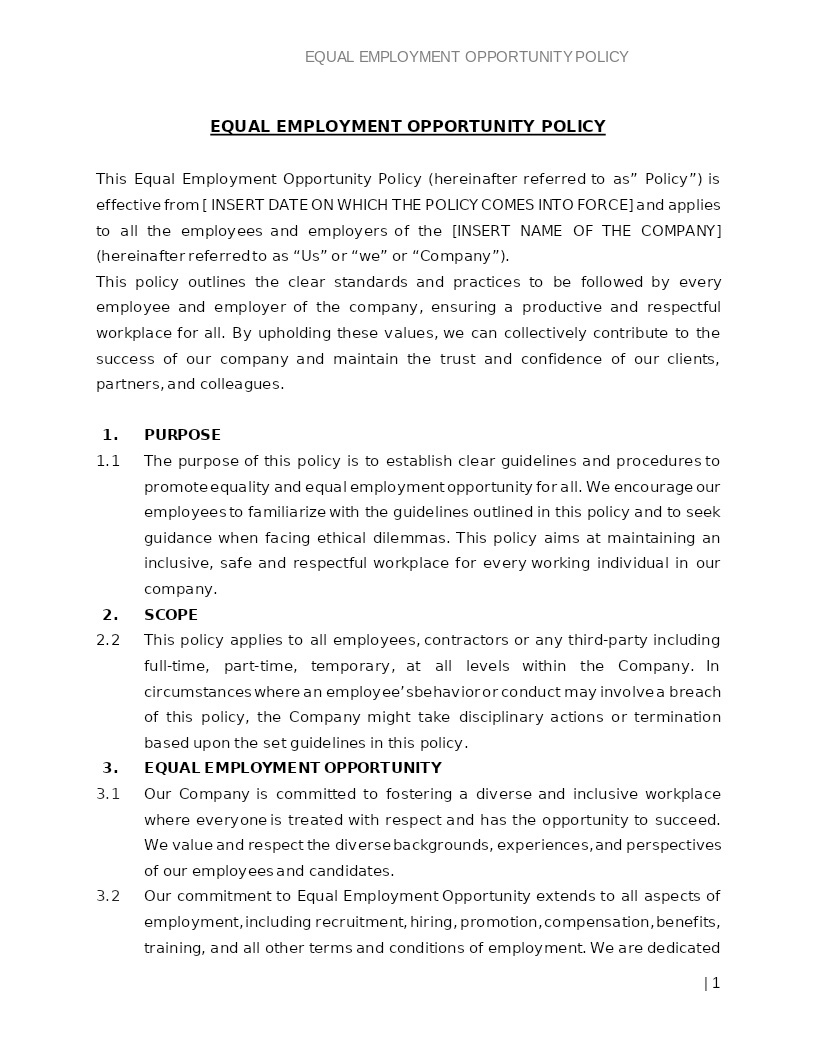
EQUAL EMPLOYMENT OPPORTUNITY
How does it work?
1. Choose this template
Start by clicking on "Fill out the template"
2. Complete the document
Answer a few questions and your document is created automatically.
3. Save - Print
Your document is ready! You will receive it in Word and PDF formats. You will be able to modify it.
Ensuring Fair and Inclusive Employment Practices
An Equal Employment Opportunity (EEO) Policy outlines an organization’s commitment to providing a work environment where all employees and applicants are treated fairly, respectfully, and without discrimination. EEO policies ensure that employment decisions such as hiring, promotions, compensation, and training—are based solely on qualifications, merit, and business needs, not on personal characteristics.
In the United States, EEO practices are shaped by federal laws including Title VII of the Civil Rights Act, the Americans with Disabilities Act (ADA), the Age Discrimination in Employment Act (ADEA), and various state and local anti-discrimination statutes. A clear EEO policy helps businesses stay compliant, reduce legal risk, and foster a workplace built on equality and respect.
Where EEO Policies Are Commonly Used
EEO policies are essential across all industries and work environments, including:
• Corporate offices and professional workplaces
• Retail, hospitality, and customer-facing businesses
• Manufacturing and industrial facilities
• Healthcare, educational institutions, and nonprofits
• Startups, SMBs, and technology companies
• Government contractors and federally regulated businesses
Different Types of EEO Protections You May Encounter
- Non-Discrimination Protections: Prohibit bias based on race, color, religion, sex, national origin, disability, age, pregnancy, or genetic information.
- Accommodation Requirements: Require reasonable accommodations for disabilities, pregnancies, and religious practices.
- Anti-Harassment Standards: Define unacceptable behavior and outline procedures for reporting and resolving harassment.
- Equal Pay Requirements: Support fair compensation practices under the Equal Pay Act and state-level laws.
- Retaliation Protections: Ensure employees can report concerns or participate in investigations without fear of retaliation.
When Legal Guidance Becomes Helpful
Legal support is valuable when:
• Operating across multiple states with differing anti-discrimination laws
• Handling harassment investigations or accommodation requests
• Drafting related workplace policies such as conduct, ADA, or anti-harassment policies
• Managing a complaint filed with the EEOC or state agencies
• Hiring globally or working with diverse employee groups
How to Work with This Policy
• Clearly define protected characteristics and prohibited behaviors
• Establish reporting, investigation, and resolution procedures
• Train employees and managers on rights and responsibilities
• Post required EEO notices in the workplace
• Apply the policy consistently and document all actions
• Choose the governing state law when customizing the policy
• Sign electronically or acknowledge receipt through HR systems
Frequently Asked Questions
Q1. What is an Equal Employment Opportunity (EEO) Policy?
An EEO Policy is a formal statement that prohibits discrimination and guarantees equal treatment in all employment actions. It ensures that hiring, promotions, compensation, and discipline are based on merit, not protected characteristics.
Q2. Is an EEO Policy required by U.S. law?
Yes. Federal law requires employers to avoid discrimination and provide equal opportunities. Most businesses especially those with 15 or more employees—must comply with EEOC regulations. Federal contractors have additional obligations under OFCCP rules.
Q3. What characteristics are protected under EEO laws?
U.S. laws prohibit discrimination based on race, color, religion, sex, national origin, age, disability, pregnancy, and genetic information. Many states add protections for sexual orientation, gender identity, marital status, and more.
Q4. Does an EEO Policy apply to job applicants?
Absolutely. EEO protections cover every stage of employment from recruitment and interviews to onboarding and daily workplace interactions.
Q5. How should employees report discrimination or harassment?
A proper EEO policy provides multiple reporting channels, such as HR, supervisors, or anonymous reporting tools. Employers must investigate promptly and take corrective action if necessary.
Q6. What is “reasonable accommodation”?
Reasonable accommodation refers to adjustments made to support employees with disabilities or religious needs, as long as the accommodation does not cause undue hardship to the employer.
Q7. Can an employee face retaliation for reporting discrimination?
No. Federal and state laws strictly prohibit retaliation. Employees cannot be punished for reporting concerns, participating in investigations, or asserting their rights.
Q8. Does an EEO Policy help prevent legal claims?
Yes. A clear policy, combined with consistent enforcement and proper documentation, significantly reduces the risk of discrimination lawsuits or EEOC complaints.
Q9. Should small businesses also have an EEO Policy?
Yes. Even small employers benefit from having an EEO policy. It creates clarity, strengthens professionalism, and supports fair hiring and workplace practices.
Q10. Is training required for EEO compliance?
While not always mandatory, regular training helps employees understand their rights and responsibilities. Many states require anti-harassment and EEO training for supervisors and staff.