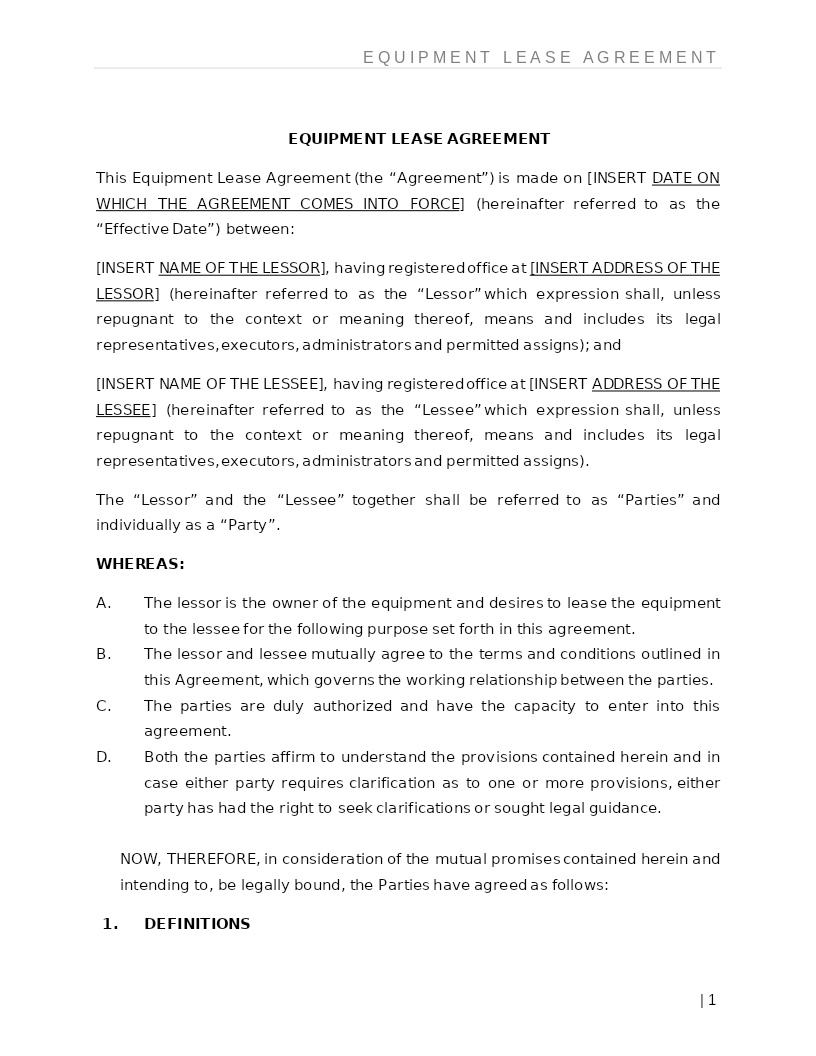
EQUIPMENT LEASE AGREEMENT
How does it work?
1. Choose this template
Start by clicking on "Fill out the template"
2. Complete the document
Answer a few questions and your document is created automatically.
3. Save - Print
Your document is ready! You will receive it in Word and PDF formats. You will be able to modify it.
Equipment Lease Agreements for Business Use
When a business needs access to machinery, tools, vehicles, or specialized equipment without purchasing it outright, an Equipment Lease Agreement provides a clear and reliable framework to facilitate this arrangement. It specifies how the equipment may be used, the financial terms of the lease, maintenance expectations, responsibilities of both parties, and the conditions under which the equipment must be returned.
Having a written lease agreement in place allows both the lessor and the lessee to operate with transparency and confidence—ensuring that the equipment is protected, payments are structured properly, and operational needs are met without uncertainty or risk.
Where Equipment Lease Agreements Are Commonly Used
Equipment lease arrangements are standard in a wide range of commercial environments, including:
- Construction and heavy machinery rentals
- Technology and IT equipment leasing
- Medical and laboratory equipment arrangements
- Film, photography, and audiovisual equipment rentals
- Manufacturing, packaging, and fabrication tools
- Fleet vehicles, transportation equipment, and logistics tools
- Restaurant and commercial kitchen equipment
Any time valuable equipment is loaned or rented out, a formal agreement sets the rules, responsibilities, and protections that both parties rely on throughout the lease period.
Different Types of Equipment Lease Agreements You May Encounter
- Operating Lease: Ideal for short-term use where the lessee needs the equipment temporarily and intends to return it at the end of the lease period.
- Finance or Capital Lease: Designed for long-term use where the lessee may ultimately buy the equipment, often with predictable payment schedules similar to financing.
- Fixed-Term Lease: Covers a specific duration with structured payments and clearly defined return or renewal conditions.
- Usage-Based or Variable Lease: Useful when payments depend on usage metrics such as hours operated, mileage, or production output.
- Master Equipment Lease: A flexible umbrella agreement that allows multiple pieces of equipment to be leased over time without renegotiating new terms for each item.
When Legal Guidance Becomes Helpful
Most standard equipment rentals can be handled using a well-drafted template, but legal review becomes valuable when:
- The leased equipment is highly technical, specialized, or high-value
- The arrangement spans multiple states or jurisdictions
- The lessor wants to include additional protections such as insurance, indemnity, or limitation-of-liability clauses
- A long-term financing or buyout structure is involved
- The equipment falls under regulated categories (medical, industrial, aviation, etc.)
- Multiple parties are sharing or co-leasing the same equipment
Legal input helps ensure the agreement is enforceable, compliant with state laws, and tailored to the operational and financial realities of the parties.
How to Work with This Template
- Identify the equipment being leased clearly (model, serial number, condition).
- State the purpose of the lease and how the equipment may and may not be used.
- Specify payment schedules, deposits, penalties, and late fees.
- Outline maintenance duties and who is responsible for repairs or insurance.
- Select the governing state law and dispute-resolution method.
- Review the conditions for renewal, return, or early termination.
- Sign electronically or in hard copy.
This template follows widely used U.S. commercial contract standards and is compatible with all major e-signature platforms.
Frequently Asked Questions
Q1. What is typically included in an Equipment Lease Agreement?
A comprehensive agreement will include details about the leased equipment, payment schedules, maintenance expectations, and restrictions on usage. It also covers insurance requirements, repair responsibilities, and return conditions. These details protect both parties by clarifying obligations and reducing opportunities for misunderstanding during the lease period.
Q2. Who is responsible for maintaining leased equipment?
Responsibility depends on the terms of the agreement. In many commercial leases, the lessee handles routine maintenance while the lessor covers major repairs unless misuse is involved. Clearly defining these expectations prevents disputes and ensures that equipment stays in safe, functional condition throughout the lease.
Q3. Can the lessee purchase the equipment at the end of the lease?
Some agreements allow a buyout option, especially in finance or capital leases. The terms may include fair-market-value pricing, a fixed buyout amount, or a nominal purchase option. Including these details upfront ensures both parties know whether ownership is possible and what conditions must be met.
Q4. What happens if leased equipment is damaged or lost?
Most agreements require the lessee to maintain insurance and to take reasonable care of the equipment. If damage or loss occurs, the lessee is typically responsible for repair, replacement, or reimbursement. Having clear liability terms protects the lessor while guiding the lessee on how to handle unexpected incidents.
Q5. Is insurance required for an equipment lease?
Yes, high-value or specialized equipment almost always requires insurance. Coverage may include theft, accidental damage, liability, or operational risks. Specifying insurance requirements in the agreement ensures financial protection and reduces disputes in case of unexpected events.
Q6. Can a lease be terminated early?
Early termination is possible if the contract allows it, but penalties or fees may apply. Agreements often outline conditions for early return, financial consequences, and obligations such as repairing wear-and-tear or paying remaining installments. This structure ensures fairness and financial stability for the lessor.
Q7. Are electronic signatures valid for an Equipment Lease Agreement?
Yes. Under U.S. federal and state laws, electronic signatures are legally recognized when both parties consent to signing electronically. This allows businesses to execute equipment leases quickly and efficiently without delaying operations.
Q8. What should be done before returning leased equipment?
Before returning equipment, the lessee should inspect it, complete necessary routine maintenance, remove personal modifications, and restore it to its original condition (aside from normal wear and tear). Documenting the condition with photos or written notes helps protect both parties and avoids unnecessary disputes.