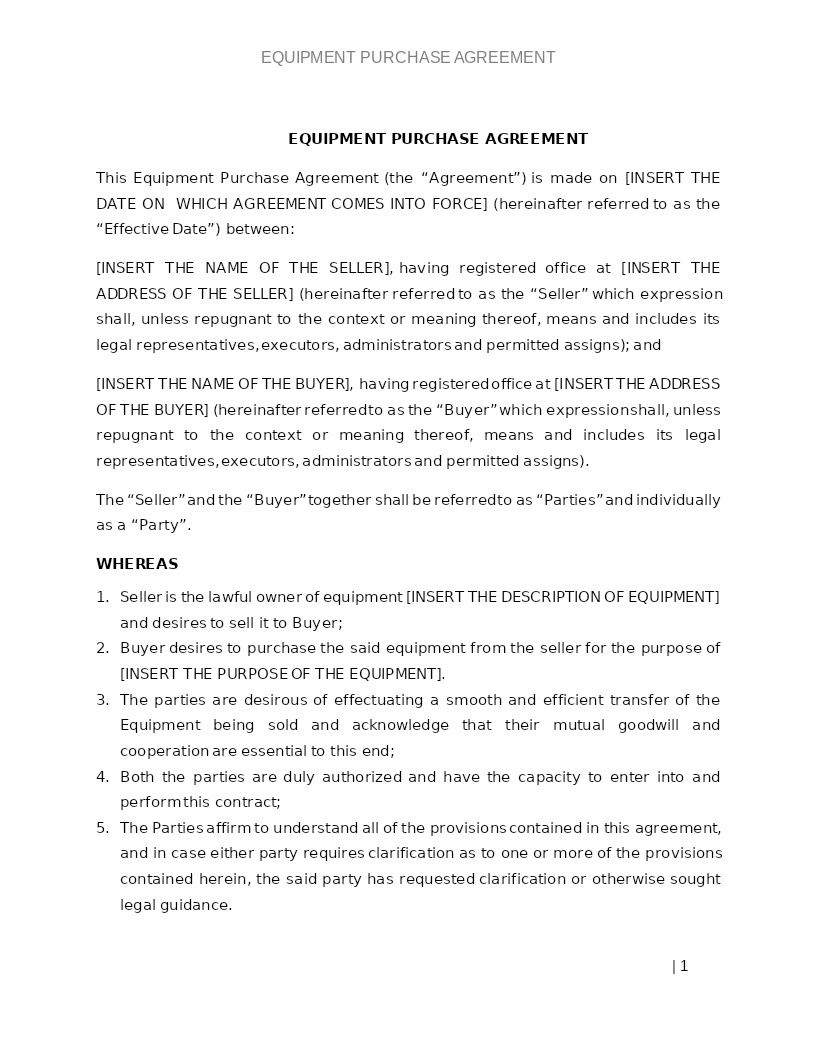
EQUIPMENT PURCHASE AGREEMENT
How does it work?
1. Choose this template
Start by clicking on "Fill out the template"
2. Complete the document
Answer a few questions and your document is created automatically.
3. Save - Print
Your document is ready! You will receive it in Word and PDF formats. You will be able to modify it.
Understanding Equipment Purchase Agreement In U.S.
An Equipment Purchase Agreement is a legally binding contract between a buyer and a seller that outlines the terms and conditions for purchasing equipment. It specifies key details such as the equipment description, purchase price, payment terms, delivery schedule, inspection rights, warranties, and transfer of ownership. This agreement ensures clarity, protects both parties from misunderstandings, and minimizes legal risks by documenting obligations, liabilities, and expectations. Under U.S. laws, including the Uniform Commercial Code (UCC), an Equipment Purchase Agreement provides essential legal protection during commercial and industrial transactions.
Where an Equipment Purchase Agreement Is Generally Used
An Equipment Purchase Agreement is commonly used in:
- Manufacturing and industrial operations acquiring machinery
- Construction businesses purchasing heavy equipment
- Medical providers buying diagnostic or treatment equipment
- IT companies acquiring hardware or office systems
- Retailers and wholesalers purchasing equipment in bulk
- Small businesses acquiring tools, vehicles, appliances, or office assets
- Any business requiring proper documentation for asset procurement
Different Types of Equipment Purchase Agreements
- Standard Equipment Purchase Agreement: Used for straightforward equipment sales that involve clear pricing, delivery, and warranty terms.
- Used/Refurbished Equipment Purchase Agreement: Includes inspection rights, condition reports, and as-is disclaimers.
- Installment Purchase Agreement: Allows payment over time while specifying interest, default remedies, and repossession rights.
- Lease-to-Own Equipment Agreement: Combines leasing terms with a purchase option at the end of the term.
- Bulk or Commercial Equipment Purchase Agreement: Used when purchasing multiple units or high-value assets, often including custom warranties and service obligations.
When Legal Guidance Becomes Helpful
Legal assistance is important for:
- Reviewing UCC warranty requirements and disclaimers
- Drafting terms for delivery delays, risk of loss, and title transfer
- Addressing cross-state or international equipment transactions
- Negotiating payment terms, financing conditions, or deposits
- Handling liability issues involving defective equipment
- Reviewing import/export rules for specialized machinery
- Ensuring compliance with industry-specific regulations (e.g., OSHA, FDA equipment rules)
- Preparing indemnification, limitation of liability, and dispute resolution clauses
Legal counsel ensures the agreement is enforceable, customized, and aligned with U.S. commercial laws.
How to Work With This Equipment Purchase Agreement
- Describe the equipment in detail, including make, model, serial number, and condition
- Specify delivery terms, inspection periods, and acceptance criteria
- Clearly define warranties, service obligations, and return/refund rules
- Establish payment structure, taxes, financing, and late-fee policies
- Document transfer of title and when risk of loss passes to the buyer
- Keep receipts, serial numbers, and written communication as proof
- Use the agreement for audits, asset tracking, and insurance compliance
Frequently Asked Questions
Q1. What should an Equipment Purchase Agreement include?
A strong agreement includes the equipment description, price, payment terms, delivery method, inspection rights, warranties, and transfer of ownership. It also outlines liability limitations and remedies if the equipment is defective or delayed, protecting both the buyer and seller.
Q2. Is an Equipment Purchase Agreement legally required in the U.S.?
While not mandatory for all equipment sales, it is strongly recommended, especially for commercial or high-value purchases. Under U.S. contract law and the Uniform Commercial Code (UCC), having a written agreement protects both parties and helps enforce warranties and payment terms.
Q3. Can the buyer inspect the equipment before finalizing the purchase?
Yes. Most agreements allow buyers to inspect the equipment either at delivery or before the sale is completed. Inspection clauses help verify condition, ensure compliance with specifications, and provide remedies if the equipment is defective or not as described.
Q4. Does the seller need to provide a warranty?
U.S. law does not require warranties, but many sellers offer express or implied warranties unless disclaimed. The agreement can specify manufacturer warranties, seller warranties, or “as-is” sales. Clear warranty terms help avoid disputes about defects or performance.
Q5. When does ownership transfer to the buyer?
Ownership typically transfers once payment is completed or as specified in the agreement. The contract should also designate when the risk of loss passes, either upon shipment, delivery, or installation, to avoid confusion in case of damage during transit.
Q6. Can the buyer return the equipment after purchase?
Returns depend on the terms stated in the agreement. Some contracts allow returns for defective equipment within a specific period, while others specify “all sales final.” Having written return and exchange terms protects both parties from unexpected liabilities.
Q7. Are financing or installment payments allowed?
Yes. Many agreements include financing terms such as installment payments, down payments, interest rates, and consequences of non-payment. These terms help buyers manage cash flow while giving sellers legal security in case of default.
Q8. Can this agreement be used for used or refurbished equipment?
Absolutely. However, used equipment agreements should include additional clauses regarding condition reports, prior usage, warranty limitations, and “as-is” disclaimers. This ensures transparency and protects both parties from future disputes over equipment quality.