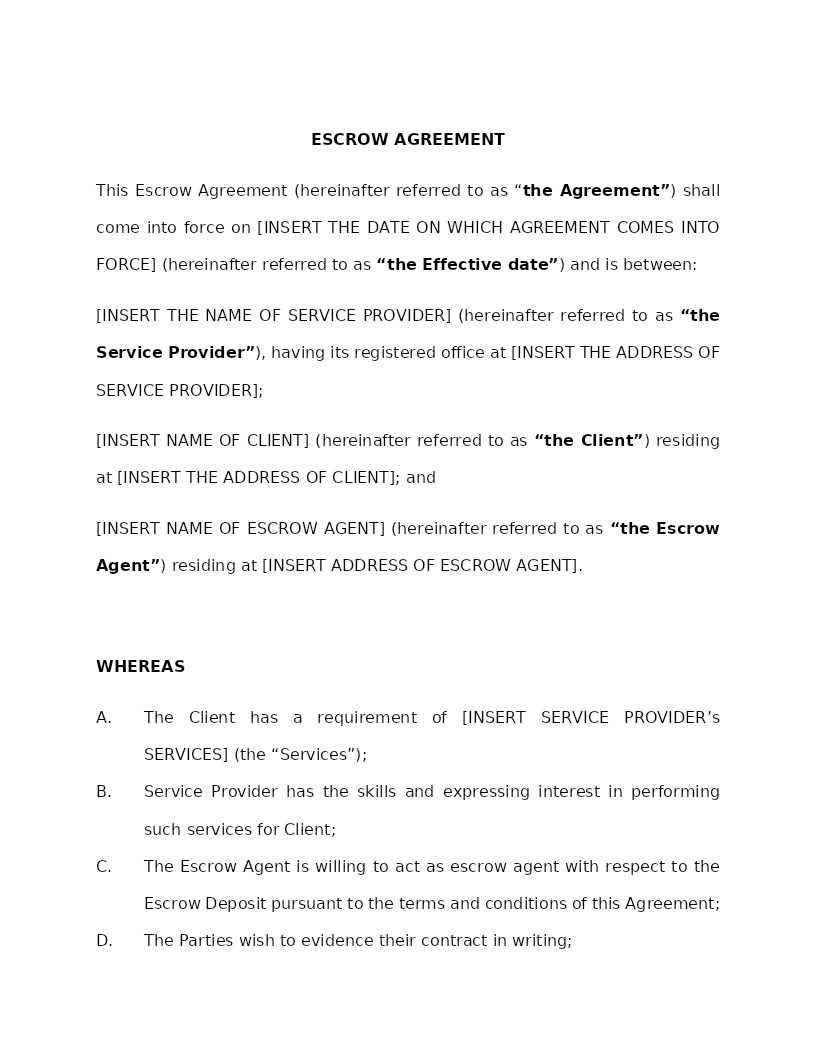
ESCROW AGREEMENT
How does it work?
1. Choose this template
Start by clicking on "Fill out the template"
2. Complete the document
Answer a few questions and your document is created automatically.
3. Save - Print
Your document is ready! You will receive it in Word and PDF formats. You will be able to modify it.
Understanding the Escrow Agreement
When two parties enter a transaction involving funds, documents, or high-value assets, trust and security become essential. An Escrow Agreement provides that structure by appointing a neutral third party, known as the escrow agent, to hold and release assets only when agreed-upon conditions are met. This ensures that neither buyer nor seller is at risk of fraud, non-payment, or premature asset transfer.
Putting an Escrow Agreement in place allows both parties to proceed with confidence, knowing that the transaction will be managed fairly, transparently, and in accordance with pre-defined terms.
Where Escrow Agreements Are Commonly Used
Escrow Agreements are standard in many U.S. transactions involving financial or legal risk, including:
- Real estate purchases, mortgage closings, and title transfers
- Mergers, acquisitions, and business sale transactions
- Online marketplaces, high-value goods, and digital asset transfers
- Intellectual property licensing, royalties, and technology development
- Legal settlements, investments, and milestone-based project payments
- Crypto-asset and blockchain-based transfers requiring third-party verification
Whenever a significant value is exchanged, an Escrow Agreement establishes a secure process that protects both parties.
Different Types of Escrow Agreements You May Encounter
- Real Estate Escrow: Used during property sales to manage deposits, closing documents, and title transfers.
- M&A / Business Escrow: Holds funds for indemnities, post-closing adjustments, or buyer-seller obligations.
- Online Transaction or E-Commerce Escrow: Protects buyers and sellers from fraud in digital or remote transactions.
- IP and Technology Escrow: Holds source code, patents, or digital assets until licensing or development milestones are met.
- Construction or Project-Based Escrow: Releases funds based on work progress, inspections, or milestone approvals.
- Legal Settlement Escrow: Used in litigation or settlement matters where controlled fund release is required.
When Legal Guidance Becomes Helpful
Legal review becomes essential when:
- High-value funds, assets, or sensitive documents are placed in escrow
- Multiple jurisdictions or cross-border transactions are involved
- Complex conditions trigger the release of funds or property
- Technology, IP, crypto assets, or proprietary information is held in escrow
- Dispute resolution mechanisms require careful drafting
- The escrow agent must meet regulatory, fiduciary, or banking requirements
- Parties need protection against unforeseen delays, fraud, or asset misuse
Legal guidance ensures enforceability, compliance, and clarity, which safeguard sensitive information by defining boundaries and responsibilities.
How to Work with This Template
- Identify the buyer, seller, and neutral escrow agent
- Define the assets or funds placed in escrow and their release conditions
- Specify documentation, verification steps, and approval procedures
- Select governing U.S. state law and dispute-resolution terms
- Clarify fees, responsibilities, and liability of the escrow agent
- Review collaboratively, legal review is optional but recommended
- Sign electronically or physically—e-signatures are widely enforceable in the U.S.
This template follows widely recognized standards used across real estate, technology, and commercial transactions in the United States.
Frequently Asked Questions
Q1. What is the purpose of an Escrow Agreement in high-value transactions?
An Escrow Agreement ensures that funds or assets are not released until both parties meet agreed-upon conditions. This prevents fraud, reduces transactional risk, and increases transparency. By involving a neutral third party, it ensures fairness and protects both the buyer and the seller throughout the process.
Q2. Who can act as an escrow agent under a U.S. Escrow Agreement?
Escrow agents may include licensed escrow companies, attorneys, financial institutions, title companies, or trusted third-party service providers. The agent must remain neutral and follow the instructions outlined in the agreement. Their role is to safeguard the assets until all conditions are verified and fulfilled.
Q3. What happens if one party fails to meet the escrow conditions?
If conditions are not met, the escrow agent will not release the funds or assets. Instead, the agreement usually provides procedures for dispute resolution or returning assets to the rightful party. This prevents premature transfers and ensures that each step of the transaction is properly documented and verified.
Q4. Can an Escrow Agreement be used for online or digital transactions?
Yes. Escrow is widely used for remote, digital, and cross-border transactions, especially when parties do not know each other. It adds a secure layer of protection by ensuring payment is only released once the buyer receives the goods or services. This model is standard for e-commerce, digital goods, and software or technology deliveries.
Q5. Are escrow funds protected if the escrow company goes out of business?
Reputable escrow agents maintain segregated accounts to protect client funds from operational liabilities. Many are regulated under state or federal law, providing additional safeguards. Choosing a licensed escrow agent is key to ensuring financial protection and compliance.
Q6. Does an Escrow Agreement help prevent fraud?
Yes. By placing funds or assets under the control of a neutral party, the agreement minimizes opportunities for fraud, false claims, or non-performance. It ensures neither party gains unfair advantage and offers documented steps that must be followed before anything is released.
Q7. Can Escrow Agreements be customized for milestone-based or staged payments?
Absolutely. Many agreements include phased or conditional releases tied to project progress, inspections, or performance benchmarks. This ensures accountability and protects both parties when large and long-term transactions are involved.
Q8. Is an Escrow Agreement valid if the parties are in different states?
Yes. Cross-state escrow arrangements are very common. The agreement simply chooses one state’s governing law, ensuring consistency and enforceability across jurisdictions. This makes escrow ideal for remote or interstate business, real estate, or tech transactions.