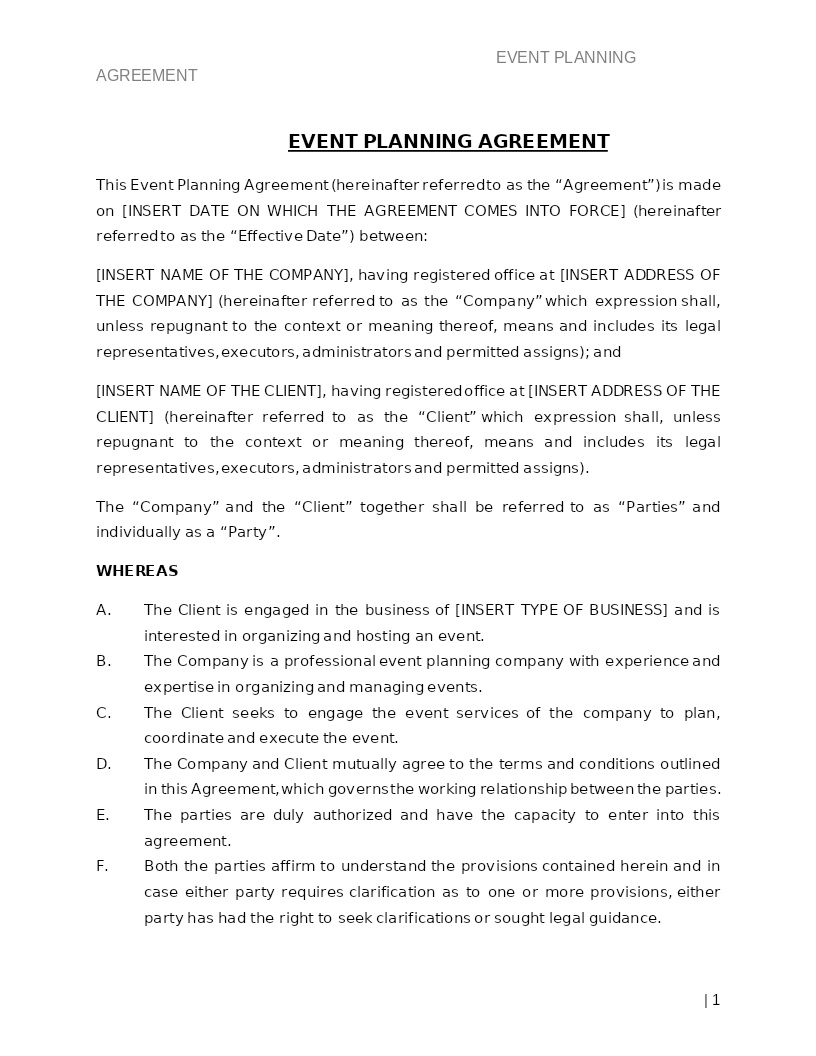
EVENT PLANNING AGREEMENT
How does it work?
1. Choose this template
Start by clicking on "Fill out the template"
2. Complete the document
Answer a few questions and your document is created automatically.
3. Save - Print
Your document is ready! You will receive it in Word and PDF formats. You will be able to modify it.
Understanding Event Planning Agreements
An Event Planning Agreement is a legally binding contract between a client and an event planner or event management company that outlines the terms under which professional planning, coordination, and execution services will be provided. This agreement defines the scope of services, event details, responsibilities, timelines, vendor coordination, budget management, cancellation terms, and payment obligations.
In the United States, Event Planning Agreements are governed by state contract laws, consumer protection rules, venue regulations, safety requirements, and liability standards. These agreements are essential for ensuring that both parties understand their obligations and expectations before the event takes place.
Where Event Planning Agreements Are Commonly Used
Event Planning Agreements are used for a wide variety of personal, corporate, and public events, including:
- Weddings, private parties, and social celebrations
- Corporate conferences, seminars, and retreats
- Charity events, fundraisers, and nonprofit galas
- Concerts, festivals, and large public gatherings
- Product launches, brand events, and business openings
- Award ceremonies, trade shows, and expos
- Small events requiring partial planning or day-of coordination
Any time a client hires a planner to manage event logistics or creative direction, an Event Planning Agreement ensures clarity and legal protection.
Different Types of Event Planning Services You May Encounter
- Full-Service Event Planning: Covers concept creation, vendor management, budgeting, coordination, and day-of execution.
- Partial Planning Services: The planner supports selected aspects of the event while the client handles others.
- Day-of Coordination: Planner manages logistics and ensures smooth execution on the event day.
- Vendor or Venue Coordination: Focused support for booking, communicating with, and overseeing vendors or the venue.
- Corporate Event Management: Specialized planning for business events, requiring compliance with company policies and professional standards.
When Legal Guidance Becomes Helpful
Legal review is recommended when:
- The event involves large crowds, multiple vendors, or high-cost services
- Alcohol service, insurance requirements, or permits are involved
- The planner is responsible for hiring and managing vendors
- Intellectual property (such as branding or photography) is part of the event
- The venue has strict rules or liability requirements
- The client needs clarity on cancellation policies, refunds, or postponements
- The event spans multiple states or involves high-risk activities
Legal guidance helps ensure compliance, manage risk, and protect both parties from financial or operational disputes.
How to Work with This Template
- Identify the client and event planner/service provider
- Describe the event type, date, venue, and service scope
- Define payment terms, deposits, installment schedules, and refund rules
- Include vendor management responsibilities and communication expectations
- Outline cancellation, postponement, and force majeure terms
- Include liability protections, insurance requirements, and safety rules
- Choose the governing U.S. state law
- Add details for final timelines, deliverables, and event-day responsibilities
- Sign electronically or in hard copy following applicable contract laws
This template follows standard U.S. event-planning industry practices and is compatible with digital signing platforms.
Frequently Asked Questions
Q1. What is an Event Planning Agreement and why is it important?
An Event Planning Agreement outlines the services an event planner will provide, along with responsibilities, fees, and timelines. It is important because it protects both the planner and client by preventing misunderstandings about duties, budgets, and expectations.
Q2. Are Event Planning Agreements legally enforceable in the U.S.?
Yes. These agreements are enforceable under state contract law. A written agreement ensures both parties have a clear understanding of the event details, deliverables, and payment schedules.
Q3. What should be included in an Event Planning Agreement?
A strong agreement includes event details, scope of services, budget terms, payment schedules, vendor responsibilities, cancellation policies, and liability protections. These elements help maintain transparency and avoid disputes.
Q4. Who is responsible for hiring and paying event vendors?
Responsibility varies by agreement. Some planners handle vendor selection and payments, while others assist only with coordination. Clear terms ensure the client understands who manages contracts, deposits, and vendor communication.
Q5. Can the event be rescheduled or canceled?
Yes, but terms vary. Most agreements include cancellation and postponement clauses outlining refund eligibility, non-refundable deposits, and rescheduling fees. These terms protect planners from last-minute cancellations and unexpected losses.
Q6. Are event planners required to carry insurance?
Many clients require planners to carry general liability insurance. For large or complex events, additional coverage may be necessary. Insurance terms are typically outlined in the agreement.
Q7. How are unforeseen events or emergencies handled?
Most agreements include a force majeure clause, covering situations like natural disasters or government restrictions. This clause explains how cancellations, refunds, or rescheduling will be handled.
Q8. Can clients request changes after the agreement is signed?
Yes. Agreements typically provide a process for change requests or add-on services. Additional fees or timeline adjustments may apply depending on the scope of changes.
Q9. Are electronic signatures valid for Event Planning Agreements?
Yes. Under the U.S. ESIGN Act, electronic signatures are legally enforceable. Many planners use digital contract tools for faster onboarding and recordkeeping.
Q10. Is an Event Planning Agreement suitable for small or private events?
Definitely. Even small parties benefit from a written agreement. It ensures transparency, clarifies payment expectations, and protects both parties from last-minute issues or misunderstandings.