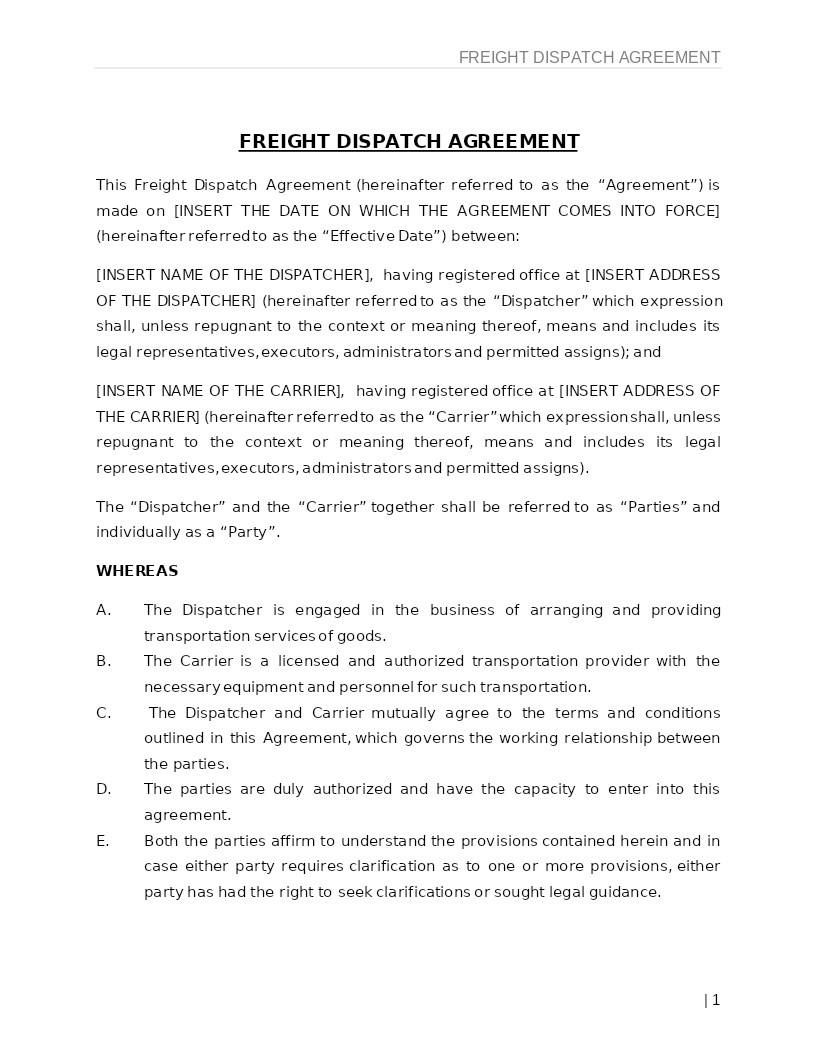
FREIGHT DISPATCH AGREEMENT
How does it work?
1. Choose this template
Start by clicking on "Fill out the template"
2. Complete the document
Answer a few questions and your document is created automatically.
3. Save - Print
Your document is ready! You will receive it in Word and PDF formats. You will be able to modify it.
Understanding Freight Dispatch Services in the United States
A Freight Dispatch Agreement is a legally binding contract between a freight dispatcher and a trucking company or owner-operator. It outlines the dispatcher’s services, such as finding loads, negotiating freight rates, managing broker communication, and handling logistics, while the carrier focuses on transportation.
In the U.S. trucking and logistics sector, dispatch agreements help streamline operations, clarify responsibilities, and reduce disputes. These agreements also help ensure compliance with industry standards, broker requirements, and regulatory obligations set by entities such as the FMCSA (Federal Motor Carrier Safety Administration).
A professionally drafted Freight Dispatch Agreement protects both parties, promotes transparency, and supports long-term business growth.
Where Freight Dispatch Agreements Are Commonly Used
Freight Dispatch Agreements are widely used in:
- Owner-operator trucking businesses
- Small and mid-sized carrier companies
- Hotshot trucking operations
- Box truck, flatbed, reefer, and dry van carriers
- Freight logistics and load management providers
- Independent dispatching service companies
- Fleet dispatching and multi-unit trucking operations
Any time a trucking business partners with a dispatcher to secure freight loads, a written agreement helps define responsibilities and prevent misunderstandings.
Different Types of Freight Dispatch Agreements You May Encounter
- Standard Dispatch Service Agreement: Covers load finding, rate negotiation, paperwork management, and communication with brokers.
- Administrative Dispatch Agreement: Focused on back-office tasks like invoicing, carrier packets, and compliance support.
- Non-Exclusive Dispatch Agreement: Allows the carrier to work with multiple dispatchers without exclusivity obligations.
- Exclusive Dispatch Agreement: The carrier grants sole dispatching rights to one service provider.
- Load Management & Strategic Planning Agreement: Includes dispatching plus additional services such as freight lane analysis, business consulting, and route planning.
When Legal Guidance Becomes Helpful
Freight dispatch arrangements can involve complex logistics and legal responsibilities. Legal advice becomes valuable when:
- The carrier or dispatcher operates across multiple U.S. states
- Brokers require additional compliance documents or insurance certificates
- The agreement includes exclusivity, long-term commitments, or volume guarantees
- The dispatcher handles sensitive information, such as rate confirmations or payment details
- Liability concerns exist for missed loads, late deliveries, or miscommunication
- Complex fee structures or recurring billing terms apply
- The carrier wants to protect its DOT/MC authority from misuse
- Intellectual property applies (e.g., dispatch systems, SOPs, templates)
Legal review ensures compliance with federal trucking laws and reduces the risk of disputes.
How to Work With This Template
- Identify both parties with legal business names and contact details
- Define dispatch services, including load booking, rate negotiation, and paperwork management
- Outline communication rules, responsibilities, and operational expectations
- Specify fees, payment terms, invoice procedures, and refund policies
- Include compliance requirements for brokers, FMCSA rules, and insurance needs
- Add liability clauses specifying what the dispatcher is and is not responsible for
- Address confidentiality, data protection, and secure handling of documents
- Select governing U.S. state law and establish dispute resolution procedures
- Review terms together (legal consultation recommended)
- Sign electronically or in print
This template is aligned with general U.S. trucking and dispatch industry practices.
Frequently Asked Questions
Q1. Why is a Freight Dispatch Agreement important for carriers and dispatchers?
A Freight Dispatch Agreement ensures both parties understand their responsibilities, payment terms, and operational expectations. It prevents disputes about load assignments, communication, or billing, and creates a professional working relationship that supports consistent and efficient operations.
Q2. Does this agreement protect the carrier from liability issues?
Yes. The agreement clarifies that the dispatcher is not a carrier or broker and does not assume liability for cargo damage, accidents, or delivery delays. This protects the carrier from confusion and ensures compliance with FMCSA regulations while distinguishing each party’s legal role.
Q3. How are dispatching fees and payments handled?
The agreement outlines fee structures, such as percentage-based fees, flat-rate billing, or per-load charges, along with payment schedules and invoice rules. This transparency helps prevent misunderstandings about compensation and ensures smooth financial management for both parties.
Q4. Can a carrier work with multiple dispatchers under this agreement?
Yes, if the agreement is structured as non-exclusive. Carriers can choose to work with several dispatchers to increase load opportunities. Exclusive agreements, however, can provide more personalized support but require commitment to one dispatcher.
Q5. Does the agreement include communication and load-handling expectations?
Absolutely. It covers communication rules, required response times, and load acceptance procedures. This ensures efficiency and helps prevent missed opportunities or confusion between brokers, dispatchers, and drivers throughout the freight process.
Q6. What if the dispatcher books a load the carrier cannot complete?
The agreement typically outlines procedures for cancellations, reassignments, or communication failures. These terms help avoid penalties from brokers and clarify who is responsible for resolving the issue and how such situations should be documented.
Q7. Does this agreement ensure compliance with U.S. trucking regulations?
Yes. It outlines responsibilities regarding FMCSA compliance, broker-carrier agreements, insurance requirements, and documentation. This helps carriers maintain legal compliance and avoid fines, penalties, or rejected loads due to missing paperwork.
Q8. Can the agreement be modified as the trucking business grows?
Definitely. Freight Dispatch Agreements can be updated to reflect new fee structures, expanded fleets, additional services, or changing operational needs. Written amendments ensure that the business relationship grows in a legally secure and mutually beneficial way.