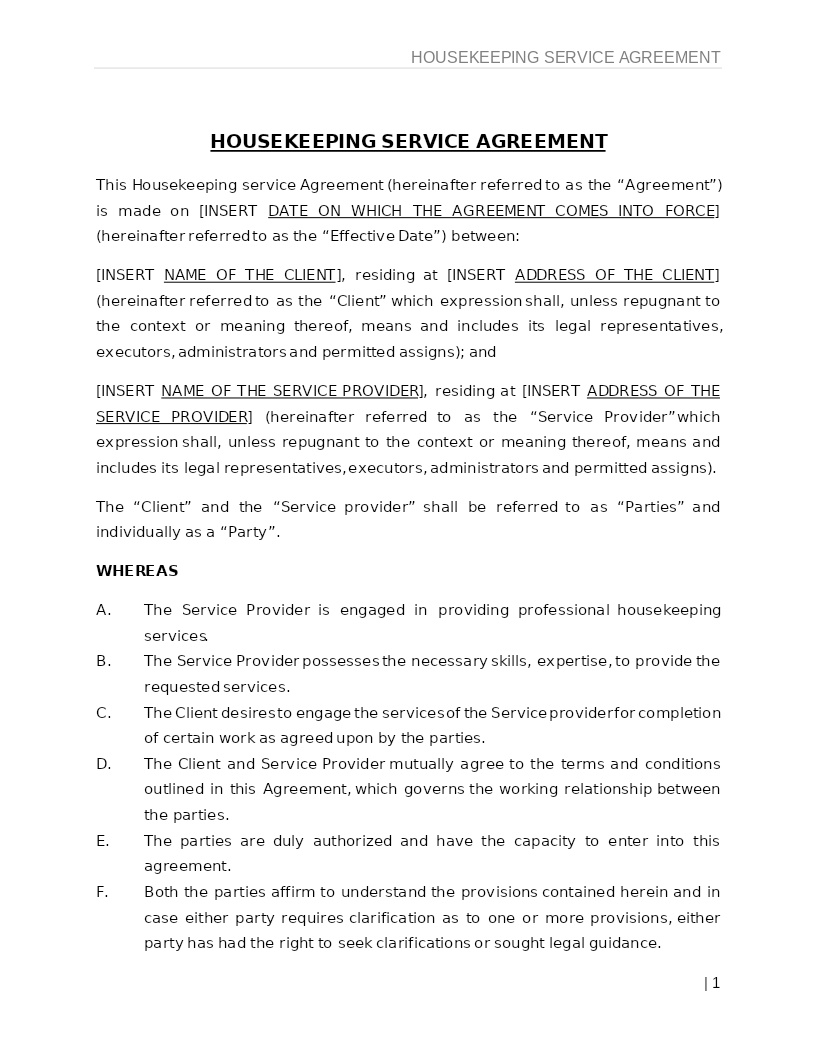
HOUSEKEEPING SERVICE AGREEMENT
How does it work?
1. Choose this template
Start by clicking on "Fill out the template"
2. Complete the document
Answer a few questions and your document is created automatically.
3. Save - Print
Your document is ready! You will receive it in Word and PDF formats. You will be able to modify it.
Understanding Housekeeping Services in the United States
A Housekeeping Agreement is a legally binding contract between a client and a housekeeping service provider that details the cleaning duties, schedule, payment terms, responsibilities, and expectations for ongoing or one-time cleaning services. It establishes a clear understanding of what the service includes, such as cleaning, laundry, organizing, or deep sanitization, while protecting both parties from misunderstandings or disputes.
In the United States, these agreements help ensure compliance with safety standards, privacy considerations, and local labor regulations. Whether the housekeeping services are provided for residential homes, rental properties, offices, or commercial spaces, a written agreement provides transparency, professionalism, and legal protection.
Where Housekeeping Agreements Are Commonly Used
Housekeeping Agreements are routinely used for:
- Residential homes and apartments
- Short-term rental or Airbnb property management
- Commercial offices and workplace cleaning
- Hotels, motels, and hospitality establishments
- Assisted living and care facilities
- Move-in and move-out cleaning
- Post-construction cleanup
- Recurring weekly, bi-weekly, or monthly cleaning services
Any time cleaning services are provided, a written agreement prevents miscommunication and provides structure to the service relationship.
Different Types of Housekeeping Agreements You May Encounter
- Recurring Cleaning Service Agreement: Used for weekly, monthly, or long-term housekeeping services with a recurring schedule.
- One-Time or Deep Cleaning Agreement: Covers special projects like post-party cleaning, spring cleaning, or move-in/move-out services.
- Commercial Cleaning Agreement: Designed for offices, retail spaces, warehouses, and business environments requiring regular cleaning.
- Vacation Rental or Airbnb Cleaning Agreement: Outlines turnover cleaning, inventory restocking, and check-in readiness for short-term rentals.
- Specialized Cleaning Agreement: Includes sanitization, hazardous cleaning, or specialized tasks requiring additional training or equipment.
When Legal Guidance Becomes Helpful
Legal guidance is valuable when:
- Housekeeping involves live-in arrangements
- The service includes handling sensitive or confidential household information
- The cleaning work requires special licenses or safety compliance
- Large commercial contracts involve multiple staff or subcontractors
- Liability issues may arise from property damage or workplace injuries
- The agreement includes employee classification concerns under U.S. labor laws
- Payment disputes or automatic billing systems are involved
- Intellectual property applies (e.g., branded cleaning systems or proprietary methods)
Attorneys help ensure the contract complies with U.S. employment, safety, and liability regulations.
How to Work With This Template
- Identify both parties with complete contact details
- Specify the scope of work, cleaning tasks, and special requests
- Define the cleaning schedule and frequency
- Establish payment terms, deposits, cancellations, and refund rules
- Include liability, insurance, and damage provisions
- Outline confidentiality expectations when entering private spaces
- Add health, safety, and supply-related responsibilities
- Select governing U.S. state law and dispute resolution methods
- Review terms together (legal consultation recommended)
- Sign electronically or on paper
This template aligns with typical U.S. service contract standards and is compatible with major e-signature platforms.
Frequently Asked Questions
Q1. Why is a Housekeeping Agreement important for U.S. homeowners and service providers?
A Housekeeping Agreement prevents confusion by documenting tasks, schedules, and expectations upfront. It ensures both parties understand their responsibilities and provides legal protection if disputes arise. This clarity is especially valuable for recurring or long-term cleaning services.
Q2. Does the agreement include liability for damage or missing items?
Yes. Most housekeeping agreements address property damage, breakage, or lost items and clarify whether the provider must carry liability insurance. These terms help protect the client’s property and ensure the cleaner is not unfairly held responsible for unrelated issues.
Q3. Are payment terms and cancellation policies included?
Absolutely. The agreement specifies total costs, payment frequency, due dates, and cancellation notice requirements. Clear payment terms help avoid disputes and ensure the housekeeping provider can schedule services reliably.
Q4. Can the agreement include confidentiality and privacy protections?
Yes. Since housekeepers enter private spaces, confidentiality clauses ensure personal information, family details, or sensitive household matters remain private. These protections are essential for maintaining trust in the working relationship.
Q5. What if the client needs additional tasks beyond the agreed scope?
Most agreements include procedures for requesting extra services, including pricing adjustments and advance notice requirements. This prevents confusion and ensures both parties agree before changes are made to the original scope of work.
Q6. Does the agreement cover cleaning supplies and equipment?
Yes. It clarifies whether the provider brings their own supplies or uses items provided by the client. This helps maintain consistent service quality and avoids disputes about costs, allergies, or preferred cleaning products.
Q7. Can the agreement be used for commercial or office cleaning as well?
Definitely. Housekeeping Agreements can be customized for residential or commercial settings. For offices, the contract may include additional requirements like after-hours cleaning, employee background checks, and workplace safety rules.
Q8. What happens if either party wants to end the agreement?
The agreement typically outlines notice periods, refund terms, and return of any property or equipment. Clear termination clauses protect both the client and service provider, preventing sudden cancellations and ensuring a smooth transition.