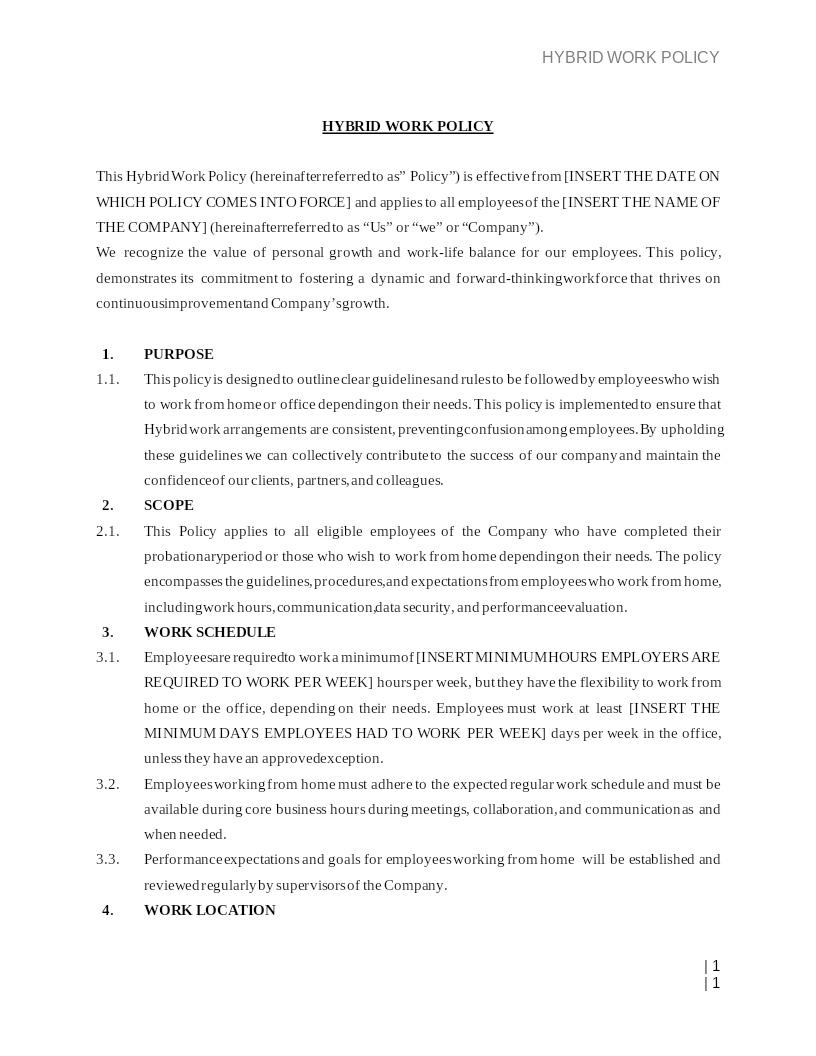
HYBRID POLICY
How does it work?
1. Choose this template
Start by clicking on "Fill out the template"
2. Complete the document
Answer a few questions and your document is created automatically.
3. Save - Print
Your document is ready! You will receive it in Word and PDF formats. You will be able to modify it.
Creating a Flexible and Productive Work Environment
As modern workplaces evolve, many organizations are shifting toward flexible work structures that balance employee autonomy with operational efficiency. A Hybrid Work Policy provides a clear framework for how employees may split their time between remote work locations and the physical workplace. It outlines expectations, communication guidelines, data-security requirements, and performance standards so that everyone understands how hybrid work will function on a day-to-day basis.
Having a formal Hybrid Work Policy creates consistency across departments, ensures compliance with U.S. labor laws, and supports a safe, inclusive, and productive environment whether work happens in the office or at home.
Where Hybrid Work Policies Are Commonly Used
Hybrid work arrangements have become standard across many industries, especially:
• Corporate offices and knowledge-based roles
• Technology, software, and digital service organizations
• Professional services, including law firms, accounting, and consulting
• Marketing, design, creative, and content-development teams
• Customer-support, sales, and administrative operations
• Educational institutions and nonprofit organizations
• Companies using distributed or multi-state workforces
Different Types of Hybrid Work Models You May Encounter
- Flexible Hybrid Model: Employees choose which days they work remotely or on-site within approved guidelines.
- Structured Hybrid Model: The organization assigns specific on-site days for teams or individuals.
- Remote-First Hybrid: Most work is remote, with office space used primarily for collaboration or meetings.
- Office-First Hybrid: The office remains the primary work location, with limited remote-work privileges.
- Role-Based Hybrid: Eligibility depends on job duties, security risks, or business requirements.
When Legal Guidance Becomes Helpful
While many hybrid arrangements are straightforward, legal input can be valuable when:
• Employees work across multiple U.S. states with different labor regulations
• The policy includes rules related to time tracking, overtime, or wage-and-hour compliance
• Workplace accommodations, disabilities, or ergonomic needs must be addressed
• Sensitive data or regulated information is handled outside the office
• The organization provides equipment stipends, reimbursements, or allowances
• Health, safety, or workers’ compensation questions arise regarding remote locations
How to Work with This Template
• Define eligibility criteria for hybrid work
• Set expectations for attendance, availability, and communication
• Outline data-security, device usage, and confidentiality rules
• Establish ergonomic standards and safety requirements for remote setups
• Choose the governing U.S. state law for interpretation
• Review expectations with employees and supervisors
• Sign electronically or in hard copy if required
Frequently Asked Questions
Q1. What is a Hybrid Work Policy and why is it important?
A Hybrid Work Policy explains how employees can split their time between working remotely and in the office. It is important because it ensures fairness, sets clear expectations, and helps maintain consistent performance and communication across all work environments.
Q2. Is hybrid work required to follow U.S. labor laws?
Yes. Employers must comply with federal and state labor laws, including wage-and-hour rules, overtime pay, meal breaks, and safety requirements—regardless of whether the employee works from home or the office.
Q3. Who is eligible to participate in hybrid work?
Eligibility is determined by job duties, performance requirements, and operational needs. Some roles may require full-time on-site presence due to confidentiality, equipment, or customer-facing duties.
Q4. How are work hours monitored in a hybrid arrangement?
Employees must accurately track their hours using the company’s approved timekeeping system. This ensures compliance with the Fair Labor Standards Act (FLSA) and avoids wage-and-hour issues.
Q5. Are employees reimbursed for remote-work expenses?
Reimbursements vary by state. Some states require employers to cover necessary business expenses, such as internet or phone usage. The policy should clearly outline what is reimbursable and what is not.
Q6. What security measures apply when working remotely?
Employees must follow strict cybersecurity protocols, including using secure networks, approved devices, strong passwords, encryption tools, and company VPNs to protect confidential information.
Q7. Can employees work remotely from any state?
Not without approval. Working from a different state may create tax, payroll, and compliance obligations. Employers often restrict remote work locations for legal and administrative reasons.
Q8. What happens if there is a performance issue during hybrid work?
Supervisors may require additional check-ins, modify the hybrid schedule, or transition the employee back to on-site work. Performance expectations remain the same regardless of work location.
Q9. Does the policy address workplace culture and communication?
Yes. Hybrid policies typically emphasize consistent communication, timely responses, virtual collaboration, and maintaining team engagement to support a healthy workplace culture.
Q10. Can the employer change or revoke hybrid work privileges?
Yes. Hybrid work is generally offered at the employer’s discretion. If business needs change, the company may modify or suspend the arrangement, with reasonable notice provided to employees.